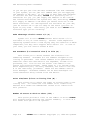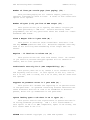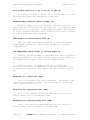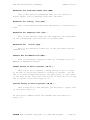
1
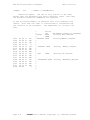
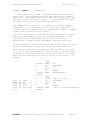
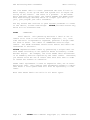
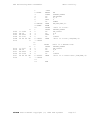
Z80ASM
Z80 Relocating Macro Assembler
USER'S GUIDE
Copyright (c) 1984 by
SLR Systems
1622 N. Main Street
Butler, PA 16001
(412) 282-0864
COPYRIGHT NOTICE
This software product is distributed for the use of the original
purchaser only, and no license is granted herein to copy,
duplicate, sell or otherwise distribute to any other person,
firm, or entity. Furthur, this software product and all forms of
the program are copyrighted by SLR Systems, and all rights are
reserved.
TRADEMARKS
Wherever referred to throughout this manual, CP/M and Z80 are
registered trademarks of Digital Research and Zilog, Inc.,
respectively.
Z80 Relocating Macro Assembler
Introduction
INTRODUCTION
Z80ASM is a powerful relocating macro assembler for Z80-based
CP/M systems. It takes assembly language source statements from
a disk file, converts them into their binary equivalent, and
stores the output in either a core-image, Intel hex format, or
relocatable object file. The mnemonics recognized are those of
Zilog/Mostek. The optional listing output may be sent to a disk
file, the console and/or the printer, in any combination. Output
files may also be generated containing cross-reference information on each symbol used.
FEATURES
1)
One pass operation (optional second pass)
2)
Powerful nested macros, conditionals, and include files
3)
Relocatable format allows extended math on externals
and relocatables
4)
Up to 15 different data, program, and common areas
5)
Zilog/Mostek mnemonics
6)
Throughput of over 6000 Lines/Minute (8"SS/SD, 2Mhz)
7)
Optional alphabetized symbol table
8)
Optional alphabetized cross-reference
9)
Directly generates a .COM, .HEX, or .REL file
10)
Labels Significant to 16 characters
11)
Supports time and date in listing
12)
User Configurable
13)
Supports ZCPR3 and CP/M+ error reporting
Page i-2
Z80ASM User's Manual Copyright (c) 1984 SLR Systems
Z80 Relocating Macro Assembler
Table Of Contents
TABLE OF CONTENTS
Section - Page
Introduction
i-2
Features
i-2
Table of Contents
i-3
Running the Assembler
1-1
Command Line Options
1-3
Source Line Format
2-1
Expressions
2-4
Relocatability
2-7
Pseudo Operations
3-0
Program Counter Maintenance
3-1
Data Definition and Generation
4-1
Conditional Assembly
5-1
Macro Facility
6-1
Listing Controls
7-1
Miscellaneous
8-1
APPENDIX A - Error Message Summary
A-1
APPENDIX B - Zilog Z80 Instr. Set
B-1
APPENDIX C - Intel HEX file format
C-1
APPENDIX D - CONFIG Utility
D-1
APPENDIX E - ASCII Table
E-1
APPENDIX F - Warranty
F-1
Z80ASM User's Manual Copyright (c) 1984 SLR Systems
Page i-3
Z80 Relocating Macro Assembler
Running The Assembler
RUNNING THE ASSEMBLER
To run the assembler, type
A > Z80ASM [COMMAND][,COMMAND]
where the brackets are not really typed, and what is enclosed in
them is optional. If no COMMAND's are given on the initial
command line, Z80ASM will prompt for a command line with a
percent (%) sign. Z80ASM allows as many commands to be given as
will fit on a 128 character line. Commands are separated by a
comma. Note that input from the prompt is via the Read Console
Buffer system call, so that commands may be passed through a
SUBMIT file. However, there is a better way...
COMMANDS are defined as follows:
<Filename>[.<Drive >][/<0ption>]
where
<Filename> is the source file with the (default) extension
Z80.
.
is a separator used only when <Drive> is
present.
<Drive>
is used to modify the default drive selection.
The default condition selects the CP/M default
drive for source file, enables binary output to
the default drive, and enables the disk listing
driver to the default drive. <Drive> is from
one to three letters (@-P, where @ is the
default drive) defined as follows:
first letter:
drive on which <Filename>.Z80 is located
second letter: selects drive to receive output file to disable binary file generation, use a
Z in this location. If this letter is
missing, output will go to the default
drive.
third letter:
selects the drive or device on which to
place the listing output. If selected,
the cross-reference and symbol table
also go to this device. To send the
output to a disk file, use a valid drive
letter in this location. To output just
to the console, use an X; Y selects
output to the list device. If no
listing-type output is desired, use a Z
in this spot. If this letter is
missing, output will go to the default
drive.
Z80ASM User's Manual Copyright (c) 1984 SLR Systems
Page 1-1
Z80 Relocating Macro Assembler
Running The Assembler
/
is optional, but must be used when
used.
<0ption>
is one or more of the following letters, in any
order:
Page 1-2
<0ption> is
A :
absolute mode.
Output file is COM.
C :
enables output to the console.
D :
don't do LOWER to UPPER case conversion.
E :
execute LOWER to UPPER case conversion.
F :
selects full listing (2 passes through
source).
H :
generate HEX file as output.
I :
special indirect command file.
K :
kill all console I/O and detach.
L :
list output partial (1 pass through
source).
M :
generate Microsoft REL file as output.
N :
new OPTION byte.
P :
enables output to the list device.
Q :
quit, abort.
R :
generate standard REL file as output.
S :
generate alphabetized symbol table.
T :
input time and date string.
U :
declares undefined symbols as external.
X :
generates cross-reference.
Y :
disable cross-reference.
6 :
selects M-Rel output, 6 significant.
7 :
selects M-Rel output, 7 significant.
Z80ASM User's Manual Copyright (c) 1984 SLR Systems
Z80 Relocating Macro Assembler
Running The Assembler
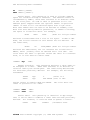
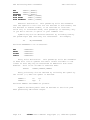
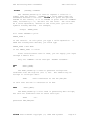
For example, assuming standard default conditions:
A>Z80ASM EXAMPLE/F,DUMP.ABZ/SXRP
tells Z80ASM to assemble A:EXAMPLE.Z80, create A:EXAMPLE.COM as
the binary output, and create A:EXAMPLE.LST as the second pass
full listing output. Next assemble A:DUMP.Z80, creating an S-REL
file on drive B, and generating a symbol table and crossreference on the printer.
Efficiency Hints
1. Use one-pass mode wherever possible. The only time two pass
mode is necessary is generating a cross-reference, or a listing
with forward references resolved.
2. If generating a one-module program, generate the COM or HEX
output directly from the assembler.
3. For multiple module work, use an indirect file. For most
assemblies, a major percentage of the assembly time is merely
loading in the assembler. Z80ASM will assemble all the files in
an indirect file without reloading the assembler.
4. If you CONFIGure in a 2nd pass listing or cross-reference, you
will ALWAYS get 2-pass mode unless you use the proper switches to
disable it (/N).
Let's talk in more detail about the command line options.
Z80ASM User's Manual Copyright (c) 1984 SLR Systems
Page 1-3
Z80 Relocating Macro Assembler
Command Line Options
COMMAND LINE OPTIONS
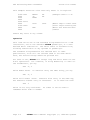
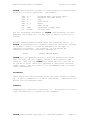
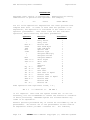
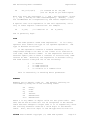
Command line options are used to modify the default operating
characteristics of Z80ASM. This is the default mode as supplied
by SLR Systems (the default mode may be modified by the user by
running the CONFIG utility):
Generate a core-image .COM file on one pass through the
source, converting lower-case items to upper-case,
generate no listing output, no symbol table output, and
no cross-reference output.
So, if you wanted to assemble the file DUMP.Z80 (included on your
distribution diskette) to create the file DUMP.COM, both on drive
B:, with no other output, you would type
A>Z80ASM DUMP.BB
Note that the Z was not needed in the listing drive spot since no
listing-type output was requested. If the files were on drive A,
A>Z80ASM DUMP
would produce the desired result.
There are many other available options though, and this section
describes them in a little more detail.
A
The A option selects absolute mode operation and a
default output file type of COM. This is the
standard default mode, so it will not need to be
used unless the default mode has been modified.
C
The C option enables the console output driver.
This has no effect in itself, but if any listing,
symbol table or cross-reference outputs are
selected, these items will be output to the console device (Error messages are always enabled to
the console, unless /K is used).
Page 1-4
Z80ASM User's Manual Copyright (c) 1984 SLR Systems
Z80 Relocating Macro Assembler
Command Line Options
D
The D option disables LOWER to UPPER case conversion. This is used when it is desired to have
upper and lower case characters treated differently, such as when assembling output from a C
compiler. Note that when this is in effect,
reserved words (mnemonics, registers, and pseudoops) may be in any case or mixture. .LIST may be
redefined as a macro, and .LIST will still be
recognized as a pseudo-op.
E
The E option enables LOWER to UPPER case
conversion. This is the standard default mode.
Note that the conversion only affects characters
not inside quoted strings, and that lower case
characters are still lower case in a list file.
F
The F option selects FULL listing mode. This
option forces Z80ASM into 2-pass mode, generating
a listing output on the second pass to any and all
enabled devices. Note that by default the disk
driver is enabled.
H
The H option selects a binary output type
compatible with the Intel HEX format.
I
The I option is a special case option used for
indirect command file input. If this option is
used, it can be the only option specified. The /I
option causes Z80ASM to read the file
<FILENAME>.SUB on the default drive (or the
selected source drive) for its command lines.
This is similar to using SUBMIT and XSUB except
that 1) it is much faster, 2) it can be used from
within a SUBMIT file, 3) it can be used without
XSUB and SUBMIT leaving more RAM available for the
assembly, and 4) it can be used while A: is not
the default drive.
K
The K option kills all console I/O, including
error messages. Also, under multitasking systems,
a 'detach console' is issued slipping Z80ASM into
the background.
Z80ASM User's Manual Copyright (c) 1984 SLR Systems
Page 1-5
Z80 Relocating Macro Assembler
Command Line Options
L
The L option selects one-pass listing mode. This
listing is similar to the F-mode full listing
except that forward references list as undefined
in the generated code columns. Note that by
default the output will go to the default disk
drive.
M
The M option forces relocatable mode. The binary
output file has the default extension REL, and the
format generated is compatible with the Microsoft
relocatable format.
N
The N option is used to start over with new
options. For instance, if you have M-REL format
with symbol table and XREF selected from CONFIG, N
will delete those options and put you back to the
standard default mode.
P
The P option enables the PRINTER or CP/M list
device output driver. Any listing, symbol table,
or cross-reference output selected will be sent to
the CP/M list device. Error messages will also be
sent to the printer, even if no other listing
output has been selected.
Q
The Q option is used to abort interactive command
line acceptance. It is identical in function to a
control-C, but it may also be used at other than
the beginning of the line, from SUBMIT files, and
from INDIRECT command files, all places where ^C
is illegal.
R
The R option is used to select relocatable
operation. The output file type is REL, and the
format generated is SLR Format.
Page 1-6
Z80ASM User's Manual Copyright (c) 1984 SLR Systems
Z80 Relocating Macro Assembler
Command Line Options
S
The S option selects the generation of an
alphabetized symbol table. The output goes to all
enabled devices. The output contains symbol
names, types, and values. The number of symbols
per line depends on the selected page width.
T
The T option is used to specify a time and date
string for use in generating listings. Any following characters (up to 16) up to the next comma
or carriage return are used as the time and date
string. This option must be used as the last
slash option. The input string is used automatically for subsequent assemblies unless overridden
by another T option, or Z80ASM is reloaded.
U
The U option (ignored in absolute mode) instructs
Z80ASM to automatically declare any UNDEFINED
labels as externals to be resolved by the linker.
X
The X option selects cross-reference generation.
This option forces two-pass mode, and the output
will go to all enabled devices.
Y
The Y option deletes the XREF option if it was
already selected (like from CONFIG).
6
The 6 option performs an implied M option, and
selects 6 significant character generation for
globals and externals. This overides the default
selected by CONFIG.
7
The 7 option does the same as 6 except that Z80ASM
will generate 7 significant characters for globals
and externals.
Z80ASM User's Manual Copyright (c) 1984 SLR Systems
Page 1-7
Z80 Relocating Macro Assembler
Command Line Options
ASSEMBLER RUNTIME CONTROL
There are several operations available at the console while
Z80ASM is in operation. For instance, at any time, a ^C
(Control-C) may be typed, causing Z80ASM to abort the assembly of
the current file. This allows you to abort the assembly of a
large file that had the wrong command line options, without
rebooting.
Assembly operation may be temporarily halted with a ^S, and
resumed with a ^Q.
The Console driver may be enabled and disabled (toggled) with a
^Z, and the list device driver may be toggled with a ^P. Note
that these may be used whether or not their drivers were enabled
in the command line. These are very useful for watching just
some of the assembly where errors are occurring, or printing out
just part of the assembly without inserting LIST and NLIST
pseudo-ops in the source (if you are quick!).
A '?' causes Z80ASM to display the current filename and line
number in the file so you can see exactly how things are
progressing.
Any other character is merely echoed on the console and ignored.
Page 1-8
Z80ASM User's Manual Copyright (c) 1984 SLR Systems
Z80 Relocating Macro Assembler
Source Line Format
SOURCE LINE FORMAT
Source input to the assembler comes from a disk. Each line of
input must be less than 128 characters, and must be terminated by
a CR-LF sequence. Input lines follow the following syntax:
[Line #] [Label[:]] [Operation] [Parameters] [Comment]
where anything inside brackets is optional.
Each line is processed one at a time. First, if lower to upper
case conversion is enabled (as in the standard default case), any
lower case characters not inside quotation marks are converted to
upper case, so that upper and lower case characters are
interchangeable for labels, opcodes, etc.
Line #
The line number is an optional field which contains a valid
number. This item is optional and is ignored by the assembler.
Label
Labels or symbols are made up of characters from the following
set:
%
$
?
.
@
0-9
A-Z
a-z
_
The first character of a label must not be from 0-9.
Symbols may be any length, however only the first 16 characters
are significant. This rule holds true throughout unless M-REL
operation is selected, in which case sixteen characters are still
significant internally, but only six or seven (see CONFIG) are
passed to the linker for entry points and external references.
S-REL format allows full 16 significant characters on all
references.
The colon following a label is optional in most instances. Two
exceptions are 1) when the label is a reserved word, and 2) when
the label is defined as both a macro and a label. In both these
cases, the colon is required to distinguish the label from the
reserved word or macro reference.
The following are valid symbols used as labels:
Label
Never_Again
??ERROR
$12345
@spec
.ABCDEFGHIJKL
Z80ASM User's Manual Copyright (c) 1984 SLR Systems
Page 2-1
Z80 Relocating Macro Assembler
Source Line Format
This example shows the colon used only where it is required:
0100 CPIR
0200
0300
0400
0500 Start
0600
0700 CPIR:
0800
0900
MACRO
JP
ENDM
XX
XX
;Changes CPIR to a JP
CPIR
CPIR
;Means Jump to Label CPIR
;Colon skips scanning the
;Macro and reserved word
;tables
END
Labels may start in any column.
Operation
This item can be one of the standard Zilog mnemonics for a Z80
instruction, one of the standard Z80ASM pseudo-ops, or a userdefined macro instruction. The macro table is searched first,
allowing redefinition of any opcodes or pseudo-ops.
The standard Zilog mnemonics are defined well in other
publications, so we will not discuss them in too much detail
here, but several things should be pointed out.
For ease of use, Z80ASM will except long and short forms for the
8-bit operations. For instance, in Zilog mnemonics, to add 5 to
the accumulator, you say
ADD
A, 5
which makes sense.
ADC
To add with carry the same thing, you say
A, 5
which still makes sense. Subtract with carry is the same way,
but Subtract without carry is different. It is used like this:
SUB
5
which is not very consistent. At times it can be hard to
remember which form is needed.
Page 2-2
Z80ASM User's Manual Copyright (c) 1984 SLR Systems
Z80 Relocating Macro Assembler
Source Line Format
Z80ASM alleviates this problem of inconsistency by accepting both
forms for all 8-bit operations. For example,
ADD
ADD
ADC
ADC
SBC
SBC
CP
CP
A, 5
5
A, 5
5
A, 5
5
0f0h
A,0f0h
;produces what you would expect
;produces the same thing
;Yep
;Same thing
;Again
;Same thing
;generates a 0FEH, 0F0H
;so does this
are all acceptable statements to Z80ASM. Use whichever you wish.
However, for portability, you may want to adhere to the strict
syntax.
Another comment should be made about the operation field. If
Z80ASM is configured not to require colons on labels not starting
in column 1, there is an area of ambiguity if you type an
operation incorrectly. For instance, if you wanted the
instruction OTIR, but incorrectly entered it:
OUTIR
;OUTPUT ENTIRE BLOCK
Z80ASM will not generate an error, will not generate the proper
code for OTIR, but will happily define a label OUTIR at that
location. The only way Z80ASM will catch an error like that is
if you do it twice, which will generate a 'previously defined'
symbol error. For this reason it is recommended that you select
colon requirements.
Parameters
These may be the operands required by the given opcode or pseudoop, or may be parameters to a macro instruction. Expressions and
macros will be discussed later.
Comments
Comments must start with a semicolon ';'. Everything on the line
after the semicolon is ignored by the assembler.
Z80ASM User's Manual Copyright (c) 1984 SLR Systems
Page 2-3
Z80 Relocating Macro Assembler
Expressions
EXPRESSIONS
Operands often consist of expressions. Expressions are merely
combinations of operators and operands. For example,
1
3+5
-Start
HIGH 0FE23h
are all valid expressions. Expressions can often get much more
complex than that. If there is more than one operator in an
expression, the expression is evaluated in the order of the
operator 'precedence'. This table lists all the available
operators, their functions, and their precedences.
Operator
+
NOT or ~
HIGH
LOW
NUL
TYPE
*
/
MOD
SHR or >>
SHL or <<
+
EQ
NE
LT
LE
GT
GE
AND
XOR
OR
or
or
or
or
or
or
or
Precedence
Function
=
<>
<
<=
>
>=
&
or |
Unary Minus
Unary Plus
Bitwise NOT
Take HIGH Byte
Take LOW Byte
Special NUL
Returns Type
Unsigned Multiply
Unsigned Divide
Unsigned Modulo
Shift Right
Shift Left
Add
Subtract
Equal
Not Equal
Less Than
Less Than or Equal
Greater Than
Greater Than or Equal
Bitwise AND
Bitwise XOR
Bitwise OR
1
1
1
1
1
1
1
2
2
2
2
2
3
3
4
4
4
4
4
4
5
6
6
Some operators have equivalent forms, i.e.,
XM & 3
is identical to
XM AND 3
in all respects. Note that the spaces around the '&' are not
necessary, but are recommended to lessen the chances of confusion
in macro processing. Embedded spaces are allowed between any
items in an expression.
Default operator precedence may of course be overridden by use of
parentheses. Be careful not to use parentheses at both ends of
an expression unless you mean 'contents of'. For instance,
Page 2-4
Z80ASM User's Manual Copyright (c) 1984 SLR Systems
Z80 Relocating Macro Assembler
LD
HL,(1+3)*(4+7)
Expressions
;is treated as LD HL,(44)
;not LD HL,44 as you would expect.
Note also that the characters (, [, and { are equivalent, as are
), ], and }, and may be used interchangeably. However, ( and )
are recommended for transportability and future compatibility.
A special case of an expression is the null expression, valid
only in index register instructions. For example
LD
D,(IX)
;is identical to
LD
D,(IX+0)
and is perfectly legal.
TYPE
The TYPE operator needs some explanation. It is a unary
operator that returns the type of its operand expression. The
type is defined as follows:
If the expression contains a forward reference, or is
complicated enough to be sent to the linker to be resolved at
link time, TYPE returns a ZERO. If the expression contains an
external symbol plus or minus a constant or relative item, TYPE
returns an 80H. Otherwise, the expression is defined locally,
and TYPE returns a 20H plus one of the following:
0
1
2
3
if
if
if
if
absolute
CSEG relative
DSEG relative
relative to a common block
This is used mainly in handling macro parameters.
NUMBERS
Numbers are by default radix 10. The default radix may be
overridden by using one of the following forms:
nB
nO
nQ
nD
nH
X'n'
Binary
Octal
Octal
Decimal
Hexadecimal
Hexadecimal
where n is any number of digits valid for the given radix. Note
that the nB and nD forms will not be recognized if the default
radix has been changed to larger than 11 or 13 respectively since
the trailing character would be a valid digit in the default
radix. Also, the first digit in the nH-type must be from 0-9.
Z80ASM User's Manual Copyright (c) 1984 SLR Systems
Page 2-5
Z80 Relocating Macro Assembler
Strings
SPECIAL SYMBOLS
A $ is recognized as a special symbol representing the load
counter at the beginning of the current statement or
substatement. For instance, to loop forever:
JR
$
is the same as
HERE:
JR
HERE
since $ is the load counter at the beginning of the instruction.
STRINGS
Strings are sequences of characters delimited by either single or
double quote pairs. For example,
'This is a string'
"This is also a string"
'This is not a legal string"
Strings may contain quotation marks, and are defined in several
possible ways. A single quote may be contained in a string
delimited by double quotes, and vise versa, by just using it:
'This is an "easy" example'
"It isn't nice to fool mother nature"
Of course, you can use a single quote in a single quote string by
just using it twice, and the same holds for double quote strings.
"This is an ""easy"" example"
'It isn''t nice to fool mother nature'
Page 2-6
Z80ASM User's Manual Copyright (c) 1984 SLR Systems
Z80 Relocating Macro Assembler
Relocatability
RELOCATABILITY
Many applications require the generation of relocatable code.
This section describes the legal operations available on
relocatable items.
What is a relocatable item? It is any item that is not defined
at assembly time, but will be defined at link time. These items
may be program relative, data relative, common relative,
external, or any mathematical combination of the above items with
other relocatable items or absolute items.
A special relocatable type is a relative type. A relative type
is a program, data, or common relative item. Certain
combinations of relatives generate absolute results, mainly a
relative item minus another relative of the same type. For
instance, a program relative item minus a program relative item
yields an absolute result. Any other combination of relatives
yields a "relocatable" item.
Absolutes may be added to or subtracted from relatives, yielding
another relative.
Certain pseudo-ops require absolute values, such as "if"
statements. Expressions that yield relative or relocatable
results are illegal there and also in DEFS, etc.
Certain pseudo-ops can accept relative parameters.
EQU, DEFL, .PHASE, and ORG.
These are
Most other places where expressions are involved, any relocatable
expression is allowed.
Suppose you wanted to load HL with a number equal to the distance
from a data segment location to a program segment item. With
most relocatable assemblers, this cannot be done directly. It
must be calculated at run time like this:
LD
LD
OR
SBC
HL,DATAITEM
DE,PROGITEM
A
HL,DE
Z80ASM User's Manual Copyright (c) 1984 SLR Systems
Page 2-7
Z80 Relocating Macro Assembler
Relocatability
Z80ASM allows you to do directly what you originally wanted:
LD
HL,DATAITEM-PROGITEM
Obviously that can't be resolved at assembly time, so the
expression is passed in reverse polish form to SLRNK for
resolution at link time.
Certain combinations are not allowed in standard Microsoft format
output; SLRNK Appendix B lists the operations that are legal and
those SLR Systems has added. All combinations are allowed for
use between Z80ASM and SLRNK, but certain operators are
"extensions".
For example, you can generate a byte as a result of one or more
relocatables like this:
LD
E,DATAITEM*EXTERNAL1+EXTERNAL2
SLRNK will give an error message if the result is out of range
for a byte quantity.
It might even be nice to have a library routine that turns on a
green light by setting the correct bit of a memory location, with
the bit # depending on the application. You could then say
SET
GREEN-1,(HL)
where GREEN is an external.
both handle that case.
Page 2-8
;TURN ON GREEN LIGHT
SLR Format and modified M-REL can
Z80ASM User's Manual Copyright (c) 1984 SLR Systems
Z80 Relocating Macro Assembler
Pseudo-ops
PSEUDO-OPERATIONS
Z80ASM makes many pseudo-ops available to the assembly language
programmer. They will be described in this section.
The pseudo-ops available are divided into 6 categories for this
discussion. The categories are
1. Program Counter Maintenance
2. Data Definition and Generation
3. Conditional Assembly
4. Macro Facility
5. Listing Control
6. Miscellaneous Pseudo-ops
Here comes the first category!
Z80ASM User's Manual Copyright (c) 1984 SLR Systems
Page 3-0
Z80 Relocating Macro Assembler
PC Maintenance
1. PROGRAM COUNTER MAINTENANCE
This category includes pseudo-ops that control the program
counter and the loading address of the generated code.
Z80ASM User's Manual Copyright (c) 1984 SLR Systems
Page 3-1
Z80 Relocating Macro Assembler
PC Maintenance
ABS
ASEG
Absolute Segment. In a relative-mode assembly, this opcode
causes Z80ASM to generate code for execution at a particular
address, in this case, the address after the last absolute byte
generated. If this is the first ASEG, then the address is 100H.
This is very similar to absolute MODE except that code generated
still has access to other relocatable items, such as externals.
The generated code still needs to be linked before execution.
This pseudo-op takes no parameters. This pseudo-op is ignored in
absolute mode.
ORG
<EXP>
Origin Program Location. This pseudo-op is used to specify
a loading address <EXP> for the code that follows. The logical
program counter is also set to <EXP>. The expression must yield
an absolute or relative result defined on pass 1. ORG forces the
mode of the expression. For example, if the expression yields a
data-relative result, ORG forces an implied DSEG first. If the
expression is absolute mode, ORG forces an implied ABS pseudo-op
first:
ORG
100H
will cause code to be generated starting at address 100H.
is the default condition in absolute mode.
This
If no parameter is given, ORG returns the PC back to the value
just preceding the last ORG.
Page 3-2
Z80ASM User's Manual Copyright (c) 1984 SLR Systems
Z80 Relocating Macro Assembler
PC Maintenance
CSEG
PROG
REL
Select Code or Program Loading Counter. This pseudo-op
selects the code segment loading address and logical program
counter. This is the default address space in relative mode.
The address selected is that of the last code segment address
used, which starts at 0. This pseudo-op is used to return to the
code segment after having switched to another address space. For
example,
0000' 21 0000"
0003' CD 0000#
0000" 48 69 20
0006' C9
MESG
LD
HL,MESG
;Load Pointer to Mes
CALL OUTPUT
;Output Mes
DATA
;Put Mes in Data Spc
DB
'Hi There'; Generate Mesg
PROG
;Return to CSEG
RET
;End of Subroutine.
The data string actually will be located elsewhere at link time,
and the RET instruction will be just after the CALL OUTPUT. The
Program segment is usually used for program or machine code.
This pseudo-op takes no parameters, and is illegal in absolute
mode.
DATA
DSEG
Select Data Segment Loading Counter. This pseudo-op is
normally used for generating data to be loaded at another area in
the target machine. It is also useful for defining address space
in RAM away from the code area in PROM. The loading counter and
logical PC selected is the one from the last used DATA area. For
example, if this code followed the code above, look what would be
generated.
DSEG
;define addresses in
0008"
LBL1
DS
1
;RAM storage
0009"
LBL2
DS
10
;more RAM storage
The actual load location for this address space is selected at
link time with the /D or /A option. The DSEG address space is
usually used for data storage. This pseudo-op takes no
parameters, and is illegal in absolute mode.
Z80ASM User's Manual Copyright (c) 1984 SLR Systems
Page 3-3
Z80 Relocating Macro Assembler
COM
COMMON
PC Maintenance
/COMNAME/
/COMNAME/
Common Block. This pseudo-op selects the named common block
for the new code type. The block name, like other symbols, is
significant to the first 16 characters internally, to 16
externally in SLR Format, 7 in M-REL format.
Unlike PROG and DATA address spaces, common areas are not
different in each module. For example, the first byte in the
PROG area for module 1 will be at a different physical address
than the first byte in the PROG area for module 2. With Common
blocks, the address spaces are the same to each module, which
allows access to the same data space from different modules.
The actual physical address of the common blocks is selected at
link time with the /C or /A option.
This pseudo-op is illegal in absolute mode.
.PHASE
<EXP>
Select Logical PC. This pseudo-op selects a new logical
program counter, without changing the load counter. It is useful
for generating code at the current location for later transfer
and execution at location <EXP>. This pseudo-op is valid in any
mode, and <EXP> can evaluate to an absolute or relative value.
Once inside a .PHASE block, all PC maintenance pseudo-ops are
illegal until the next .DEPHASE pseudo-op is encountered, which
brings us to another point.
.DEPHASE
End of Logical Phase Block. This pseudo-op terminates the
current .PHASE block. For example,
0100
0103
0106
0109
010B
21
11
01
ED
21
2000 C9
010E
2000
0001
B0
2000
RETT
DESTIN
ORG 100H
LD
HL,RETT
LD
DE,DESTIN
LD
BC,l
LDIR
JP
DESTIN
.PHASE 2000H
RET
.DEPHASE
;Return Instr Physical
;Return Instr Destination
;Return Instr Length
;Move it
;Jump to It
;Actual Execution addr
;Generated at 010E with
;Logical address of 2000H
Phase blocks may not be nested.
Page 3-4
Z80ASM User's Manual Copyright (c) 1984 SLR Systems
Z80 Relocating Macro Assembler
Data Definition
2. DATA DEFINITION AND GENERATION
This sections contains the pseudo-ops that are involved in
defining and generating all types of data.
Z80ASM User's Manual Copyright (c) 1984 SLR Systems
Page 4-1
Z80 Relocating Macro Assembler
Data Definition
DB
[EXP1][,EXP2]
DEFB [EXP1][,EXP2]
DEFM [EXP1][,EXP2]
Define Byte. This pseudo-op allows the generation of bytes
of data. Data can be a single expression or string, or several
separated by commas. In relocatable mode, the expressions may be
absolute, relative, or relocatable. Note that a null item will
generate no output, nor is it a syntax error. This is to
accomodate missing parameters in macro expansions. For example,
0100 00 01 02 03
NUMS
DEFB
0,1,2,,,3
DB
40H,LOW EXTERN1,'B'&1FH,'Hi'
and
0104 40 ?? 02 48
are legal statements.
DW
[EXP1][,EXP2]
DEFW [EXP1][,EXP2]
Define Word. This pseudo-op is used to generate 16-bit
quantities, low byte first. Data can be a single expression or
string, or several separated by commas. In relocatable mode, the
expressions may be absolute, relative, or relocatable. Note that
a null item will generate no output, nor is it a syntax error.
This is to accomodate missing parameters in macro expansions.
For example, the following are legal statements:
0100
0104
0100
69 48
Page 4-2
???? START
54 20
DEFW
DW
START,EXTERNAL SHR
'Hi There'
4
Z80ASM User's Manual Copyright (c) 1984 SLR Systems
Z80 Relocating Macro Assembler
Data Definition
DS
<EXP1>[,<EXP2>]
DEFS <EXP1>[,<EXP2 >]
Define Space. This pseudo-op is used to allocate address
space for variable storage or whatever. The address counter is
incremented by <EXP1>, which must evaluate to an absolute value
on the first pass. No code or data is generated to fill the
address space skipped unless the optional <EXP2> is specified.
<EXT2> is used to fill the declared space with a byte value.
Note that <EXT2> does not need to be defined at assembly time.
Note also that during COM file generation, if <EXP2> is missing,
the space is filled with zeros. For example,
BUFA
DEFS
200H
;Room for 512 byte buffer
declares a buffer BUFA with a size of 512 bytes. In HEX or REL
mode, the initial contents of this buffer are not defined. On
the other hand,
BUFA:
DS
200H,EMPTY ;Room for 512 byte buffer
declares the same buffer, but its contents are initialized to
EMPTY, which possibly won't be defined until link time. The
colon after the label is optional unless the label is a reserved
word, or is also used as a macro name.
<LABEL>
EQU
<EXP>
Equate Directive. This pseudo-op declares a value <EXP> to
be assigned to a label. <EXP> must evaluate to an absolute or
relative item by the second pass. The label being defined must
not have been previously defined. For example, the following
statements
FALSE
TRUE:
EQU
EQU
0
;false is 0
NOT FALSE ;true is ffff
assign values to symbols TRUE and FALSE.
label is optional in all cases.
<LABEL>
<LABEL>
DEFL
ASET
The colon after the
<EXP>
<EXP>
Define Label. This pseudo-op is identical to EQU except
that it can be used to redefine a label that has been previously
defined. For instance, it could be used to update a counter:
COUNT
DEFL
COUNT+1
;increment count
Z80ASM User's Manual Copyright (c) 1984 SLR Systems
Page 4-3
Z80 Relocating Macro Assembler
Data Definition
EXT
LABEL1[,LABEL2]
EXTRN
LABEL1[,LABEL2]
EXTERNAL LABEL1[,LABEL2]
BYTE EXT
LABEL1[,LABEL2]
BYTE EXTRN
LABEL1[,LABEL2]
BYTE EXTERNAL LABEL1[,LABEL2]
External Declaration. This pseudo-op tells the assembler
that the symbols in this list are not defined in this module, but
are defined in another module, to be resolved at link time.
Valid only in relocatable mode, this pseudo-op is necessary only
if you don't use the /U option in your command line.
Symbols may also be declared external by following them by
two pound-signs (##) when they are referenced. For example,
LD
BC,EXTERNAL##
declares EXTERNAL to be an external.
ENT
ENTRY
GLOBAL
PUBLIC
<LABELIST>
<LABELIST>
<LABELIST>
<LABELIST>
Entry Point Declaration. This pseudo-op tells the assembler
to make this list of symbols and their values available to the
linker so that they may be referenced as EXTernals from other
modules. This is not allowed in absolute mode.
PUBLIC
LABEL1,LABEL2,LABEL3
Entry points may also be defined by following the symbol by
two colons (::) when the symbol is defined.
LABEL1::
LABEL2::
LD
EQU
A,3
$
declares LABEL1 and LABEL2 as globals.
Symbols declared public must be defined on the first pass
when generating SLR Format output.
Page 4-4
Z80ASM User's Manual Copyright (c) 1984 SLR Systems
Z80 Relocating Macro Assembler
.ACCEPT
Data Definition
[STRING,]<SYMBOL>
The .ACCEPT pseudo-op is used to request a value for a
symbol from the console. <SYMBOL> is a valid symbol name not
elsewhere defined in the file. Z80ASM will print the optional
STRING on the console, or if no STRING is given then the <SYMBOL>
name, followed by a '?', and wait for the value. The value must
be a valid expression, defined on the first pass (you can use
symbols already defined). For example,
.accept
DEBUG_FLAG
will cause Z80ASM to print
DEBUG_FLAG ?
on the console. At this point you type a valid expression.
TRUE has already been defined, you could type
If
DEBUG_FLAG ? NOT TRUE
to set DEBUG_FLAG
to false.
Since console buffer read is used, you can supply your input
through a submit file.
Only one <SYMBOL> can be used per .ACCEPT statement.
DEFC
DC
EXP1[,EXP2]
EXP1[,EXP2]
The DEFC pseudo-op is used to generate strings that
terminate with the high bit (bit 7) set. The <EXP>'s may be
strings or valid byte data:
DEFC
"This terminates at the LF',0dh,0ah
In this case the 0ah is converted to an 8ah.
DEFZ
EXP1[,EXP2]
The DEFZ pseudo-op is also used in generating data strings,
but this one terminates with an extra zero byte.
DEFZ
'hi'
generates 68H,69H,00H.
Z80ASM User's Manual Copyright (c) 1984 SLR Systems
Page 4-5
Z80 Relocating Macro Assembler
Conditional Assembly
3. CONDITIONAL ASSEMBLY
This section describes the facility whereby sections of code may
be selected for assembly based on certain conditions.
One very useful way to utilize conditional assembly is in program
debugging. For instance, you can insert code to print out intermediate values of variables, or messages to say where the program
is, etc. By putting all that code in conditional assembly
blocks, you would not have to delete the code after debugging, or
re-insert it when something else crops up. You could just define
a symbol DEBUG at the top of the module that defines whether or
not the debug code is included in the assembled code. The
following pseudo-ops allow conditional assembly.
NOTE: For any of the IF-type pseudo-ops that take an expression
as a parameter, CONFIG can be used to select whether to look at
just bit 0 (for DRI compatibility) or the whole 16-bit value.
Z80ASM User's Manual Copyright (c) 1984 SLR Systems
Page 5-1
Z80 Relocating Macro Assembler
Conditional Assembly
IF
<EXP>
COND <EXP>
IFT <EXP>
Conditional Assembly. This pseudo-op allows conditional
assembly of a section of code. For instance, if you have code
that you want assembled only during program debugging, you could
use the statement
IF
DEBUG
to tell Z80ASM whether the following code should be assembled.
If the expression <EXP> evaluates to an absolute zero, then the
subsequent code up to the next active ELSE or ENDIF is not
assembled. A non-zero value yields a true IF condition, causing
the subsequent lines to be assembled. Since IF blocks may be
nested, active means on the same nest level.
The expression must yield a defined absolute result on the first
pass.
Conditional blocks may be nested as deeply as you need
(theoretically to 65535 levels...).
IFE
IFF
<EXP>
<EXP>
This pseudo-op has the opposite effect of the IF pseudo-op.
If the given expression evaluates to 0, a true IF condition is
generated.
ENDIF
ENDC
Endif directive. This pseudo-op declares the end of the
last conditional block declared.
Page 5-2
Z80ASM User's Manual Copyright (c) 1984 SLR Systems
Z80 Relocating Macro Assembler
Conditional Assembly
ELSE
Else directive. This pseudo-op toggles the current IF
condition. If the current IF condition is false, now it is true,
and vise versa. For example,
PRNTOUT
;call printer output routine
IF
PARPNT
;if parallel printer
CALL
PAROUT
;call parallel output
ELSE
;otherwise
CALL
SEROUT
;call serial output
ENDIF
;terminate if block
if PARPNT is true, the first call will be assembled, otherwise
the second one will be used.
IF0
This pseudo-op is a special form of the IF pseudo-op. It
takes no parameters, but assembles the following lines of code
only in one-pass mode assemblies.
IF1
This is similar to the IF0 pseudo-op, except that it returns
a true conditional only on pass 1 of 2-pass mode.
IF2
This is similar to the IF1 pseudo-op, except that it returns
a true conditional only on pass 2 of 2-pass mode.
IFDEF
<SYMBOL>
The IFDEF pseudo-op takes a valid symbol as an operand, and
assembles the following lines of code only if the symbol has been
defined in the module as absolute, relative or external.
IFNDEF
<SYMBOL>
The IFNDEF pseudo-op performs the opposite function as
IFDEF. The conditional block is assembled only if the given
symbol is undefined.
Z80ASM User's Manual Copyright (c) 1984 SLR Systems
Page 5-3
Z80 Relocating Macro Assembler
IFIDN
Conditional Assembly
<PARAM1>,<PARAM2>
The IFIDN pseudo-op assembles the conditional block only if
the character strings (not necessarily valid STRINGS) passed as
PARAM1 and PARAM2 are identical. This is useful in testing macro
parameters. Note that the angle bracket delimiters are required.
IFDIF
<PARAM1>,<PARAM2>
The IFDIF pseudo-op performs the opposite function of IFIDN,
the parameters must be different to assemble the conditional
block. Note that the angle bracket delimiters are required.
IFB
<PARAM>
IF BLANK. If the parameter passed is blank, a true IF is
generated. This can be used to test for the existence of macro
parameters. The CONFIG program can be used to select whether or
not a space is treated as a blank parameter (ignore leading
spaces). Note that the angle bracket delimiters are required.
IFNB
<PARAM >
Opposite of IFB. IF NOT BLANK.
delimiters are required.
Page 5-4
Note that the angle bracket
Z80ASM User's Manual Copyright (c) 1984 SLR Systems
Z80 Relocating Macro Assembler
Macro Facility
4. MACRO FACILITY
Macro facilities provide the ability to reproduce sequences of
instructions repetitively and simply. Z80ASM supports the Intel
standard macro facility, which includes several different types
of macros.
Z80ASM User's Manual Copyright (c) 1984 SLR Systems
Page 6-1
Z80 Relocating Macro Assembler
Macro Facility
The simplest form of macros are the inline macro types, REPT,
IRP, and IRPC. These all store source lines for immediate
repetition after which the lines are discarded.
[LABEL]
REPT
<EXP>
Repeat Macro. The repeat macro reads a group of statements
up to the next matching ENDM or MEND pseudo-op. That is the BODY
of the macro. The group of statements are then scanned and
assembled <EXP> times. <EXP> must be defined and absolute on the
first pass.
The body of the REPT macro may contain other proper macro
definitions including other REPT macros. The body can also
contain nested conditional pseudo-ops. Any active conditionals
are automatically terminated at the end of each repetition of the
macro, so that IF and ELSE directives are not required to have
their matching ENDIF statements if they begin within the macro
body.
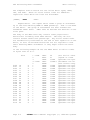
In the following example we use the REPT macro to build a table
of bytes from 20 to 0.
0014
0100
0101
0102
0103
0104
0105
0106
0107
0108
0109
010A
010B
010C
010D
010E
010F
0110
0111
0112
0113
0114
14
13
12
11
10
0F
0E
0D
0C
0B
0A
09
08
07
06
05
04
03
02
01
00
Page 6-2
A
A
A
A
A
A
A
A
A
A
A
A
A
A
A
A
A
A
A
A
A
1 ??VAR
2
3
4 ??VAR
5
1
1
1
1
1
1
1
1
1
1
1
1
1
1
1
1
1
1
1
1
I
DEFL
REPT
DEFB
DEFL
ENDM
DEFB
DEFB
DEFB
DEFB
DEFB
DEFB
DEFB
DEFB
DEFB
DEFB
DEFB
DEFB
DEFB
DEFB
DEFB
DEFB
DEFB
DEFB
DEFB
DEFB
DEFB
20
21
??VAR
??VAR-1
??VAR
??VAR
??VAR
??VAR
??VAR
??VAR
??VAR
??VAR
??VAR
??VAR
??VAR
??VAR
??VAR
??VAR
??VAR
??VAR
??VAR
??VAR
??VAR
??VAR
??VAR
;set initial value
;repeat 21 times
;generate the byte
;decrement the var
;end of macro body
;generate the byte
;generate the byte
;generate the byte
;generate the byte
;generate the byte
;generate the byte
;generate the byte
;generate the byte
;generate the byte
;generate the byte
;generate the byte
;generate the byte
;generate the byte
;generate the byte
;generate the byte
;generate the byte
;generate the byte
;generate the byte
;generate the byte
;generate the byte
;generate the byte
Z80ASM User's Manual Copyright (c) 1984 SLR Systems
Z80 Relocating Macro Assembler
[LABEL]
IRPC
Macro Facility
<DUMMY>,<CHARLIST>
Indefinite Repeat Character. The IRPC macro reads the body
of the macro, just like the REPT macro. The body of the macro is
then scanned and assembled once for each character in the given
CHARLIST. However, any occurrence of the item DUMMY in the body
is replaced by the current character in CHARLIST. Well, almost
any occurrence. See the section on dummy parameter evaluation.
As with the REPT macro, this can contain nested macros and
conditionals.
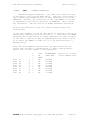
In the next example, we use an IRPC macro to generate a string of
characters, each with the high bit set to 1. Note that the DUMMY
parameter XX is replaced by a single character for each iteration
of the macro. Note also that an ampersand must be used in front
of or after the DUMMY in order for it to be replaced within a
quoted string.
Note also that comments started with two semi-colons are not
stored with the macro, and therefore 1.) don't take up memory
space, and 2.) don't appear in the expansion.
0100
0101
0102
0103
0104
0105
0106
0107
CD
C5
D3
D3
C1
C7
C5
B1
A
A
A
A
A
A
A
A
1
2
3
1
1
1
1
1
1
1
1
IRPC
DB
ENDM
DB
DB
DB
DB
DB
DB
DB
DB
XX,MESSAGE1
'&XX'+80H
;set hi bit of each
;;this comment gone
'M'+80H
'E'+80H
'S'+80H
'S'+80H
'A'+80H
'G'+80H
'E'+80H
'1'+80H
Z80ASM User's Manual Copyright (c) 1984 SLR Systems
Page 6-3
Z80 Relocating Macro Assembler
[LABEL]
IRP
Macro Facility
< DUMMY >,<<PARAMLIST>>
Indefinite Repeat. The IRP is very similar to the IRPC,
except that the parameters are multi-character items. Note that
the brackets around the PARAMLIST are required.
In the following example, we generate four error messages with
labels. Note that the label is constructed by "concatenating"
the letter M to the parameter. The ampersand (&) is used to do
that.
0100
0104
0108
010C
010F
0113
0117
011B
011F
0123
0127
012B
012F
0133
0137
013B
6D
69
4D
4F
6D
69
2E
53
6D
69
49
6D
69
2E
48
0D
Page 6-4
69
6E
41
0D
69
6E
50
45
69
6E
46
69
6E
44
41
0A
73
67
43
0A
73
67
48
0D
73
67
0D
73
67
45
53
73A
20A
52A
A
73A
20A
41A
0AA
73A
20A
0AA
73A
20A
50A
45A
A
1
2
3
4
1
1
1
1
1
1
1
1
1
1
1
1
1
1
1
1
5
mtlist
IRP
XX&M:
DEFB
ENDM
MACROM: DEFB
XX,<MACRO,.PHASE,IF,.DEPHASE>
'missing &XX',0DH,0Ah
'missing MACRO',0DH,0Ah
.PHASEM: DEFB
'missing .PHASE',0DH,0Ah
IFM:
'missing IF',0DH,0Ah
DEFB
.DEPHASEM: DEFB 'missing .DEPHASE',0DH,0Ah
Z80ASM User's Manual Copyright (c) 1984 SLR Systems
Z80 Relocating Macro Assembler
<LABEL>
MACRO
Macro Facility
[<DUMMYLIST>]
Macro Definition. This is the most sophisticated form of
macro item. This statement declares the beginning of a MACRO
definition. The <LABEL> must be present; it is the name by which
the macro will be referred to later. It follows the same rules
as labels. A colon after the label is optional.
The <DUMMYLIST> is optional. If present, it declares <dummy>
items which will be replaced by other items when the macro is
called. Multiple <dummy> items are separated by commas. <Dummy>
items follow the same rules as labels.
All source lines following the macro header are stored in memory
under the name <LABEL>, up to the next matching ENDM or MEND.
Since macros may contain macro definitions (nested macro
definitions), matching means the ENDM at the same nest level.
To call the macro, just use the macro name as you would any other
opcode or pseudo-op, passing with it any desired parameters.
Suppose you are writing a program for CP/M systems in which you
do a lot of displaying messages on the console. It might be nice
to design a macro that would let you easily do that. You could
then call the PRINT macro to print a string on the screen. For
example,
0100
0103
0105
0108
010B
011C
11
OE
CD
C3
54
010B
A
09
A
0005
A
011C
A
68 69 73A
A
1
2
3
4
5
6
7
8
9
10
1
2
3
4
5
6
11
PRINT
STRING
STEND
STRING
STEND
.LALL
MACRO
LD
LD
CALL
JP
DEFB
XX
DE,STRING
C,9
5
STEND
XX,0DH,0AH,'$'
ENDM
PRINT
LD
LD
CALL
JP
DEFB
'This is a test'
DE,STRING
C,9
5
STEND
'This is a test',0DH,0AH,'$'
Z80ASM User's Manual Copyright (c) 1984 SLR Systems
Page 6-5
Z80 Relocating Macro Assembler
Macro Facility
The line PRINT 'This is a test' generated the next 6 lines of
macro output, to set up the data and system call to output the
string on the console. But there is a problem. If the PRINT
macro had been called again, the labels STRING and STEND would
have been multiply defined, which is illegal (you won't go to
jail, your program just won't assemble).
One way around that would be to pass another parameter to concat
to the labels, to make them unique. Z80ASM provides another way,
which will be discussed next.
LOCAL
<LABELIST>
Local Labels. This pseudo-op declares a label or set of
labels to be local to the current macro expansion, i.e., each
time the macro is expanded or repeated, generate a unique label
for each of these. The labels in <LABELIST> must be legal
labels. The LOCAL statement should occur before the labels are
referenced in the macro.
Z80ASM implements LOCAL labels by generating a unique label for
each LOCAL consisting of two question marks followed by 4 hexadecimal digits. For example, the first LOCAL label encountered
in an assembly would be replaced by the label ??0001. Therefore,
you should avoid the use of labels that have that form in order
to lessen the chances of confusion.
LOCAL label replacement is done at expansion time, not at macro
definition time. This implies that parameters passed to a macro
that match a local symbol name will also be replaced by a local
label.
Note that LOCAL labels are valid in all macro types.
Page 6-6
Z80ASM User's Manual Copyright (c) 1984 SLR Systems
Z80 Relocating Macro Assembler
0100
0103
0105
0108
010B
011C
011C
011F
0121
0124
0127
013F
11
0E
CD
C3
54
A
010B
A
09
A
0005
A
011C
A
68 69 73A
A
11
0E
CD
C3
54
A
0127
A
09
A
0005
A
013F
A
68 69 73A
A
1
2 PRINT
3
4
5
6
7
8 STRING
9 STEND
10
1
2
3
4
5
6 ??0001
7 ??0002
11
12
1
2
3
4
5
6 ??0003
7 ??0004
13
14
Macro Facility
.LALL
MACRO
LOCAL
LD
LD
CALL
JP
DEFB
ENDM
PRINT
LOCAL
LD
LD
CALL
JP
DEFB
PRINT
LOCAL
LD
LD
CALL
JP
DEFB
XX
STRING,STEND
DE,STRING
C, 9
5
STEND
XX,0DH,0AH,'$'
'This is a test'
STRING,STEND
DE,??0001
C,9
5
??0002
'This is a test',0DH,0AH,'$'
'This is a STRING test'
STRING,STEND
DE,??0003
C,9
5
??0004
'This is a ??0003 test',0DH,0AH,'$'
END
Z80ASM User's Manual Copyright (c) 1984 SLR Systems
Page 6-7
Z80 Relocating Macro Assembler
Macro Facility
EXITM
Exit macro expansion. This pseudo-op allows an easy way to
terminate a macro expansion. It is usually used in conjunction
with a conditional test.
EXITM is also allowed in an include file or maclib file, to halt
the processing of those files.
Note that EXITM exits only a macro expansion, not a definition.
Use ENDM or MEND to end the macro definition.
INCLUDE
$INCLUDE
<FILENAME.EXT>
<FILENAME.EXT>
Include another source file. This pseudo-op takes as an
argument a valid CP/M file name. That disk file is then opened
and inserted at the point. Note that your listing line numbers
start over at 1, and that a letter precedes that number. That is
the nesting level. Any errors generated while processing this
included file will give the Included file name and line number in
that file. Note also that the included file can also contain an
INCLUDE directive. At the end of the included file, assembly
continues at the previous file, next line. This is a very
powerful feature for including common macro definitions, and even
assembling large projects without resorting to relocatable code.
MACLIB
<FILENAME.EXT>
Include Macro Definition File. This pseudo-op is identical
to an INCLUDE, except that it is ignored on the second pass.
This pseudo-op is used to read macro definition files, or any
source files that produce no output code. This is to save time
on 2-pass assemblies since the whole MACLIB file will be skipped
on the second pass.
Page 6-8
Z80ASM User's Manual Copyright (c) 1984 SLR Systems
Z80 Relocating Macro Assembler
Parameter Evaluation Rules
Dummy Parameter Evaluation
While reading the body of a macro, Z80ASM looks for the
occurrence of any of the optional dummy parameters in the text.
There are several rules that are followed.
1. Dummy parameters are not replaced in a comment field.
2. A dummy parameter delimited by spaces, tabs, commas, etc., and
not inside a quoted string, is automatically flagged for
replacement at expansion time.
3. Any dummy parameter preceded or followed by an ampersand (&),
whether or not it is contained in a quoted string, is flagged for
replacement, and the leading and/or trailing ampersand is
removed. This is useful for dummy replacement in strings, and
also for concatenating a parameter to something else.
4. Any dummy parameter preceded by an up-arrow (^) is ignored.
The up-arrow is used to cause a character to be taken literally,
i.e., an up-arrow can be represented as two up-arrows in
succession.
Z80ASM User's Manual Copyright (c) 1984 SLR Systems
Page 6-9
Z80 Relocating Macro Assembler
Parameter Evaluation Rules
Parameter Evaluation Rules
There are a number of special options available to the programmer
when it comes to parameter passing. Here we will describe the
rules that Z80ASM follows when evaluating parameters.
First, all leading blanks are skipped. In other words, the
parameter starts at the first non-blank character. That first
non-blank character determines what type of parameter is being
evaluated.
If the first character is a quotation mark (single or double),
then the parameter is processed as a STRING, following the rules
for strings. The leading and trailing quotation marks are passed
as part of the parameter.
If the first character is a '<' (less-than sign, refered to in
this discussion as a left bracket), then the '<' is removed, and
the text is processed up to the next matching '>'. By matching
we mean that the brackets are nestable, so that if there are
three left brackets, the parameter is processed up to the third
right bracket exclusive. Strings encountered in the bracketed
parameter are treated as such, and follow the rules for strings.
Brackets contained in a string are not counted as part of the
nesting level.
If the first character is a percent sign (%), then the expression
evaluator is called to process the following valid expression.
The expression must resolve to a defined absolute value. This
value (16-bit unsigned) is then converted to a number in the
current radix, which is then used as the parameter.
Otherwise, the item is treated as a regular old parameter.
Note that a special character in macros is the up-arrow. It
causes characters to be taken literally. For instance, to pass
an up-arrow (^) as a parameter, use two in succession. To pass a
semicolon as a parameter, use ^;, which is equivalent to <;>.
Try using the following parameter:
<This is a ^> and this is an ^^>
and see what you get.
Page 6-10
Z80ASM User's Manual Copyright (c) 1984 SLR Systems
Z80 Relocating Macro Assembler
Parameter Evaluation Rules
One condition that occurs very often is a macro call with a
missing or null parameter. This can be discovered at expansion
time by using the special operator NUL. NUL returns a true value
(-1) if what comes after it is nothing but tabs, spaces, comment
field, or an end of line. Anything else will return a false
value to NUL.
Look at the following example.
0055
0100
0104
0106
0107
0108
010A
010B
010C
010E
010F
0110
0112
0113
0114
0116
0117
0118
011A
011B
011C
011E
011F
0120
44 41 54 41A
0104
B
55
B
03
B
0108
B
55
B
0F
B
010C
B
55
B
0E
B
0110
B
55
B
14
B
0114
B
55
B
12
B
0118
B
55
B
0F
B
011C
B
55
B
0C
B
55
A
1
2
3
4
5
6
7
8
9
10
11
12
13
14
15
16
17
1
2
3
4
2
3
4
2
3
4
2
3
4
2
3
4
2
3
4
2
3
4
18
19
1
20
21
XX
EQU
55H
MAC1
MACRO
DEFB
IF
EXITM
ELSE
IRPC
LOCAL
DW
DEFB
DEFB
ENDM
ENDM
?XX,?YY
?YY
;SECOND
NUL ?XX
LABEL
??0001
??0002
??0003
??0004
??0005
??0006
??0007
XX,?XX
LABEL
LABEL
^^XX
'&XX'&1FH
MAC1
DEFB
DW
DEFB
DEFB
DW
DEFB
DEFB
DW
DEFB
DEFB
DW
DEFB
DEFB
DW
DEFB
DEFB
DW
DEFB
DEFB
DW
DEFB
DEFB
CONTROL,'DATA'
'DATA'
;SECOND
??0001
XX
'C'&1FH
??0002
XX
'O'&1FH
??0003
XX
'N'&1FH
??0004
XX
'T'&1FH
??0005
XX
'R'&1FH
??0006
XX
'O'&1FH
??0007
XX
"L'&1FH
MAC1
DEFB
,XX
XX
;
;SECOND
END
Z80ASM User's Manual Copyright (c) 1984 SLR Systems
Page 6-11
Z80 Relocating Macro Assembler
Listing Controls
5. Listing Controls
Z80ASM User's Manual Copyright (c) 1984 SLR Systems
Page 7-1
Z80 Relocating Macro Assembler
TITLE
Listing Controls
<ANYTHING>
Listing Title. This defines a new title to be put at the
top of subsequent pages of listing. Takes effect BEFORE this
line is printed, so this can be used in the first line of your
source file to put a title on the first page. The title may be
up to 80 characters, and may be truncated by Z80ASM to fit on the
page.
Note that any tabs are compressed to single spaces. CONFIG can
enable or disable the listing of the source line containing the
TITLE directive.
<ANYTHING> can be in one of two forms. If the first non-blank
character is a left paren, then the token is assumed to be in the
following form:
(STRING)
where STRING is a valid delimited string, like 'Hi there y''all'.
The delimiting quotes do not become part of the stored string.
If the first non-blank character is not a left paren, then the
stored string begins with the first non-blank up to the first
semicolon or CR. For example
TITLE
This is my
'Title'
TITLE
( 'This is my ''Title''')
and
are equivalent.
SUBTTL
$TITLE
<ANYTHING>
<ANYTHING>
Listing Subtitle. This defines the subtitle to be used on
subsequent listing pages. The subtitle can be up to 60
characters long. See TITLE for a definition of <ANYTHING>.
The default subtitle is the filename of the file being
assembled. The subtitle is reset upon entry and exit to/from any
INCLUDE file to the name of the current source file.
Page 7-2
Z80ASM User's Manual Copyright (c) 1984 SLR Systems
Z80 Relocating Macro Assembler
PAGE
EJECT
$EJECT
*EJECT
Listing Controls
[PLENGTH][,PWIDTH]
[PLENGTH][,PWIDTH]
[PLENGTH][,PWIDTH]
[PLENGTH][,PWIDTH]
Top of Page. If no parameters are given, this pseudo-op
causes a new page to be started in the listing. Otherwise, one
or two parameters are expected, the first being the new page
length in lines, and the second being the new page width in
columns. The standard default page length and width are set with
CONFIG. Note that spaces are allowed between the * and EJECT.
PAGE
80, 132
;page = 80 lines by 132 columns
LIST
.LIST
Listing On. This is the default mode. This has effect only
if a listing is being generated. This affects overall listing.
NLIST
.XLIST
No List. This pseudo-op stops all listing generation.
can be countered only by a subsequent LIST pseudo-op.
This
MTLIST
Multi-line List. This pseudo-op enables listing of extra
lines generated when the given source line generates more than 4
bytes of output. The default case is to just list the first 4
bytes with the source line. For instance, the line
DEFB
'I Like Peanut Butter'
generates 20 bytes of code. The default case will just list the
first four bytes, while MTLIST will cause 5 lines to be printed.
NMTLIST
No Multi-line List. This pseudo-op suppresses the listing
of extra lines of output caused by more than 4 bytes being generated from one source line. This is the standard default case.
Z80ASM User's Manual Copyright (c) 1984 SLR Systems
Page 7-3
Z80 Relocating Macro Assembler
Listing Controls
CLIST
.LFCOND
Conditional List. This pseudo-op enables listing of lines
contained in FALSE conditional assembly blocks. Standard default
is to list only the lines that are in TRUE conditional blocks.
NCLIST
.SFCOND
No Conditional Listing. This pseudo-op causes the
suppression of listing output during FALSE conditional block
processing. This is the standard default case.
.TFCOND
Toggle Conditional List. This pseudo-op causes the listing
of conditional blocks to be turned OFF if it was ON, and ON if it
was OFF.
.LALL
List All. This pseudo-op controls macro expansion listing
only. It causes Z80ASM to list every line of macro expansion
(does not override NLIST or .XLIST).
.SALL
Suppress All. This pseudo-op controls macro expansion
listing only. It causes the suppression of all macro expansion
listing.
.XALL
Partial List. This pseudo-op controls macro expansion
listing only. .XALL causes Z80ASM to list only the lines that
generate code output.
Page 7-4
Z80ASM User's Manual Copyright (c) 1984 SLR Systems
Z80 Relocating Macro Assembler
Miscellaneous Pseudo-ops
6. Miscellaneous Pseudo-ops
The ones that don't fit in anywhere else.
Z80ASM User's Manual Copyright (c) 1984 SLR Systems
Page 8-1
Z80 Relocating Macro Assembler
END
Miscellaneous Pseudo-ops
[STARTADR]
End directive. This signifies end of input file to the
assembler. The optional argument is used, in HEX and relocatable
mode, to signify a starting address for the program. Note: this
directive is ignored if encountered during a macro definition or
within a FALSE conditional block.
END
START
NAME
;start at start...
<ANYTHING>
Module name. Valid only in relocatable code, this assigns a
name to the generated relocatable module. If no name is defined,
Z80ASM uses the source file name as the module name. See TITLE
for a description of <ANYTHING>. Maximum size 16 chars. Syntax:
NAME
NAME
.REQUEST
MYFILE
('MYFILE')
<LIBLIST>
Request Library Search. This pseudo-op causes SLRNK to
search the given filename.REL for any undefined externals. The
modules are loaded as needed. The given filename.REL is assumed
to reside on the default disk at link time. Note that the
filename may be eight characters long in M-REL format, but only
six characters if you included a drive specifier. SLR Format
allows eight in either case (actually 16, but CP/M filenames are
limited to eight). Requests may pass more than one filename,
separated by commas. They will be searched in the order in which
they are defined. For example:
REQUEST
C:MYLIB,FORLIB
.Z80
This pseudo-op has no effect.
.CREF
Cross-reference ON. This pseudo-op turns on the crossreference builder for the subsequent source lines. This is the
default condition. This pseudo-op is useful only when crossreference generation has been selected by a command line option
or through CONFIG.
Page 8-2
Z80ASM User's Manual Copyright (c) 1984 SLR Systems
Z80 Relocating Macro Assembler
Miscellaneous Pseudo-ops
.XCREF
Cross-reference OFF. This pseudo-op turns off the crossreference builder for the subsequent lines of source up to the
next .CREF. Useful only when cross-reference generation is in
use, ignored otherwise.
.COMMENT <delim>
Comment text. This pseudo-op is used to turn text into a
comment. The next non-blank character defines the <delim>iter.
The rest of the source file up to line containing the next
<delim> character is considered a comment field. This is useful
for commenting out a chunk of code without putting a semicolon at
the beginning of each line.
.PRINTX
Print text. This pseudo-op takes the rest of the source
line and places it on the console. It is useful in displaying
messages, values of parameters (by passing the parameter using a
leading % to a macro containing .printx), etc.
.RADIX
<EXP>
Set input and output radix.
This pseudo-op is used to
change the default input and output radix from base 10 to
something else in the range of 2-16. The default radix is set to
10 before the <EXP> is processed. This is usually used to enter
a group of data in a base such as 16 without requiring the
trailing H. It also affects the base used in processing macro
parameters preceded by a %.
Z80ASM User's Manual Copyright (c) 1984 SLR Systems
Page 8-3
Z80 Relocating Macro Assembler
Error Message Summary
APPENDIX A - ERROR MESSAGE SUMMARY
There are many error conditions that Z80ASM can detect. This
section describes the error messages that can be generated.
Error messages are of the form:
FILENAME - ERROR MESSAGE Line # ?????
<This Line Is The Source Line That Contains The Error Condition>
where FILENAME is the name of the current file or macro being
processed, and ????? is the line number of that file or macro on
which the error was discovered.
Note: errors discovered while processing the intermediate code
give code address instead of line number for the error.
Bad Dummy Param
Dummy parameters must follow the syntax for valid
labels.
Bad File Name
Something is syntactically incorrect with the given
file name.
Bad Opcode
Something was found in the opcode field that is not in
the opcode list, pseudo-op list, or macro table.
Byte Out of Range
This can occur in several places, with meaning
depending on the instruction involved. For relative
jumps and indexed addressing, the value generated must
lie within the range of -128 to +127. For BIT, RES,
and SET instructions, the bit number must be between 0
and 7. For RST instructions, the operand must be 0, 8,
10H, 18H, etc. Finally, for the IM instruction, the
operand must be 0, 1, or 2. Something other than these
was calculated.
Z80ASM User's Manual Copyright (c) 1984 SLR Systems
Page A-1
Z80 Relocating Macro Assembler
Error Message Summary
Comma Expected
Guess what? You're right, a comma was expected.
Possibly something extra ahead of your comma, or else
your comma is missing. Or something.
Expression Error
This error message will only be generated if the
expression evaluator gets very confused. Should not
happen...
Extra Operand
Look at that line closely, Z80ASM found more items on
it than belonged. Possibly you just forgot a semicolon
before your comment, but it may be more critical than
that.
File Not Found
Z80ASM tried to open the given file unsuccessfully.
ID, (, or Unary Op Expected
The expression evaluator was looking for an ID (valid
number or label), left paren, or Unary Operator (such
as HIGH or LOW). Something else was there.
Illegal in Absolute File
A pseudo-op was encountered that is valid only in
relocatable assembly.
Illegal - 0 used
The expression could not be evaluated down to the type
required by the pseudo-op on this line. A zero was
used instead.
Intermediate Corrupt
An item was found while processing the intermediate
code that should not be there. Try to determine what
led up to that and report the bug.
Page A-2
Z80ASM User's Manual Copyright (c) 1984 SLR Systems
Z80 Relocating Macro Assembler
Error Message Summary
Line Too Long
Source lines are limited to 127 characters in length.
Macro Redef
Macro Table is confused about a macro redefinition.
Possibly you redefined the macro differently on
different passes through MACLIB, IF1, IF2 or some other
conditional situation. Macro redefinition is allowed,
but obviously must be the same on each pass.
Missing .DEPHASE
Something was encountered that is illegal inside a
PHASE block. Possibly you forgot a .DEPHASE pseudo-op.
Missing ENDIF
Oops! End of file encountered while in a conditional.
Where was your ENDIF ?
Missing ENDM
Oops! End of file encountered while building a macro.
Probably a missing ENDM or MEND.
Missing IF
An ELSE or ENDIF without IF.
Missing MACRO
Something was encountered that is not legal outside a
macro, such as an ENDM, MEND, or LOCAL.
Missing
.PHASE
A .DEPHASE pseudo-op was found without a preceding
.PHASE pseudo-op. Check your phase blocking.
No Backing Up in COM File
Only in absolute mode, COM type files. The address
given in the ORG statement is smaller than the last
location generated. You cannot go backwards while
generating a COM file.
Z80ASM User's Manual Copyright (c) 1984 SLR Systems
Page A-3
Z80 Relocating Macro Assembler
Error Message Summary
Out Of Memory
No room left in memory. Symbol table, macro table,
include tables, cross-reference table, etc, must all
fit into memory. Ask about Z80ASM+.
Previously Defined
This LABEL has been defined already elsewhere in the
file and is being redefined with something other than a
DEFL. Change the name of one of your labels.
String Syntax
Strings can contain only printable characters. Either
your string contains a control character (such as a
TAB), or you forgot the trailing quotation mark.
Symbol Expected
Something was found that is illegal as an operation or
label. Probably something was mis-typed on the line.
Syntax Error
This message appears when the assembler is too confused
to know what went wrong.
Too Many Commons
An attempt was made to define more than 12 common
blocks. That is the limit. Ask about Z80ASM+.
Unexpected EOF
The end of the source file was found at an inopportune
time.
')' Expected
Somewhat self-explanatory.
Page A-4
Z80ASM User's Manual Copyright (c) 1984 SLR Systems
Z80 Relocating Macro Assembler
Error Message Summary
'/' Expected
Somewhat self-explanatory. Common block name must be
delimited by slashes, and contain only valid label-type
characters.
), Bin-op, or End of Exp Expected
Well, the expression evaluator was looking for one of
the above, a right paren, a binary operator (an
operator that takes two arguments, such as * or /), or
an end-of-expression delimiter. Something else was
there.
Z80ASM User's Manual Copyright (c) 1984 SLR Systems
Page A-5
Z80 Relocating Macro Assembler
Zilog Z80 Instruction Set
APPENDIX B - ZILOG Z80 INSTRUCTION SET
The following definitions are used throughout this description of
the ZILOG Z80 Instruction Set.
cc
dd
nn
(nn)
n
r
d
b
ss
pp
qq
rr
ir
m
s
C, NC, Z, NZ, P, M, PE, or PO (V & NV allowed in
Z80ASM in place of PE and PO)
C, NC, Z, or NZ
Any 16-bit number or expression
Represents the contents of address nn
Any 8-bit number or expression
Register A, B, C, D, E, H, or L
A one-byte expression in the range -128 to 127
Expression in the range 0 through 7
Register pairs BC, DE, HL, SP
Register pairs BC, DE, IX, SP
Register pairs BC, DE, HL, AF
Register pairs BC, DE, IY, SP
(HL), (IX+d), or (IY+d)
r, (HL), (IX+d), or (IY+d)
r, n, (HL), (IX+d), or (IY+d)
ADC HL,ss
ADC A,s
ADD A,n
ADD A,r
ADD A,(ir)
ADD HL,ss
ADD IX, pp
ADD IY,rr
AND s
BIT b,m
CALL cc,nn
CALL nn
CCF
CP s
CPD
CPDR
CPI
CPIR
CPL
DAA
DEC m
DEC IX
DEC IY
DEC ss
DI
DJNZ e
EI
EX (SP),HL
EX (SP),IX
HL = HL + Carry + ss
Acc = Acc + Carry + s
Acc = Acc + n
Acc = Acc + r
Acc = Acc + (ir)
HL = HL + ss
IX = IX + pp
IY = IY + rr
Acc = Acc AND s
Z = BIT b of m
IF cc is true, call subroutine at nn
Call subroutine at nn
Complement Carry
Set Flags as result of Acc - s
CP (HL), DEC HL, DEC BC
CP (HL), DEC HL, DEC BC, Rpt till BC=0 or Acc=(HL)
CP (HL), INC HL, DEC BC
CP (HL), INC HL, DEC BC, Rpt till BC=0 or Acc=(HL)
Complement Acc - Acc = -(Acc + 1)
Decimal Adjust Acc
m = m - 1
IX = IX - 1
IY = IY - 1
ss = ss - 1
Disable interrupts
B = B - 1, if B<>, Jump to e
Enable interrupts
Exchange HL with (SP) top of stack
Exchange IX with (SP) top of stack
Z80ASM User's Manual Copyright (c) 1984 SLR Systems
Page B-1
Z80 Relocating Macro Assembler
EX (SP),IY
EX AF,AF'
EX DE,HL
EXX
HALT
IM 0
IM 1
IM 2
IN A,(n)
IN r,(C)
INC m
INC IX
INC IY
INC ss
IND
INDR
INI
INIR
JP (HL)
JP (IX)
JP (IY)
JP cc,nn
JP nn
JR dd.nn
JR nn
LD A,(BC)
LD A,(DE)
LD A,I
LD A,(nn)
LD A,R
LD (BC),A
LD (DE),A
LD (ir),n
LD (ir),r
LD ss,nn
LD ss,(nn)
LD I,A
LD IX,nn
LD IX,(nn)
LD IY,nn
LD IY,(nn)
LD (nn),A
LD (nn),ss
LD (nn),HL
LD (nn),IX
LD (nn),IY
LD R,A
LD r,(ir)
LD r,n
LD r,r
LD SP,HL
LD SP,IX
LD SP,IY
LDD
LDDR
Page B-2
Zilog Z80 Instruction Set
Exchange IY with (SP) top of stack
Exchange AF with AF'
Exchange DE with HL
Exchange HL, DE, & BC with HL', DE', & BC'
Halt CPU till interrupt or reset
Select Interrupt Mode 0
Select Interrupt Mode 1
Select Interrupt Mode 2
Acc = input from port n
r = input from port (C)
m = m + 1
IX = IX + 1
IY = IY + 1
ss = ss + 1
(HL) = input from port (C), DEC HL, DEC B
(HL) = input from port (C), DEC HL, DEC B,
(HL) = input from port (C), INC HL, DEC B
(HL) = input from port (C), INC HL, DEC B,
PC = HL (Jump to location (HL))
PC = IX
PC = IY
If cc is true, PC = nn
PC = nn
If dd is true, jump relative to nn
Jump relative to nn
Acc = contents of location (BC)
Acc = (DE)
Acc = I (Interrupt Vector Reg)
Acc = location nn
Acc = R (Refresh Reg)
location (BC) = Acc
location (DE) = Acc
Store n in location (ir)
Store r in location (ir)
ss = nn
ss = contents of nn
I = Acc
IX = nn
IX = contents of nn
IY = nn
IY = contents of nn
Store a in location (nn)
Store ss in location (nn)
Store HL in location (nn)
Store IX in location (nn)
Store IY in location (nn)
Store A in R
r = location (ir)
r = n
r = r
SP = HL
SP = IX
SP = IY
Location (DE) = Location (HL), DEC HL, DE,
(DE) = (HL), DEC HL, DE, & BC, REPEAT TILL
Z80ASM User's Manual Copyright
rpt till B=0
rpt till B=0
& BC
BC=0
(c) 1984 SLR Systems
Z80 Relocating Macro Assembler
LDI
LDIR
NEG
NOP
OR s
OTDR
OTIR
OUT (C), r
OUT (n),A
OUTD
OUT1
POP IX
POP IY
POP qq
PUSH IX
PUSH IY
PUSH qq
RES b,m
RET
RET cc
RETI
RETN
RL m
RLA
RLC m
RLCA
RLD
RR m
RRA
RRC m
RRCA
RRD
RST p
SBC A,s
SBC HL,ss
SCF
SET b,m
SLA m
SRA m
SRL m
SUB s
XOR s
Zilog Z80 Instruction Set
Location (DE) = Location (HL), INC HL & DE, DEC BC
(DE) = (HL), INC HL & DE, DEC BC, Repeat till BC=0
Acc = -Acc
Nothing
Acc = Acc OR s
Port (C) = (HL), DEC HL & B, Repeat till B = 0
Port (C) = (HL), INC HL, DEC B, Repeat till B=0
Port (C) = r
Port n = A
Port (C) = (HL), DEC HL & B
Port (C) = (HL), INC HL, DEC B
IX = (SP), SP = SP + 2
IY = (SP), SP = SP + 2
qq = (SP), SP = SP + 2
SP = SP - 2, (SP) = IX
SP = SP - 2, (SP) = IY
SP = SP - 2, (SP) = qq
Reset bit b of m
PC = (SP), SP = SP + 2 (Return from sub.)
If cc is true, PC = (SP), SP = SP + 2
Return from interrupt
Return from non-maskable interrupt
Rotate m left through carry
Rotate Acc left through carry
Rotate ma left circular
Rotate Acc left circular
Rotate (HL) & Lower nibble of Acc left 4 bits
Rotate m right through carry
Rotate Acc right through carry
Rotate m right circular
Rotate Acc right circular
Rotate (HL) & Lower nibble of Acc right 4 bits
SP = SP - 2, (SP) = PC, PC = p (Single byte call)
Acc = Acc - Carry - s
HL = HL - Carry - ss
Set Carry Flag
Set bit b of m
Shift m left arithmetic
Shift m right arithmetic
Shift m right logical
Acc = Acc - s
Acc = Acc XOR s
Z80ASM User's Manual Copyright (c) 1984 SLR Systems
Page B-3
Z80 Relocating Macro Assembler
INTEL Hex File Format
APPENDIX C - INTEL HEX FILE FORMAT
The HEX file optionally generated by Z80ASM is the standard INTEL
format HEX file. The file consists of one or more records of
ASCII text defined below.
Record Syntax
:NNAAAATTDDDDDDDDDDDDDDDDDDXX
The first character is a colon (:)
The next two characters (NN) define the record length (00 - FF)
If the length is non-zero:
AAAA Defines the load address of the record.
reading, i.e., High byte first.
It is forward
The next two characters are the record type.
for data records, 01 for ending record.
TT is always zero
The following NN*2 characters define the actual binary to be
loaded starting at AAAA.
XX is a checksum byte which, when added to the sum of all the
previous bytes in this record, gives a total of zero (mod 256).
If NN = 0, then the value at AAAA is the optional starting or
execution address. A record length zero also signifies end-offile.
Z80ASM User's Manual Copyright (c) 1984 SLR Systems
Page C-1
Z80 Relocating Macro Assembler
CONFIG Utility
APPENDIX D - CONFIG UTILITY
The configuration utility CONFIG.COM provided with Z80ASM allows
easy customization of Z80ASM to a particular set of requirements.
This section briefly describes its use.
To run CONFIG, type
A>CONFIG Z80ASM.COM
where Z80ASM.COM is the file name you want to customize.
CONFIG will respond with a series of questions requesting flag
settings or item values. In parentheses is the current value of
that item. You can modify the current value by typing a new one,
or the item can be left the same by just entering a CR. The
process can be aborted by typing a ^C. After the last question
is answered, CONFIG will write out the new settings.
Now we will explain each question that CONFIG asks.
Page Width (80) The current default page width is 80 columns. Any listing
output wider than that will be truncated. This should be set to
the width of the printer you use most often, in columns (255
max). This parameter can be changed at assembly time with the
PAGE pseudo-op.
Page Length (60) The current default page length is 60 lines. A form feed
will be generated after every 60 lines of listing. This should
be modified if your page size is different. This parameter can
be modified at assembly time with the PAGE pseudo-op.
Special Bits
This allows you to modify the default assembly type, which
is: absolute, COM-type, Lower to upper is enabled, no symbol
table, no cross-reference, no automatic Externals. CONFIG tells
you what the different bits in the byte stand for. You can
toggle any bit by just typing in a number from 0 to 7. To leave
that item the way it is, just type CR.
Z80ASM User's Manual Copyright (c) 1984 SLR Systems
Page D-1
Z80 Relocating Macro Assembler
CONFIG Utility
List more than 4 bytes of object code (N) The default setting is to list up to 4 bytes of object code
for each source line. Any more than that (such as in a DB
string) are not printed. A Y in this flag would cause extra
bytes to be printed on successive listing lines, four per line.
This flag has the same effect as the MTLIST & NMTLIST pseudo-ops.
List lines encountered during false conditionals (N) The default setting is to suppress the listing of lines
encountered during a false conditional block. A Y in this flag
will cause false conditional lines to be printed. This flag can
be modified at assembly time by the CLIST and NCLIST pseudo-ops.
Form Feed at start of listing (N) The default setting causes no top-of-form to be issued
before the first line is printed. This assumes that your printer
is already at the top of a new page when the listing begins. If
you want a leading Form Feed, just type a Y here.
Macro Listing Option - 1=.IALL, 2=.XALL, 4=.SALL (2) This controls the macro listing default setting. Read the
descriptions of .LALL, .XALL, and .SALL to see if you want to
change the default setting. You can change it by typing a 1, 2,
or 4.
Generate 6 Significant in M-Rel instead of 7 (N) The Microsoft REL format supports 7 significant characters
for globals and externals. However, most software that utilizes
M-Rel format truncates to 6 characters (Fortran compatibility ?).
You have your choice of 6 or 7 characters of significance.
Print 16-bit values in logical direction (Y) This controls the byte order (in the listing) for 16-bit
values when printed. If you prefer to see the bytes in the order
generated, use an N. The default case prints the high byte
first.
Suppress Lines Containing PAGE, TITLE, etc (N) This controls the listing of lines that contain the pseudoops PAGE, TITLE, and .PRINTX. A Y here will cause those lines to
be suppressed from any listing.
Page D-2
Z80ASM User's Manual Copyright (c) 1984 PLR Systems
Z80 Relocating Macro Assembler
CONFIG Utility
Disable Interrupts (N) Z80ASM was written to take full advantage of the Z80
architecture and instruction set for reasons that are selfexplanatory when you see it run. Certain systems that are 'Z80'
CP/M machines do not provide a true Z80 environment. If your
system is interrupt driven and destroys any Z80 registers on
interrupts, a Y here will cause Z80ASM to disable interrupts
whenever any special Z80 registers are in use. Interrupts will
always be enabled during any system calls.
Force Form Feed before Summary (N) This allows you to control the summary printing. By
default, the summary will be printed at the end of the listing.
You can force the summary to be placed at the top of a new page
by putting a Y here.
Form Feed at End of Listing (Y) This causes Z80ASM to issue a form feed at the end of all
listing output. This usually makes it easier for you to remove
the listing from your printer, and also sets the top-of-form for
the next listing without wasting any paper. The Form Feed can be
eliminated by typing an N here.
Time and Date in Listing (N) If you are running on a system that provides time & date,
Z80ASM provides the ability to have the time and date printed on
the title line of your listing. To enable this, put a Y here.
Special TIME & DATE Items
The next three questions may be ignored if you 1) answered H
to the above question, or 2) you are running under an operating
system that provides MP/M compatible time and date (CP/M Plus,
TurboDos, etc.).
If your system supports time and date, but not the system
call 105 to return time and date, you can still have Z80ASM
utilize your time and date information. The information must
either be in the same form as that supplied by CP/M Plus:
DW
DATE
DB
DB
HOURS
MINUTES
;Number of days since 1 Jan 1978
;with 0001 being 1 Jan 1978
;Hour of the day in BCD
;Minutes of the hour in BCD
or it must be in ASCII, 16 chars max, terminated by a -1.
Z80ASM User's Manual Copyright
(c) 1984 SLR Systems
Page D-3
Z80 Relocating Macro Assembler
CONFIG Utility
If you can get your time and date formatted like that somewhere
in your system, you can just tell CONFIG that you are supplying
the address of the data. If you need to have some code executed
to retrieve the time and date, Z80ASM will optionally call a
subroutine for you, you just supply the address of the routine.
The routine must emulate the System Call 105, that being, Z80ASM
will supply an address in DE where you should store one of the
above structures. All Z80 registers are available for your use,
just be careful not to get too deep on the stack (you have 30
bytes to play with). Then lastly you need to tell Z80ASM which
structure type you are returning.
Take advantage of multi-sector I/O (Y) System call 12 tells Z80ASM whether multi-sector I/O is
available or not, at least usually. Certain 'CP/M compatible'
operating systems return a code saying they are CP/M Plus or MP/M
compatible, but they don't support multi-sector I/O. If that is
your case, you will need to answer N here.
Use Statement #'s instead of Line # in file (N) This allows you to choose between two different linenumbering schemes. Statement #'s are numbers assigned as the
listing is generated. This causes numbers to be generated in
numerical order even when macro's are expanded, include files
processed, etc. Line #'s are the actual line number in the
source file being processed. These reset to 1 on include files.
macro expansions, etc, are fully nestable, and refer to the line
# in the item being processed. These are the numbers used in
error messages. Statement numbers can be more meaningful for
cross-references using include files and macros.
Print Line/Stmt # first on listing line (N) This allows you to select the order of certain items in the
listing line. A Y causes the line number to be listed first,
whereas an N causes the hexadecimal values to be listed first.
Suit yourself!
Number of errors on which to abort (100) This option provides a limit on the number of errors Z80ASM
will process before aborting the current assembly. A value of 0
will cause this option to be ignored.
Page D-4
Z80ASM User's Manual Copyright (c) 1984 ?LR Systems
Z80 Relocating Macro Assembler
CONFIG Utility
Number of lines per console page (0=no paging) (24) This provides paging for all console output, pausing for
operator intervention after N lines. A value of zero causes this
option to be ignored.
Number of bytes (1-60) per line of HEX output (32) This option allows you to specify the number of bytes per
line when generating a .HEX file. Certain emulators, PROM
programmers, etc are very particular about the format for 'IntelStandard' HEX format.
Close & ReOpen file in 2-pass mode (N) This option is used for CP/M 'lookalikes' that don't like
the way Z80ASM optimizes disk I/O. Molecular Computer users may
need to set this flag when assembling files larger than one
extent.
Require : if label not in column one (Y) This option allows full free form source lines. Be careful
if you select N, because mistyped opcodes will be treated as
labels, and no error generated.
Conditionals test only bit 0 (DRI compatibility) (N) This option, when set to N, causes 0 to be treated as false,
and anything else as true. If this option is set to Y, then if
bit 0 is off, that is false, bit 0 on is true, and all other bits
are ignored.
Suppress IF parameter errors in 1 pass mode (N) This option will disable the reporting of IF operand errors
in one-pass mode. IF operands containing forward references can
cause different sections of code to be assembled on different
passes, which will go undetected in one pass mode.
Ignore leading space & tab chars in IF <> types (Y) This option controls the significance of spaces and tabs in
IF string parameter processing. IFB < > will return FALSE if
this option is set to N (M80 compatible, space is not blank), but
will return TRUE if set to Y.
Z80ASM User's Manual Copyright (c) 1984 SLR Systems
Page D-5
Z80 Relocating Macro Assembler
CONFIG Utility
Fill unused space with 0 (N) or FF (Y) in COM (N) This option is used to define the fill byte used in filling
uninitialized space when generating a COM file.
Generate Empty External Chains (M-REL) (N) Normally symbols that are declared external but never
referenced are not entered into the REL file. This option forces
generation of all externals. Some compilers expect the assembler
to strip unneeded externals, while others select library options
by simply declaring labels external.
ASEG Default to 0H instead of 100H (N) The first ASEG encountered defaults to 100H for standard
CP/M program generation. This can be changed to 0 for M80
compatability.
ORG <ABSOLUTE> Yields Offset in Current Space (N) Normally an implied ASEG is performed when ORG is passed an
absolute parameter. This option allows that absolute number to
be treated as an offset in the current address space.
The next series of prompts allow you to change the
extensions looked for or generated on several different files.
To change the extension, just type a new one, otherwise type a
CR.
Extension for source File (Z80) This is the source file being assembled. The default case
looks for an extension of Z80. You can change it to ASM, MAC,
SRC, or whatever you like.
Extension for relocatable File (REL) This is the extension generated when you are creating a
binary output file in relocatable mode.
Extension for absolute binary File (COM) This is the extension generated when you are creating a
binary output file in absolute core-image mode.
Page D-6
Z80ASM User's Manual Copyright (c) 1984 SLR Systems
Z80 Relocating Macro Assembler
CONFIG Utility
Extension for Intel-Hex format file (HEX) This is the extension generated when you are creating a
binary output file in absolute Intel-hex (/H) mode.
Extension for listing
file (LST) -
This is the extension used when generating a listing file to
disk.
Extension for temporary file ($$1) This is the extension used for the temporary file generated
if the intermediate code overflows in one-pass mode.
Extension for
/I file (SUB) -
This is the extension looked for on the specified indirect
command file.
Default Ext for MACLIB file (MAC) This is the default extension used for filenames given in a
MACLIB or INCLUDE statement.
Leader String to send to printer (1B,51,) This allows you to specify a setup string of up to 8 bytes
to be sent to the printer before a listing is started. You can
use it to select compressed print, one-pass print, or just blank
it out with an FF. Note that this string is sent only if you use
the /P option, not a drive type of 'Y'.
Trailer String to send to printer (1B,4E,) This allows you to undo whatever you did above.
is only done with a /P.
Again, this
At this point, CONFIG writes the changes the specified file.
That's it!
Z80ASM User's Manual Copyright (c) 1984 SLR Systems
Page D-7
Z80 Relocating Macro Assembler
ASCII Table
APPENDIX E - ASCII TABLE
ASCII CHARACTER SET
The ASCII character set consists of single codes in the range of
0 to 7FH inclusive. This is always nice to have around when you
need it.
BIT 6
I
5
C
T
4
O
3210 ROW L
0000
0
0001
1
0010
2
0011
3
0100
4
0101
5
0110
6
0111
7
1000
8
1001
9
1010
10
1011
11
1100
12
1101
13
1110
14
1111
15
0
0
0
0
0
0
1
1
1
0
1
0
0
NUL
SOH
STX
ETX
EOT
ENQ
ACK
BEL
BS
HT
VF
VT
FF
CR
SO
SI
1
DLE
DC1
DC2
DC3
DC4
NAK
SYN
ETB
CAN
EM
SUB
ESC
FS
GS
RS
US
2
SP
!
"
#
$
%
&
'
(
)
*
+
,
.
/
1
0
1
3
0
1
2
3
4
5
6
7
8
9
:
;
<
=
>
?
1
0
0
4
@
A
B
C
D
E
F
G
H
I
J
K
L
M
N
O
1
1
1
5
P
Q
R
S
T
U
V
W
X
Y
Z
[
\
]
^
_
1
0
6
`
a
b
c
d
d
f
g
h
i
j
k
l
m
n
o
Z80ASM User's Manual Copyright (c) 1984 SLR Systems
1
7
p
q
r
s
t
u
v
w
x
y
z
{
|
}
~
DEL
Page E-1
Z80 Relocating Macro Assembler
Limited Warranty
APPENDIX F - LIMITED WARRANTY
SLR Systems disclaims any warranty as to this product.
SELLER MAKES NO WARRANTY EXPRESS OR IMPLIED, AND ANY
IMPLIED WARRANTY OF MERCHANTABILITY OR FITNESS FOR A
PARTICULAR PURPOSE WHICH EXCEEDS THE FOREGOING
WARRANTY IS HEREBY DISCLAIMED BY SELLER AND EXCLUDED
FROM ANY AGREEMENT.
Buyer exclusively waives its rights to any consequential damages,
loss or expense arising in connection with the use of or the
inability to use its goods for any purpose whatsoever.
No warranty shall be applicable to any damages arising out of any
act of the Buyer, his employees, agents, patrons or other
persons.
The remedies set forth herein are exclusive and the liability of
Seller to any contract or sale or anything done in connection
therewith, whether in contract, in tort, under any warranty, or
otherwise, shall not, except as expressly provided herein, exceed
the price of the equipment or part on which said liability is
based.
No employee or representative of Seller is authorized to change
this warranty in any way or grant any other guarantee or
warranty.
Z80ASM User's Manual Copyright (c) 1984 SLR Systems
Page F-1