1
Total RNA Isolation
Problem
Possible cause and suggestions
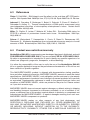
rDNase not active
•
Reconstitute and store lyophilized rDNase according to
instructions given in section 3.
DNase solution not properly applied
•
Pipette rDNase solution directly onto the center of the silica
membrane and close the lid.
Too much cell material used
•
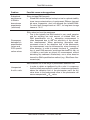
Contamination
of RNA with
genomic DNA
Reduce quantity of cells or tissue used.
DNA detection system too sensitive
•
The amount of DNA contamination is effectively reduced
during the on-column digestion with rDNase. Anyhow, it can
not be guaranteed that the purified RNA is 100 % free of
DNA, therefore in very sensitive applications it might still be
possible to detect DNA.
The probability of DNA detection with PCR increases with:
- the number of DNA copies per preparation: single copy
target < plastidial / mitochondrial target < plasmid transfected
into cells
- decreasing of PCR amplicon size.
•
Use larger PCR targets (e.g., > 500 bp) or intron spanning
primers if possible.
•
Use support protocol 5.4 for subsequent rDNase digestion in solution.
Carry-over of ethanol or salt
Suboptimal
performance
of RNA in
downstream
experiments
30
•
Do not let the flow-through touch the column outlet after
the second Buffer RA3 wash. Be sure to centrifuge at the
corresponding speed for the respective time in order to
remove ethanolic Buffer RA3 completely.
•
Check if Buffer RA3 has been equilibrated to room temperature before use. Washing at lower temperatures lowers
efficiency of salt removal by Buffer RA3.
•
Depending on the robustness of the used RT-PCR system,
RT-PCR might be inhibited if complete eluates are used as
template for RT-PCR. Use less eluate as template.
MACHEREY-NAGEL – 01 / 2010, Rev. 04