1
Total RNA Isolation
Cultured animal cells are often tough and should be disrupted mechanically to
be available for lysis. Depending on the disruption method, the viscosity of the lysed
sample has to be reduced further for optimal results. It is essential for efficient RNA
preparation that all the RNA contained in the sample is released from the cells by
disruption and that the viscosity of the sample is reduced by homogenization.
Thawing of undisrupted animal tissue should only be done in the presence of Buffer RA1
under simultaneous mechanical disruption, for example with a rotor-stator homogenizer
or a bead mill. This ensures that the RNA is not degraded by RNases before the preparation has started.
Commonly used techniques for disruption of animal tissues are, for example grinding
with pestle and mortar or using a syringe and needle for multiple passage of the
sample through the needle. However, due to the small size of samples to be processed
with NucleoSpin® RNA XS these disruption methods are often not suitable.
Recommended disruption and homogenization methods
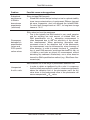
The simple addition of lysis buffer and subsequent vortexing is usually sufficient to
disrupt and homogenize for example up to 104 cultured cells, laser captured cells, or
microdissected cryosections.
Tissue can be homogenized using a rotor-stator homogenizer. The spinning rotor
disrupts and simultaneously homogenizes the sample which is submerged in lysis
buffer by shearing within seconds up to minutes (homogenization time depends on
sample). Keep the rotor tip submerged to avoid excess foaming. Select a suitably sized
homogenizer (5 – 7 mm diameter rotors can be used for homogenization in microcentrifuge tubes).
Bead-milling disrupts the tissue samples, submerged in lysis buffer, by rapid agitation
in the presence of beads. Suitable disruption parameters (type, size and number of
beads, tube type, speed and time of agitation) have to be determined empirically for
each application.
MACHEREY-NAGEL – 01 / 2010, Rev. 04
9