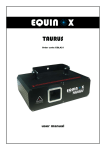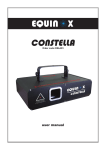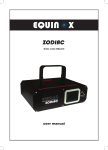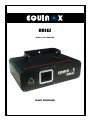
1
Equinox Aries Laser
Safety
Class 3B Laser Safety Guide
Warning
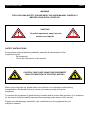
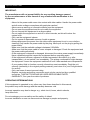
Class 3B Lasers have the potential to harm eyesight if viewed directly and can also be
harmful at long distances.
Any unit that contains a laser diode has to be classified depending upon the light output that
someone may be exposed to. All laser products are classed as defined in the
Laser Product Safety Standard (BS/EN 60825.1). The classes range from the safest, which is
Class 1, through to the most hazardous, which is Class 4. A laser diode that emits more than 5mW
of light and less than 500mW can be classified as a Class 3B product.
Operation and installation Notes
Laser effects should only be installed and operated by persons who have been trained in how to
operate laser effects safely.
Laser effects should be located in a safe and secure position in the venue, so that once installed it
cannot be tampered with by unauthorized users.
Before operation the path of the laser beams should be taken into account in respect to how the
beams will scan the viewing audience.
If direct audience scanning is to be used then the laser energy levels from the effects needs to be
calculated.
Health
If used responsibly and in accordance with the relevant guidance issued by the Health and Safety
Executive a laser effect will not present a hazard to those viewing the show as long as the laser
beams are projected over the heads of the viewing audience. When laser effects are directed into
the audience area it becomes difficult to tell if the effects are causing harm.
Class 3B laser beams can be harmful to eyesight if viewed directly The injury that a Class 3B
laser can inflict is dependant upon several varients, including the amount of time the laser beam
enters the eye for, the intensity of beam and what part of the eye that actually receives the beam.
The part of the eye which is most susceptible to receive damage from the beam is the retina. The
retina is the part of the eye that receives the light signals that are sent to brain. All light entering
the eye gets focused onto the retina.
Normal light sources including halogen lamps are not usually harmful to view. Lasers are different
in the fact that they can get the beam focused down to a very small point on the retina which can
burn holes on the back wall of the eye. There are no pain receptors on the retina and the damage
can happen in less time than it takes for a person to blink so the person will be not be aware of
any damage taking place. Damage to the retina cannot be repaired and therefore is permanent.
Symptoms include severe loss of sight and unnoticeable vision loss.