1
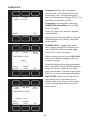
The PD algorithm is the PID algorithm used on most Alicat controllers.
It is divided into two segments:
The first compares the process value to the set-point to generate a proportional
error. The proportional error is multiplied by the ‘P’ gain, with the result added
to the output drive register.
The second operates on the present process value minus the process value during
the immediately previous evaluation cycle. This ‘velocity’ term in multiplied by
the ‘D’ gain, with the result subtracted from the output drive register.
The above additions to and subtractions from the output drive register
are carried over from process cycle to process cycle, thus performing the
integration function automatically.
Increasing the ‘P’ gain will promote the tendency of the system to overshoot,
ring, or oscillate.
Increasing the ‘D’ gain will reduce the tendency of the system to overshoot.
The PD2I algorithm is a PID algorithm used primarily for high performance
pressure and flow control applications.
It exhibits two basic differences from the PD algorithm that most controllers utilize.
1. Instead of applying a damping function based upon the rate of change of the
process value, it applies a damping function based upon the square of the rate of
change of the process value.
2. The damping function is applied directly to the proportional error term
before that term is used in the proportional and integral functions of the
algorithm. This provides a certain amount of ‘look ahead’ capability in the
control loop.
Because of these differences, you will note the following:
1. Increasing ‘P’ gain can be used to damp out overshoot and slow oscillations
in pressure controllers. You will know that ‘P’ gain is too high, when the
controller breaks into fast oscillations on step changes in set-point. On flow
controllers, too high a ‘P’ gain results in slower response times. Too low a ‘P’
gain results in overshoot and/or slow oscillation. A good starting value for ‘P’
gain is 200.
2. If the unit was originally shipped with the PD2I algorithm selected, the
‘D’ gain value should be left at or near the factory setting because it relates
primarily to the system phase lags. If you are changing from the default
algorithm to the PD2I algorithm, you should start with a ‘D’ gain value of 20.
3. The ‘I’ gain is used to control the rate at which the process converges
to the set-point, after the initial step change. Too low a value for ‘I’ gain
shows up as a process value that jumps to near the set-point and then takes
awhile to converge the rest of the way. Too high a value for ‘I’ gain results in
oscillation. A good starting value for the ‘I’ gain is 200.
21