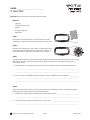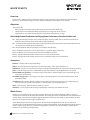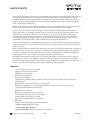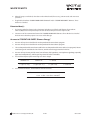
1
Uniting Native Indigenous Traditional Education with University Science (UNITE US) Classroom Lessons Project Year Two, Level C Things Are Heating Up .......................................................................................C-1 Noctilucent Clouds ...........................................................................................C-14 Invasive Species ..............................................................................................C-33 Climate Impacts: Salmon .................................................................................C-40 Harbingers Of Change .....................................................................................C-50 Solar Energy ....................................................................................................C-62 Wind Generators ..............................................................................................C-76 Hydrokinetic Power ..........................................................................................C-95 Waste To Watts ..............................................................................................C-105 Exploring Traditional Values ..........................................................................C-123 Level C Stewardship Project is located under a separate tab within this manual. THINGS ARE HEATING UP Overview: This lesson provides an overview of climate change indicators in the Arctic and subarctic as well as possible impacts brought about by climate change, including ways climate change may affect students’ communities. Objectives: The student will: • identify indicators of climate change in Alaska; • write a paragraph that integrates and connects information about climate change in Alaska; • predict implications of climate change in Alaska for local communities; and • visually depict a selected aspect of climate change in Alaska. Targeted Alaska Reading Performance Standards for the High School Graduation Qualifying Exam R4.2 Summarize information or ideas from a text and make connections between summarized information or sets of ideas and related topics or information. R4.4 Read and follow multi-step directions to complete complex tasks. R4.8 Analyze and evaluate themes across a variety of texts, using textual and experiential evidence. Targeted Alaska Writing Performance Standards for the High School Graduation Qualifying Exam W4.2 Demonstrate understanding of elements of discourse (purpose, speaker, audience, form) when completing expressive (creative, narrative, descriptive), persuasive, research-based, informational, or analytic writing assignments. W4.3 Use the conventions of Standard English independently and consistently including grammar, sentence structure, paragraph structure, punctuation, spelling, and usage. Vocabulary: Vocabulary words are divided into two sections. The first section contains words in general use that may be unfamiliar to students. The second section contains words that are used in the lesson in ways that pertain to science or data collection. Teachers should determine if students need study and practice with one or both sections of vocabulary. Supplementary vocabulary worksheets are included. General Usage Vocabulary accelerate – to cause faster or greater activity, development, progress, advancement, to hasten the occurrence of albedo – reflective power; the ratio of the light reflected by a planet or satellite to that received by it anthropogenic – caused or produced by humans. climate – the composite or generally prevailing weather conditions of a region, as temperature, air pressure, humidity, precipitation, sunshine, cloudiness, and winds throughout the year, averaged over a series of years. convection – the transfer of heat by the circulation or movement of the heated parts of a liquid (like water) or gas (like air). current – a large portion of air, large body of water, etc., moving in a certain direction, a flowing movement ecosystem – a system formed by the interaction of a community of organisms with their environment, an ecological community made up of plants, animals, microorganisms together with their environment erosion – the process by which the surface of the earth is worn away by the action of water, glaciers, winds, waves, etc. export – to ship things to other countries or places for sale, exchange, etc. UNITE US ©2010 - 2012 Geophysical Institute, UAF C-1 Things are Heating Up THINGS ARE HEATING UP frequency – rate of occurrence, how often something happens harbinger – anything that foreshadows a future event; omen; sign ice core – a core sample from the accumulation of snow and ice over many years that have recrystallized and have trapped air bubbles from previous time periods. The composition of these ice cores, especially the presence of hydrogen and oxygen isotopes provides a picture of the climate at the time. permafrost – ground that is at 0° Celsius or below for two or more years Whole Picture: Earth’s climate is always changing. Historical fluctuations in climate were a result of natural causes and variations. The trends and patterns of change that have emerged in recent decades indicate human influences may be a factor, primarily from increased emissions of carbon dioxide and other greenhouse gases. Scientists are particularly interested in studying just how the Arctic is responding to climate change. In the past few decades, the average temperature in the Arctic has risen at almost twice the rate as the rest of the world. Widespread melting of glaciers and sea ice and rising permafrost temperatures present additional evidence of strong Arctic warming. These changes in the Arctic provide an early indication of the environmental and societal significance of global climate change. Any changes in the Arctic impact the planet as a whole. For example, melting of Arctic glaciers is one of the factors contributing to sea-level rise around the globe. The Arctic also provides important natural resources to the rest of the world (such as oil, gas, and fish) that will be affected by climate change. The reduction in sea ice is very likely to have devastating consequences for polar bears, ice-dependent seals, and local people for whom these animals are a primary food source. On the other hand, reduced sea ice is likely to increase marine access to the region’s resources, expanding opportunities for shipping and possibly for offshore oil extraction. Increased areas of tree growth in the Arctic could serve to take up carbon dioxide and supply additional wood products and related employment, providing local and global economic benefits. On the other hand, increased tree growth is likely to add to regional warming and encroach on the habitat for many birds, reindeer/caribou, and other locally beneficial species, thereby adversely affecting local residents. Potential complications include projected increases in forest disturbances such as fires and insect outbreaks that could reduce expected benefits. Adapted from Arctic Climate Impact Assessment (2004). Materials: • • • • • • • • Colored pencils (students can share) DVD: Alan Alda in Scientific American Frontiers: Hot Times in Alaska VISUAL AID: “Climate Change Cartoon” STUDENT INFORMATION SHEET: “Social Impacts of Climate Change” STUDENT WORKSHEET: “Climate Change Impacts in the Arctic” STUDENT WORKSHEET: “Climate Change: Things are Heating Up” STUDENT WORKSHEET: “Social Impacts of Climate Change” STUDENT WORKSHEET: “There’s Something Funny about Climate Change” Activity Preparation: 1. Preview the DVD Scientific American Frontiers: Hot Times in Alaska. 2. Preview the vocabulary words to determine if pre-teaching is necessary before beginning the lesson. 3. Do an Internet search using the search terms, “climate change cartoons.” Gather a few examples of cartoons that illustrate a climate change issue. UNITE US ©2010 - 2012 Geophysical Institute, UAF C-2 Things are Heating Up THINGS ARE HEATING UP Activity Procedure: 1. Ask students if any of them have heard the terms “climate change” or “global warming.” If so, ask students what they think these terms mean. After discussion, explain this lesson will help them understand what scientists mean when they refer to “climate change” and “global warming.” Explain that they will also learn how scientists in Alaska have used data to confirm climate changes. 2. Hand out STUDENT WORKSHEET: “Climate Change Impacts in the Arctic.” Explain students will be watching a DVD produced by Scientific American Frontiers and narrated by Alan Alda. Questions 1 through 13 on the worksheet will be answered in the video. Question 14 will require a thoughtful response. Review the questions so that students will know what to listen for. Show the DVD Scientific American Frontiers: Hot Times in Alaska. Allow time for students to finish the worksheet. Students may consult classmates for answers they didn’t catch and to check for accuracy through question 13. Answer 14 should be completed independently. 3. Divide students into pairs or small groups. Hand out STUDENT WORKSHEET: “Climate Change: Things are Heating Up.” Ask students to take turns reading, then work together to complete questions one through four. At the end of the worksheet, question five asks students to create their own crossword puzzle. Students should work independently to complete the puzzle then trade with a partner or group member. Each student will complete another’s puzzle. 4. Hand out STUDENT INFORMATION SHEET: “Social Impacts of Climate Change.” Ask for volunteers to read each impact section. Discuss and elaborate. As students about other impacts that could go in each section. Students should add notes during the discussion to be used when completing the worksheet to come. Hand out STUDENT WORKSHEET: “Social Impacts of Climate Change.” Ask students to complete. 5. Show VISUAL AID: “Cartoon.” Explain climate change is a controversial topic and many artists seize the chance to express their opinions through cartoons. Hand out STUDENT WORKSHEET: “There’s Something Funny about Climate Change” and explain students will have the chance to do the same. Consider using the final cartoons to create a classroom display. NOTE: If time permits, allow students to do an Internet search for cartoons related to climate change to help spur creativity. There are hundreds of them! Suggest they enter the search term, “climate change cartoons.” 6. Ask the following review and critical thinking questions: a. How much did the temperature increase during the last decade of the 20th century? Why is such a small increase important? b. What are some natural contributions to global temperature increase? c. How do some scientists think humans may be contributing to a warmer climate? d. What is the difference between weather and climate? e. If you put aluminum foil over a pizza box, what will happen to the box’s albedo? f. What happens to the temperature of the land when snow no longer covers it? g. Where on Earth is the convection of air currents the strongest? Why? Answers: STUDENT WORKSHEET: Climate Change Impacts in the Arctic 1. 2. 3. 4. 5. 6. B. Arctic cod D. Puffins 4˚ Celsius Height of glaciers A. Two meters sea/ocean water level UNITE US ©2010 - 2012 Geophysical Institute, UAF C-3 Things are Heating Up THINGS ARE HEATING UP 7. 8. carbon dioxide (CO2) Climate change rate will increase. CO2 levels will likely double causing an increase in greenhouse gases that will mean an increase in temperature. 9. C. permafrost is thawing beneath the trees 10.True 11. The implant data loggers in the squirrels in the fall, then read out temperatures the next spring when the squirrel is re-trapped. 12. D. all of the above 13. Climate change will accelerate because of the increase in greenhouse gases and the ensuing increase in temperature. 14. Answers will vary but should indicate an understanding of the nature of change. One example might explain that thawing permafrost will mean that in discontinuous permafrost areas like Minto Flats the trees will eventually disappear. In tundra areas where some, but not all of the permafrost may thaw, more trees will grow as soil warms. STUDENT WORKSHEET: Climate Change: Things are Heating Up 1. 2. 3. 4. 5. Any three of the following: scientists take ice cores to examine layers of volcanic ash, dust and carbon dioxide, take much (sediment cores) out of lakes and riverbeds, look at tree rings, and research records from ancient cultures to learn about climate long ago. 4˚ to 6˚ Celsius 1.4˚ to 5.8˚ Celsius Two factors that affect climate in any region are temperature and precipitation. Each student crossword will be different. Check to see that a classmate could complete. STUDENT WORKSHEET: The Social Impacts of Climate Change Answers will vary, but students must address two changes and how these changes could impact their community. An example might explain that new marine shipping routes could mean that local residents will see fewer seals and polar bears. Longer growing seasons might mean that local residents can plant gardens, especially root crops like potatoes and carrots. STUDENT WORKSHEET: There’s Something Funny about Climate Change Rubric Criteria Excellent 5-4 Satisfactory Content Shows artist’s clear understanding of climate change concept Shows some understanding by the artist of climate change concept Shows little or no understanding by the artist of climate change concept Position The point of view/position of the artist is clearly conveyed The point of view/position of the artist is discernible with some consideration. The point of view/position of the artist is marginally or poorly conveyed Entertainment Value The artist uses irony or satire. The cartoon is original and funny. The cartoon is original and funny, but lacks the “bite” of irony or satire. The cartoon lacks originality and is not very funny. Visual Presentation Text and graphics are completely legible and neatly done. Text and graphics are mostly legible and could be neater. Text and graphics are mostly illegible. UNITE US ©2010 - 2012 Geophysical Institute, UAF C-4 3-2 Needs Work 1-0 Things are Heating Up CLIMATE CHANGE CARTOON From : Arctic Climate Modeling Program UNITE US ©2010 - 2012 Geophysical Institute, UAF C-5 Things are Heating Up SOCIAL IMPACTS OF CLIMATE CHANGE A changing climate doesn’t just mean more hot summer days. The impacts are far reaching. Some changes may be positive, some negative. Consider the brief examples below. Pros Cons Warmer winter temperatures could mean... lower heating costs. less wear and tear on vehicles. less risk of frostbite and hypothermia. thin sea, river and lake ice make travel dangerous. shorter season for ice bridges and roads vital for winter travel. Warmer summer and longer growing season could mean... agriculture has more opportunities. ecosystems and animal habitat change. personal gardens do better. invasive species of plants invade and choke out native species. tourism opportunities are extended. the seasonal cycle of animals is disrupted. Permafrost thaw means... construction is easier on unfrozen ground. water wells are easier to drill in unfrozen ground. existing infrastructure is damaged, which is costly to repair. permafrost keeps groundwater out of mining pits. oil and gas well maintenance is affected. Less sea ice could mean... ships may be able to travel farther north, which would reduce transportation costs, allow export of natural resources, and create jobs. less protection from storms, which leads coastal erosion forcing communities to relocate. the fragile ecosystem of the Arctic land and sea would be at risk. Here are a few more things to consider about a changing climate: • Changes in the ecosystem impact those inhabitants that rely on subsistence for survival. Animal behavior becomes less predictable as habitat changes. • Traditional berry-picking areas become less fruitful or disappear. • Warmer temperatures allow the introduction of new insects, parasites and disease. • Hot, dry summers lead to more forest fires. UNITE US ©2010 - 2012 Geophysical Institute, UAF C-6 Things are Heating Up NAME: __________________________ CLIMATE CHANGE IMPACTS IN THE ARCTIC Directions: Watch the video: Scientific American Frontiers: “Hot Times In Alaska.” To complete the questions below. 1. Guillemot birds depend on what fish to feed their young? A. Salmon hatchlings C. Arctic char B. Arctic cod D. Pike 2. What aggressive, subarctic birds are now invading Cooper Island? A. Pigeons C. Arctic terns B. Sea gulls D. Puffins 3. On average, how many degrees has Alaska warmed up over the last 50 years? ___________________________ 4. When Paul Claus and Anthony Arendt fly over glaciers, what do they measure? __________________________ 5. Keith Echelmeyer and By Valentine have found that glaciers lose ice every year. About how much is lost? A. two meters B. two hundred meters C. they aren’t losing ice 6. As glaciers melt, what rises? ____________________________________________________________________ 7. When permafrost, and the organic matter it contains, thaws, what gas will be released in to the atmosphere? ____________________________________________________________________________________________ 8. If the gas is released, how will the rate of climate change likely be affected? ____________________________________________________________________________________________ 9. What causes “drunken forests”? A. Bears push the trees over when they climb. C. Permafrost is thawing beneath the trees. B. The trees have reached the end of their life cycle. D. The tree roots are drawing up toxic chemicals. 10. Circle one: True False By comparing aerial photographs from the last 50 years to photos from today, Brian Riordan learned Alaska’s lakes are shrinking. ____________________________________________________________________________________________ ____________________________________________________________________________________________ 11. How do Brian Barnes and Ryan Long keep track of ground squirrels during long periods of hibernation when they can’t observe the squirrels? ____________________________________________________________________________________________ ____________________________________________________________________________________________ UNITE US ©2010 - 2012 Geophysical Institute, UAF C-7 Things are Heating Up NAME: __________________________ CLIMATE CHANGE IMPACTS IN THE ARCTIC 12. What does the shrub photograph study tell scientists about changes in the tundra? A. As the temperature increases, shrub growth moves further north. B. Increased shrub growth changes the albedo of the Arctic. C. Shrubs have expanded their growing area 30 to 40 percent in the last 50 years. D. All of the above. 13. If the tundra and boreal forest continue to add CO2 to the atmosphere, how will climate likely be affected? ____________________________________________________________________________________________ ____________________________________________________________________________________________ 14. The video depicts many different ways scientists are able to determine that the climate in the Arctic is changing. In a paragraph, explain how you see the connection between the different types of information that scientists have gathered. How does one type of information connect to another. For example, how does the changing vegetation give us insight into what might be happening to the permafrost below. ____________________________________________________________________________________________ ____________________________________________________________________________________________ ____________________________________________________________________________________________ ____________________________________________________________________________________________ ____________________________________________________________________________________________ ____________________________________________________________________________________________ ____________________________________________________________________________________________ ____________________________________________________________________________________________ ____________________________________________________________________________________________ ____________________________________________________________________________________________ ____________________________________________________________________________________________ ____________________________________________________________________________________________ ____________________________________________________________________________________________ ____________________________________________________________________________________________ ____________________________________________________________________________________________ ____________________________________________________________________________________________ ____________________________________________________________________________________________ ____________________________________________________________________________________________ ____________________________________________________________________________________________ ____________________________________________________________________________________________ ____________________________________________________________________________________________ UNITE US ©2010 - 2012 Geophysical Institute, UAF C-8 Things are Heating Up NAME: __________________________ CLIMATE CHANGE: THINGS ARE HEATING UP Directions: Read each section then answer the question(s) that follow. Climate of the Past Earth gives many clues to its past climate. From the start the planet has experienced dramatic shifts, from tropical to ice age. Natural forces contributed to past climate change. Shifts in the sun’s energy output, changes in ocean currents, even the movement of Earth’s continents (plate tectonics) caused long-term climate change. Sometimes large-scale volcanic eruptions spewed ash into the atmosphere and shaded the world from the sun’s energy. There are a number of research methods used to figure out what our climate was like throughout history. Ice, such as glaciers and the Antarctic Ice Sheet store records in their layers. Scientists take ice cores to examine the layers, looking for volcanic ash, dust, carbon dioxide, and other chemical elements—all clues about past climates. They drill into the bottom of lakes and pull out sediment cores to look for clues in the buried layers. The sediment holds pollens, fossilized insects and other materials. Scientists look at tree rings to determine which years were warmer than others. They also interview local inhabitants and research written and oral records from ancient cultures. Climate records indicate temperatures have been fairly stable since the last major ice age ended about 10,000 years ago. Within the last 100 years a noticeable warming trend began. This time, however, scientists can’t trace the cause to the sun or to a volcanic eruption. Scientists are now looking at ways human activity may contribute. 1. Name three ways scientists learn about Earth’s past climate. ______________________________________________________________________________________ ______________________________________________________________________________________ ______________________________________________________________________________________ Warming Trend So what’s the big deal if it warms up by a couple of degrees? Consider this. During the last ice age Earth was just 4˚ to 6˚ Celsius cooler than it is today, but that small difference caused glaciers and ice sheets to cover vast areas of the planet. Sun-loving animals couldn’t survive, others adapted and moved rapidly south. While it is true that Earth’s climate has always changed, a few degrees can make a big difference. Scientists’ research shows the average temperature of the globe increased by about 0.6˚ Celsius between 1900 and 2000. Many regions of the Arctic have warmed up by as much as 5˚ Celsius in the same 100-year period. If the current trend continues, scientists predict the average global temperature is expected to rise by 1.4˚ to 5.8˚ Celsius by 2100. 2. How many degrees cooler was the last ice age compared to today’s climate? ______________________ 3. How many degrees warmer do scientists predict it may be by 2100? _____________________________ UNITE US ©2010 - 2012 Geophysical Institute, UAF C-9 Things are Heating Up NAME: __________________________ CLIMATE CHANGE: THINGS ARE HEATING UP What is Climate Change? The term global warming is often used to describe recent changes in Earth’s climate, however the term climate change better describes the full range of changes happening worldwide. Climate change is more than just warmer temperatures. Changes occur in precipitation, in wind patterns, and in cloud cover, too. Remember, just a few degrees lower in temperature can lead to an ice age! Climate is the long-term pattern of a region’s weather. It is the composite of 30 years or more of the prevailing weather conditions of a region, including temperature, humidity, precipitation, wind and sun. The two main influences on climate are temperature and precipitation. Everyone expects the climate in Hawaii, Florida or Mexico to be warmer than Alaska based on historical experience. That is why such places are popular winter vacation spots! However, now and again disappointed vacationers come home complaining about the unusually cold weather that kept them off the beach and in the hotel. Weather is the short-term reality that can make or break our fun outdoors, but climate is the long-term pattern. Both can change. Weather changes daily and we see it. But climate only changes noticeably over the long-term, over decades, centuries and even longer time periods. 4. What are the two main influences on the climate of any region? ____________________________________ and _______________________________________ Pieces of the Climate Change Puzzle Scientists believe that several factors work together to influence climate change. These include increased albedo, changes in air and water currents, increased moisture in the air and increased amounts of greenhouse gases in the atmosphere. Land and water absorb the sun’s radiant heat. The absorption and reflection of light, heat and radiation is called albedo. Heat that is absorbed by the land and water is slowly released back into the air and is an important contributor to climate. Global patterns of air currents are another climate contributor. When warm air rises, cooler air from surrounding areas rushes in to fill the gap, a process called convection. The strongest convection occurs near the equator because this part of the world receives more direct sunlight than any other place on Earth. Here in the north the sun hits Earth at a lower angle. The sun’s energy has to travel farther before it reaches land or water. A lot of energy is lost before it reaches the surface and the incoming energy is spread over a larger area. Ocean currents, created by the movement of the air above (wind-driven circulation), by differences in water temperature, and by the amount of salt in the water, move the sun’s heat around the world. Cold or water with higher salinity sinks and warmer or water with less salinity rises (density-driven circulation). In fact, the movement of air and water creates our daily and seasonal weather patterns. Any long-term change to the pattern of air currents will change the climate. UNITE US ©2010 - 2012 Geophysical Institute, UAF C-10 Things are Heating Up NAME: __________________________ CLIMATE CHANGE: THINGS ARE HEATING UP Another piece of the climate puzzle is found in the atmosphere. Earth is surrounded by a mixture of gases, including nitrogen, oxygen, water vapor, carbon dioxide, methane, and nitrous oxide. Some of these gases have specific properties that earn the classification greenhouse gases. Greenhouse gases, such as water vapor, carbon dioxide and methane, absorb heat radiating off of Earth, basically trapping it in the atmosphere, which is a good thing! Without greenhouse gases the temperature of Earth would be an average of -18˚ Celsius instead of the current average of 15˚ Celsius. However, extra greenhouse gases can trap too much heat. For example scientists are concerned that the burning of fossil fuels may be contributing enough carbon dioxide to cause a climate shift. 5. Use the words to the right to create a crossword puzzle. Trace the grid squares you want to use. Use the information you just read to create clues. When your crossword puzzle is complete, trade with a classmate so they can solve it. air currents albedo climate convection greenhouse gases ocean currents Hint: Two-word answers should not have a space between them on the grid. Write your clues here. Use the numbers as they fit your puzzle. Add more if necessary. Across: Down: 1. 1. 2. 2. 3. 3. 4. 4. UNITE US ©2010 - 2012 Geophysical Institute, UAF C-11 Things are Heating Up NAME: __________________________ SOCIAL IMPACTS OF CLIMATE CHANGE Directions: Read the STUDENT INFORMATION SHEET: “Climate Change: Social Impacts” then respond to the following prompt. There is no doubt the Arctic is changing. Look at the array of possible changes listed in the handout. Some of the changes might be positive and some negative. In a paragraph or two discuss at least two of these changes and how they could impact your community. Do you see any of these changes happening now? _______________________________________________________________________________________________ _______________________________________________________________________________________________ _______________________________________________________________________________________________ _______________________________________________________________________________________________ _______________________________________________________________________________________________ _______________________________________________________________________________________________ _______________________________________________________________________________________________ _______________________________________________________________________________________________ _______________________________________________________________________________________________ _______________________________________________________________________________________________ _______________________________________________________________________________________________ _______________________________________________________________________________________________ _______________________________________________________________________________________________ _______________________________________________________________________________________________ _______________________________________________________________________________________________ _______________________________________________________________________________________________ _______________________________________________________________________________________________ _______________________________________________________________________________________________ _______________________________________________________________________________________________ _______________________________________________________________________________________________ _______________________________________________________________________________________________ _______________________________________________________________________________________________ _______________________________________________________________________________________________ _______________________________________________________________________________________________ _______________________________________________________________________________________________ _______________________________________________________________________________________________ _______________________________________________________________________________________________ _______________________________________________________________________________________________ _______________________________________________________________________________________________ _______________________________________________________________________________________________ UNITE US ©2010 - 2012 Geophysical Institute, UAF C-12 Things are Heating Up NAME: __________________________ THERE’S SOMETHING FUNNY ABOUT CLIMATE CHANGE Directions: In the box below draw a cartoon that illustrates a climate change issue. Be prepared to explain your cartoon to your classmates. Your cartoon will be assessed using the rubric provided at the bottom of this page. Climate Change Cartoon Rubric Criteria Excellent Content Shows artist’s clear understanding of climate change concept 5-4 Shows some understanding by the artist of climate change concept Satisfactory Shows little or no understanding by the artist of climate change concept Position The point of view/position of the artist is clearly conveyed The point of view/position of the artist is discernible with some consideration. The point of view/position of the artist is marginally or poorly conveyed Entertainment Value The artist uses irony or satire. The cartoon is original and funny. The cartoon is original and funny, but lacks the “bite” of irony or satire. The cartoon lacks originality and is not very funny. Visual Presentation Text and graphics are completely legible and neatly done. Text and graphics are mostly legible and could be neater. Text and graphics are mostly illegible. UNITE US ©2010 - 2012 Geophysical Institute, UAF C-13 3-2 Needs Work 1-0 Things are Heating Up NOCTILUCENT CLOUDS Overview: Students investigate noctilucent clouds, a rare cloud type scientists think could be a climate-change indicator, then interview Elders about cloud knowledge as a weather predictor. Objectives: The student will: • view visual aids, online multimedia and a classroom demonstration to review basic information about cloud formation and types; • read and answer questions about a series of science articles that trace scientific knowledge of noctilucent clouds; and • build a model that represents the conditions necessary to view noctilucent clouds. Targeted Alaska Performance Standards for the High School Graduation Qualifying Exam R4.4 Read and follow multi-step directions to complete complex tasks. Targeted Alaska Grade Level Expectations Science [11] SA1.1 The student develops an understanding of the processes of science by asking questions, predicting, observing, describing, measuring, classifying, making generalizations, analyzing data, developing models, inferring, and communicating. [11] SA3.1 The student demonstrates an understanding of cycles influenced by energy from the sun and by Earth’s position in the solar system by describing causes, effects, preventions, and mitigations of human impact on climate. Vocabulary: altostratus – middle clouds, light gray and uniform in appearance, generally covering most of the sky, they indicate the likelihood of precipitation altocumulus – middle clouds with puffy, patchy appearance cirrus – a cloud formation made up of feathery white patches, bands, or streamers of ice crystals; cirrus clouds form at upper levels of the atmosphere cirrocumulus – high clouds with puffy, patchy appearance, often with wave-like patterns, the clouds indicate rain, thunder, lightning, and wind, never produce rain or snow cirrostratus – high clouds, light gray or white, often thin with light seen through them; usually covers much of the sky; never produce rain or snow cloud – a visible mass of condensed water droplets or ice particles floating in the atmosphere; clouds take various shapes depending on the conditions under which they form and their height in the atmosphere, ranging from ground level or sea level to several miles above Earth condensation – the change of a gas or vapor to a liquid, either by cooling or by being subject to increased pressure; when water vapor condenses in the atmosphere, it condenses into tiny drops of water, which form clouds cumulonimbus – large clouds with dark bases and tall billowing towers, can have sharp well defined edges or anvil shape at the top, can be accompanied by thunder, usually are seen when there is a storm or storm coming cumulus – a white, fluffy cloud often having a flat base; cumulus clouds form at lower levels of the atmosphere and are generally associated with fair weather, however large cumulus clouds that billow to higher levels can produce rain showers ice – water frozen solid, normally at or below a temperature of 32° nimbostratus – low and middle dark gray clouds with precipitation falling from them UNITE US ©2010 - 2012 Geophysical Institute, UAF C-14 Noctilucent Clouds NOCTILUCENT CLOUDS precipitation – a form of water, such as rain, snow, or sleet, that condenses from the atmosphere and falls to Earth’s surface stratus – a low-lying, grayish cloud layer that sometimes produces drizzle; a stratus cloud that is close to the ground or a body of water is called fog stratocumulus – low clouds with irregular masses, rolling or puffy in appearance, sometimes with space between clouds; often form after a rainstorm water cycle – the continuous process by which water is distributed throughout Earth and its atmosphere; energy from the sun causes water to evaporate from oceans and other bodies of water and from soil surfaces; plants and animals also add water vapor to the air by transpiration; as it rises into the atmosphere, the water vapor condenses to form clouds; rain and other forms of precipitation return water to Earth, where it flows into bodies of water and into the ground, beginning the cycle over again water vapor – water in its gaseous state, especially in the atmosphere and at a temperature below the boiling point Materials: • • • • • • • • • • • • • • • • • • • • • • • Small, clear plastic container w/clear lid (or use clear plastic wrap), big enough for tin can lid to fit inside Salt (a pinch) Lid from juice concentrate or cut lid from canned good Soda bottle lid Warm water Styrofoam™ ball, approximately 6” (one per group) Flashlight, small (one per group) Batting (small pinch per group) Toothpicks (5 per group) Round head sewing pin (1 per group) Oil pastels (1 set per group) Clay or tacky putty (one lump per group) NOAA/NASA Cloud Chart (one per pair) MULTIMEDIA: “Noctilucent Cloud Song” VISUAL AID: “Clouds” VISUAL AID: “Noctilucent Clouds” VISUAL AID: “Noctilucent Clouds in Perspective” VISUAL AID: “Studying Noctilucent Clouds” STUDENT INFORMATION SHEET: “Scientists Learn About Night-Shining Clouds” STUDENT INFORMATION SHEET: “Noctilucent Cloud Song Lyrics” STUDENT WORKSHEET: “Understanding Night-Shining Clouds” STUDENT LAB: “Understanding Night-Shining Clouds” STUDENT WORKSHEET: “Elder Interview” Whole Picture: Alaska Native people have always been careful observers of the weather. Native languages are rich in words describing weather. Knowing how to interpret weather, including the cloud types, is important cultural know-ledge. It affects all aspects of daily and yearly cultural activities, especially subsistence hunting and food gathering. Illustration courtesy of NASA UNITE US ©2010 - 2012 Geophysical Institute, UAF C-15 Noctilucent Clouds NOCTILUCENT CLOUDS By high school students should have knowledge of how clouds form. In case review is needed: Clouds are formed when water on Earth evaporates and forms water vapor held in the air. As warm are rises, cooling occurs. The cooler the air, the smaller the amount of water vapor it can hold, therefore some of the water vapor is forced to condense onto tiny particles (dust, pollution, etc.) floating in the atmosphere. A small drop of water forms around each particle. A cloud is a visible mass of such water in the form droplets of water or ice crystals small enough to stay suspended in the atmosphere. Noctilucent clouds are clouds on the edge of space that are visible in Alaska and similar latitudes in late summer. They occur in the extreme conditions of the cold summer mesosphere. The appearance of the clouds appears to be sensitive to environmental conditions. The sky must be relatively free of tropospheric clouds. The 82- kilometer altitude region must be in sunlight – this condition is fulfilled when sun is less than 16 degrees below the observer’s horizon. The sky background must be dark enough for the clouds to stand out – this requires that the sun is at least 6 degrees below the horizon. In the last few decades scientists, such as those with NASA’s AIM (Aeronomy of Ice in the Mesosphere) have learned a lot about how the clouds form. At temperatures around minus 230 degrees Fahrenheit, dust from space that finds its way to the atmosphere provides a resting spot for water vapor to condense and freeze. The clouds form every day and are widespread, though can only be see under certain environmental conditions. During the northern hemisphere’s summer, the atmosphere is heating up and expanding. At the outside edge of the atmosphere, that actually means that it’s getting colder because it’s pushed farther out into space. Activity Preparation: Gather the materials needed for the lesson and review the information and related articles. UNITE US ©2010 - 2012 Geophysical Institute, UAF C-16 Noctilucent Clouds NOCTILUCENT CLOUDS Activity Procedure: 1. Gauge student knowledge and review the basics of cloud formation with students as needed. As a motivational activity, perform the following demonstration: a. Fill a soda bottle cap with water and place it on the bottom of the clear container. b. Place a few salt grains onto the metal lid (removed from the can). c. Set on top of the soda bottle cap. d. Carefully add warm water to the dish so that the bottom is covered. Do not wet the lid. e. Cover the container with a lid or plastic wrap. Make sure it is tightly covered. f. Wait 20 minutes. While waiting, continue with the lesson. g. After 20 minutes, you should see water gathered around the salt. The water evaporated from the bottom of the container, but instead of escaping into the air, it attached itself to the salt, just like it does to dust and other microscopic particles in the air. 2. Show VISUAL AID: “Clouds” and review the three basic cloud types most familiar to students. Explain today’s lesson is about a different kind of cloud that scientists believe is a climate-change indicator. Write the word “noctilucent” on the board. Ask students if they have heard the word. Remind them of the word “nocturnal”. What part of the word is similar? (noct meaning night) What about “lucent” – what does it mean? (Means softly bright or radiant, shining) Write the word “clouds” after noctilucent. “Knowing what you do about the word, what kind of clouds do you think these are?” (night-shining, or night-glowing clouds) 3. Explain students are going to study about notilucent clouds, which are a very rare kind of cloud found only in Alaska and other areas with similar latitude. Noctilucent clouds can only be seen under very specific circumstances: The sun must be below the horizon but still casting light into the upper atmosphere, the sky must be free of other cloud types (which could obstruct the view) and it must be late summer. Tell students they will hear more about these things in the lesson. 4. Show VISUAL AID: “Noctilucent Clouds.” Explain noctilucent clouds are found in an area of the atmosphere much higher than more common clouds. Show VISUAL AID: “Noctilucent Clouds in Perspective.” Point out the highest common clouds (associated with weather patterns) are found up to about 10 miles above Earth’s surface. Noctilucent clouds are found about 50 miles above the surface. They are not associated with weather, but are thought to be a climate indicator. **Be sure to check the demonstration at the appropriate time.** 5. Hand out STUDENT INFORMATION SHEET: “Scientists Learn About Night-Shining Clouds” and STUDENT WORKSHEET: “Understanding Night-Shining Clouds.” The reading level in each article included is high school level, so choose a reading strategy suited for the class. Consider reading aloud to students, one article at a time, then discussing each set of related questions. When you reach the Critical Thinking section, consider doing a Think-Pair-Share activity. Ask students to pair up and talk about the questions. Once they have explored the question, ask them to share their ideas with one other pair then write the answer they think is best on their own worksheet. 6. Divide students into small groups. Hand out STUDENT LAB: “Understanding Night-Shining Clouds.” Ask each group to select a member to collect materials listed on the lab sheet. Read through the directions then allow students to explore on their own. Circulate to check for understanding. UNITE US ©2010 - 2012 Geophysical Institute, UAF C-17 Noctilucent Clouds NOCTILUCENT CLOUDS 7. Hand out STUDENT WORKSHEET: “Elder Interview.” Explain students will interview Elders and culture bearers to find out Native language terms for different cloud types and weather associated with such clouds. Assist students in identifying Elders to visit. Students may visit individually or in small groups. 8. After Elder visits are complete, ask each student to share what they learned from their Elder interview with the class. Help students identify similarities and differences among information learned from different Elders. Create a class list of Native language terms for clouds and cloud types. Language Links: Ask a local Native language speaker to provide the words in the local dialect for the weather phenomenon listed in the chart below. The local dialect for these words may differ from the examples provided. Share the words with students to build fluency in local terms related to weather. Include local words in songs, stories and games when possible. English Gwich’in Denaakk’e Lower Tanana Deg Xinag Rain / It’s raining Tsin / ahtsin Kohn / yo¬ee hødelaatlghaanh Chonh Chonh Wind / It’s windy Ahtr’aii Ts’ehy Eltr’eyh Xidetr’iyh Zhah Zhee k’oh / Tseetl Yeth Yith gwit’eh goo’aii Kk’ul / yokk’u¬ hoolaanh K’wth / k’wth xulanh Q’uth Sun / It’s sunny Drin oozhrii So / Sole¬ Sro No’oy Freeze / It’s freezing Datan Ggaats Gats Ice Òuu Ten Tenh Snow / It’s snowing Clouds / It’s cloudy Your Language Tinh Extension Ideas: 1. Visit NASA’s AIM (Aeronomy of Ice in the Mesosphere) Project website to learn more about the latest discoveries involving noctilucent clouds. (http://aim.hamptonu.edu/mission/index.html) 2. Consider studying other rare cloud formations and the cause behind them. Look for rare cloud types such as nacreous clouds, mammatus clouds, altocumulus castelanus, mushroom clouds, cirrus Kelvin-Helmholtz, lenticular clouds, roll clouds, shelf clouds, Morning Glory clouds, pileus cloud, and diamond dust. Visit the cloud appreciation society website for tips. (http://cloudappreciationsociety.org/) 3. Perform the “cloud in a bottle” demonstration. Pour two inches of very hot tap water into a clear, empty 2-liter soda bottle that has the label removed. Place your mouth over the opening and blow into it to ensure the bottle is fully expanded. Immediately seal the bottle tightly. Shake the bottle vigorously for one minute. This will distribute water molecules in the air. Light a match and let it burn for two seconds then drop it into the bottle. Quickly recap the bottle. Lay the bottle on its side with black paper behind it. Press hard on the bottle for ten seconds. The bottle is strong, so don’t be afraid to really push hard. Release, observe and repeat until a cloud forms. When the cloud forms, unscrew the cap. You should see the cloud escape from the bottle. If not, give the bottle a light squeeze. The cloud in a bottle activity simulates the conditions necessary for cloud formation: water vapor in the air, smoke particles for water to collect on, and cooling of the air by lowering the air pressure within the bottle. UNITE US ©2010 - 2012 Geophysical Institute, UAF C-18 Noctilucent Clouds NOCTILUCENT CLOUDS Answers: STUDENT WORKSHEET: “Understanding Night Shining Clouds” 1. 1885 2. No, they thought it was ice-coated dust particles from the dust of meteors. 3. C. 50 Miles 4. B. An electron microscope found that nickel was in the clouds, an element in meteors. 5. A Nike-Cajun rocket 6. No 7. Any one of the following: Why are the clouds only seen in the summer? Why are the displays localized? Why do the clouds behave the way they do? 8. lasers 9. They pop before they reach high enough. 10. C. During the warm summer months. 11. D. All of the above. 12. Yes 13. Answers will vary but student should indicate an understanding of at least one of the following concepts: In the last three decades (1979 – 2007 or current) understanding of the cause of noctilucent clouds has increased. A variety of different scientific instruments have been used to study the clouds so scientists have much more data. The theory that meteor dust helps form the clouds is now widely accepted. 14. Answers will vary but students should indicate that the sighting of noctilucent cloud is a new phenomenon; scientists wonder if the sightings began around the same time that the climate began to warm. Many scientists attribute the recent trend toward a warmer climate to human activity, such as an increase in carbon dioxide in the atmosphere. Carbon dioxide is a greenhouse gas. STUDENT WORKSHEET: “Elder Interview” Answers will vary depending on the Elder interviewed. UNITE US ©2010 - 2012 Geophysical Institute, UAF C-19 Noctilucent Clouds CLOUDS Cirrus clouds Cirrus clouds occur high up in the sky. These thin, wispy clouds are often stretched out by high winds. Cumulus clouds Cumulus clouds are white, puffy clouds that look like floating cotton balls. When they grow larger and taller, they can develop into thunderstorm clouds. Stratus clouds Stratus clouds are thick gray clouds that occur lower and often cover the entire sky. Light rain or drizzle often falls from these clouds. UNITE US ©2010 - 2012 Geophysical Institute, UAF C-20 Noctilucent Clouds NOCTILUCENT CLOUDS Noctilucent clouds look like their wispy cousin the cirrus, but they occur at a much higher altitude. Cirrus clouds are found in the troposphere – about 10 miles up (6 to 12 kilometers). Noctilucent clouds are much higher. They occur in the mesosphere – about 50 miles up (82 kilometers). The conditions under which they occur are slightly different than other cloud types too. • They are only seen in the Arctic. • They are only seen in late summer. • They are only seen at dusk or dawn. • Reported sightings are new to recorded history. The clouds may be a climate change indicator. Noctilucent cloud photos by Patrick Cobb. UNITE US ©2010 - 2012 Geophysical Institute, UAF C-21 Noctilucent Clouds NOCTILUCENT CLOUDS IN PERSPECTIVE UNITE US ©2010 - 2012 Geophysical Institute, UAF C-22 Noctilucent Clouds STUDYING NOCTILUCENT CLOUDS UAF, in partnership with NASA and several other agencies, operates a rocket range that also serves as a clustered observatory for rocket-borne and ground-based studies of the atmosphere. These images, taken at Poker Flat Research Range were provided by the University of Alaska Fairbanks Geophysical Institute. UNITE US ©2010 - 2012 Geophysical Institute, UAF C-23 Noctilucent Clouds SCIENTISTS LEARN ABOUT NIGHT-SHINING CLOUDS NOTE: The following articles, Noctilucent Clouds, Clouds that Glow at Night and Exploring the Heavens with Laser Light, are excerpts from the Alaska Science Forum. The full article for each can be found at the Geophysical Institute website: http://www.gi.alaska.edu/ScienceForum/. Noctilucent Clouds by T. Neil Davis September 28, 1979, Article #346 This column is provided as a public service by the Geophysical Institute, University of Alaska Fairbanks, in cooperation with the UAF research community. T. Neil Davis is a seismologist at the institute. Like blue-white spider webs laced across the twilight sky, noctilucent clouds form a wispy filigree in the heavens. Truly a polar phenomenon, noctilucent clouds are never seen at latitudes below 45°. Thus, in North America, noctilucent clouds are pretty much the property of Alaska and Canada. Nor are noctilucent clouds an everyday occurrence. In 1885, they were first recognized as something strange in the sky. Since then more than a thousand sightings have been recorded in the world. Several displays occurred over central Alaska in the summer of 1979. The characteristic that distinguishes noctilucent clouds from all others is their remarkably high altitude, 82 (plus or minus a few) kilometers (about 50 miles). Rarely do normal clouds extend as high as 15 kilometers. Noctilucent clouds are seen only in deep twilight, when the sun is 6° to 16° below the horizon. Then the sky is dark enough for the thin noctilucent clouds to be seen and yet the sun is still in position to reflect enough light from the clouds to make them visible to an observer. Though noctilucent clouds have been recognized for nearly a century, no one quite knows why they occur. Almost certainly, the clouds consist of ice-coated dust particles, the dust presumably coming from meteors striking the atmosphere. Beyond that, not much is known. Clouds that Glow at Night by Larry Gedney July 30, 1982, Article #556 This article is provided as a public service by the Geophysical Institute, University of Alaska Fairbanks, in cooperation with the UAF research community. Larry Gedney is a seismologist at the Institute. As we move into August, the opportunity to observe noctilucent clouds is at its best. Many people who have lived in the northern latitudes for years have probably noticed them before without having a proper appreciation for what they really are. Noctilucent (night-shining) clouds ride in the sky above 99.9 percent of the atmosphere and over 40 miles above the highest clouds associated with weather. At an average altitude of 50 miles (80 km), they actually skirt the lowest fringes of the aurora, and are above the height at which meteors are observed. For reasons which are not well understood, they occur only at higher latitudes and almost exclusively during the summer months. What are they made of and why are they there? Some rocketborne observations have provided clues. The first of these studies was made in Sweden in 1962. A Nike-Cajun rocket with a payload designed to trap particles of a cloud and return them to earth was fired into a noctilucent display and successfully recovered. Under an electron microscope, the surfaces on which the particles were captured revealed millions of minute motes of dust as small as 0.05 microns in diameter (a micron is one-thousandth of a millimeter, a millimeter is about half the thickness of pencil lead). Electron bombardment indicated that the particles contained nickle. Nickle is an element quite rare on earth, but common in meteorites. UNITE US ©2010 - 2012 Geophysical Institute, UAF C-24 Noctilucent Clouds SCIENTISTS LEARN ABOUT NIGHT-SHINING CLOUDS The picture which therefore emerges is that noctilucent clouds are meteor dust particles covered with ice. Knowing what they are, however, in no way explains why they behave as they do. It would be expected that meteoritic particles would be evenly distributed in the earth’s upper atmosphere. Why, then, are noctilucent displays localized; why do they occur only occasionally; why only during the summer months; and, why only at the higher latitudes? These questions about the rare and beautiful spectacle remain to be answered. Exploring the Heavens with Laser Light by Ned Rozell February 17, 1998, Article #1376 This column is provided as a public service by the Geophysical Institute, University of Alaska Fairbanks, in cooperation with the UAF research community. Ned Rozell is a science writer at the institute. Imagine a glowing green pencil that reaches so far into the night sky it seems to pierce the Big Dipper. Such is the sight on a hillside above the Chatanika River valley, where scientists at Poker Flat Research Range aim lasers skyward. With lasers, they hope to learn more about the upper tiers of Earth’s atmosphere. Laser light is the primary tool of Richard Collins, a researcher at the Geophysical Institute of the University of Alaska Fairbanks. Unlike a standard light bulb that emits light in all directions, a laser’s energy is focused in one direction. Collins is able to send pulses of laser light high enough to reach the part of the atmosphere he studies—the mesosphere, a region from thirty to fifty miles above sea level, just below where the bottom of the aurora forms. The laser also allows Collins to see noctilucent, or “luminous night” clouds. Collins is funded to study the mesosphere because scientists think this area will cool as Earth’s surface warms, and they want to find out why. Because the mesosphere is a tough place to study—balloons carrying sensors pop before they get that high, and satellites can’t orbit that low—scientists know little about the region. The mesosphere is the home of shooting stars, where meteors flame out as they hurdle toward Earth at speeds as fast as 30 miles per second. Meteors, pebble-size fragments left over from the birth of the solar system, glow with the heat of friction as they collide with gas molecules in the mesosphere. When a meteor burns, it leaves a trail of smoke and atoms of metal. Oddly, temperatures in the mesosphere are coldest when it is warmest on the ground. This leads to the formation of noctilucent clouds above Alaska in August. Because the clouds have only been reported since the 1870s, scientists wonder if perhaps human activity causes or intensifies the clouds, which may be the result of pollution and a fingerprint of global change. Measurements taken throughout the year, through the waxing and waning of the seasons, are important in understanding how the entire atmosphere might evolve over the long haul. Collins gathers information from the mesosphere with an incredibly simple tool—a column of colored light that reaches where more complicated machines fail. Polar Ice Clouds May Be Climate Change Symptom ScienceDaily (Aug. 21, 2007) — As the late summer sun sets in the Arctic, bands of wispy, luminescent clouds shine against the deep blue of the northern sky. To the casual observer, they may simply be a curiosity, dismissed as the waning light of the midnight sun. But to scientists, these noctilucent ice clouds could be an upper-atmospheric symptom of a changing climate. “The question which everyone in Alaska is dealing with is what are the symptoms of climate change and, as in medicine, how do these symptoms reflect the underlying processes,” said Richard Collins, a researcher at the Geophysical Institute at the University of Alaska Fairbanks. “It is believed that [these clouds] are an indicator of climate change.” UNITE US ©2010 - 2012 Geophysical Institute, UAF C-25 Noctilucent Clouds SCIENTISTS LEARN ABOUT NIGHT-SHINING CLOUDS Dozens of scientists from several countries will gather at the University of Alaska Fairbanks Aug. 20-23 to discuss the latest findings on noctilucent clouds and other phenomena of the earth’s upper atmosphere during the Eighth International Workshop on Layered Phenomena in the Mesopause Region. Sessions will include information on the latest ground-based and satellite data on the mesopause region, an area of the atmosphere 50 miles above Earth’s surface and the site of the coldest atmospheric temperatures. Noctilucent clouds form under conditions that counter common logic. They only form in the summer, when solar radiation is most intense, Collins said. That solar heating, rather than warming the mesopause, causes cooling, he said. “The mesopause region is colder in summer under perpetual daylight than it is in winter under perpetual darkness.” The reason lies in the movement of air within the atmosphere, Collins said. Solar radiation heats the lower atmosphere, causing a rising cell of air over the summer pole, he said. “As the air rises it cools and that beats out the radiative heating.” Those cold temperatures allow the ice clouds to form in the mesopause. The clouds could serve as an indicator of climate change because an increase in carbon dioxide, which causes heating in the lower atmosphere, causes cooling in the upper atmosphere. Collins said the noctilucent clouds are a relatively new phenomenon. History indicates that humans first recorded their presence in the 19th century, he said. Satellite and ground-based data has been limited, he said, but it appears that the clouds have become more prevalent over time. A new satellite, Aeronomy of Ice in the Mesosphere, or AIM, was launched in April 2007 to observe clouds and their environment in the mesopause, Collins said scientists are looking forward to having more reliable data, which could contribute to a broader understanding of the upper atmosphere, noctilucent clouds and how both fit into the climate system. University of Alaska Fairbanks (2007, August 21). Polar Ice Clouds May Be Climate Change Symptom. ScienceDaily. Retrieved November 15, 2010, from http://www.sciencedaily.com¬ /releases/2007/08/070820145343.htm UNITE US ©2010 - 2012 Geophysical Institute, UAF C-26 Noctilucent Clouds NOCTILUCENT CLOUD SONG LYRICS Noctilucent Cloud Song Words and Music by Patricia Boyd ©2007 P. Boyd High oh high way up above the ozone Shining over a darkened sky High oh high in regions near the poles In mesospheric zones so high Set against the arctic cold twilight How and why can you be? Casting off an irridescent light Are you tied to our destiny Known for only the last century Our global climate history We don’t know how you have come to be An atmospheric mystery Noctilucent! Noctilucent Cloud That ghostly shining polar shroud Every year you number more and more We didn’t think you’d be allowed And with time you’re brighter than before At latitudes so low (but there you go) Forming in a most unlikely place At the edge of space Shining over a darkened sky Noctilucent Cloud In mesospheric zones so high That ghostly irridescent shroud How and why can you be? We didn’t think you’d be allowed At latitudes so low (we need to know) You’re a cloudy mystery (mystery...) For the twenty-first century Glowing over the polar sky Noctilucent Cloud! In mesospheric zones so high How and why can you be? High oh high on wings above the ocean On a Pegasus, AIM launches into space Measuring the temperature so cold Sizing up the cosmic dust so old Are you tied to our destiny Our global climate history You’re still a cloudy mystery Noctilucent Noctilucent Noctilucent Cloud! How much water vapor lies within Your layer so thin? Noctilucent Cloud That ghostly irridescent shroud We didn’t think you’d be allowed At latitudes so low (how can we know?) UNITE US ©2010 - 2012 Geophysical Institute, UAF C-27 Noctilucent Clouds NAME: __________________________ UNDERSTANDING NIGHT-SHINING CLOUDS Directions: Use STUDENT INFORMATION SHEET: “Scientists Learn about Night-Shining Clouds” to answer questions 1 - 14. Article One: Noctilucent Clouds by T. Neil Davis, 1979 1. Around what year was the first recorded sighting of notilucent clouds? _________________________________ 2. In 1979, did scientists know what caused the phenomenon? What was their guess? ____________________________________________________________________________________________ 3. Circle one. About how high above Earth’s surface are notilucent clouds found? A. 82 Miles B. 15 Miles C. 50 Miles D. 16 degrees Article Two: Clouds That Glow at Night by Larry Gedney, 1982 Illustration courtesy of NASA 4. Circle the best answer. How can scientists guess that meteors are involved with the presence of noctilucent clouds? A. Scientists have watched meteors fly through noctilucent clouds. B. An electron microscope found nickel in cloud residue, an element in meteors. C. Meteors also glow in the night sky, so they are likely related. 5. What instrument was used to reach and study the clouds? ____________________________________________ 6. In 1982, did scientists know why noctilucent clouds are found only in certain latitudes? ____________________ 7. Write one other thing scientists were wondering in 1982 about noctilucent clouds. ____________________________________________________________________________________________ Article Three: Exploring the Heavens with Laser Light by Ned Rozell, 1998 8. What instrument are scientists like Dr. Richard Collins currently using to study noctilucent clouds? ____________________________________________________________________________________________ UNITE US ©2010 - 2012 Geophysical Institute, UAF C-28 Noctilucent Clouds NAME: __________________________ UNDERSTANDING NIGHT-SHINING CLOUDS 9. Why can’t scientists use a weather balloon? ________________________________________________________ 10. Circle one. Temperatures in the mesosphere, where these clouds are found, are coldest when? A. During the Ice Age. B. During the coldest part of the winter. C. During the warm summer months. Article Four: Polar Clouds May Be Climate Change Symptom by ScienceDaily, 2007 11. Circle one. What are scientists hoping to learn in current studies of the mesosphere? A. Is human activity contributing to an increase in noctilucent cloud sightings? B. Are noctilucent clouds a climate-change indicator? C. Is an increase in the amount of carbon dioxide contributing to more noctilucent clouds? D. All of the above. 12. Are scientists still learning about the mesosphere and noclilucent clouds?_______________________________ Critical Thinking 13. How do these four articles show progress in the scientific study of noctilucent clouds? ____________________________________________________________________________________________ ____________________________________________________________________________________________ ____________________________________________________________________________________________ ____________________________________________________________________________________________ ____________________________________________________________________________________________ ____________________________________________________________________________________________ 14. Why do scientist think the increase in sightings of noctilucent clouds could be related to human activity? ____________________________________________________________________________________________ ____________________________________________________________________________________________ ____________________________________________________________________________________________ ____________________________________________________________________________________________ ____________________________________________________________________________________________ ____________________________________________________________________________________________ UNITE US ©2010 - 2012 Geophysical Institute, UAF C-29 Noctilucent Clouds NAME: __________________________ UNDERSTANDING NIGHT-SHINING CLOUDS Directions: Using the materials listed, follow the steps below to create noctilucent clouds above Earth. STEP 1: Using oil pastels, color the Styrofoam™ ball to resemble planet Earth. Sketch in Alaska in the Northern hemisphere. Materials • Styrofoam™ ball, approximately 6” (one) • Batting (small pinch) • Round head sewing pin (one) • Clay or tacky putty (one small lump) • Flashlight, small (one) • Toothpicks (five) • Oil pastels (one set per group) STEP 2: Place a piece of clay or tacky putty about the size of a half-dollar coin on your working surface. Place your foam Earth on the tacky surface and gently press until it stays in place. Make sure Alaska is facing upward. (*Remember: Earth is tilted on its axis at an angle of about 23.5°.) STEP 3: Place a round head pin where your community lies in Alaska. Press it until the round head sits at the surface. Place three or four toothpicks around the pin. STEP 4: Take a small piece of batting material and pull it thin so that it looks like wispy clouds. Gently place the “clouds” over the toothpicks. The toothpicks support the “clouds.” STEP 5: Use your small flashlight to imitate the sun. Light up the clouds but leave Earth’s surface, where your community is marked, in the dark. HINTS: • • Noctilucent clouds are seen at dawn and dusk. Where is the sun in relation to Alaska during those times of day? The sun is most directly overhead in the region of the equator. Where is the equator on your model Earth? UNITE US ©2010 - 2012 Geophysical Institute, UAF C-30 Noctilucent Clouds NAME: __________________________ UNDERSTANDING NIGHT-SHINING CLOUDS STEP 6: In the space below, draw your lab set up. Include the flashlight/sun. Use labels. STEP 7: Write a sentence or two that explains how the surface of Earth can be dark, but the noctilucent clouds are illuminated by the sun. ____________________________________________________________________________________________ ____________________________________________________________________________________________ ____________________________________________________________________________________________ ____________________________________________________________________________________________ ____________________________________________________________________________________________ ____________________________________________________________________________________________ ____________________________________________________________________________________________ ____________________________________________________________________________________________ ____________________________________________________________________________________________ ____________________________________________________________________________________________ ____________________________________________________________________________________________ ____________________________________________________________________________________________ ____________________________________________________________________________________________ ____________________________________________________________________________________________ UNITE US ©2010 - 2012 Geophysical Institute, UAF C-31 Noctilucent Clouds NAME: __________________________ ELDER INTERVIEW Directions: Visit an Elder or culture bearer, taking along the NOAA/NASA Cloud Chart given to you by your teacher. Ask the Elder, “Do any of these pictures look like clouds you would expect to see overhead this time of year?” “Are there Native words for different clouds types?” “What can clouds tell us about the weather?” “Can you use clouds to predict weather?” Elder Name: ______________________________________________ Date of Interview: _______________________ Summarize what the Elder said below: ____________________________________________________________________________________________ ____________________________________________________________________________________________ ____________________________________________________________________________________________ ____________________________________________________________________________________________ ____________________________________________________________________________________________ ____________________________________________________________________________________________ ____________________________________________________________________________________________ ____________________________________________________________________________________________ ____________________________________________________________________________________________ ____________________________________________________________________________________________ ____________________________________________________________________________________________ ____________________________________________________________________________________________ ____________________________________________________________________________________________ ____________________________________________________________________________________________ ____________________________________________________________________________________________ ____________________________________________________________________________________________ ____________________________________________________________________________________________ ____________________________________________________________________________________________ ____________________________________________________________________________________________ ____________________________________________________________________________________________ ____________________________________________________________________________________________ ____________________________________________________________________________________________ ____________________________________________________________________________________________ ____________________________________________________________________________________________ ____________________________________________________________________________________________ ____________________________________________________________________________________________ ____________________________________________________________________________________________ ____________________________________________________________________________________________ UNITE US ©2010 - 2012 Geophysical Institute, UAF C-32 Noctilucent Clouds INVASIVE SPECIES Overview: In this lesson, students read about invasive species and climate change in Alaska then create an informational brochure to inform their community about the issue. Objectives: The student will: • read an article and information sheet on invasive species and climate change in Alaska; • summarize information on invasive species and climate change in Alaska; and • create a brochure to convey information about invasive species and climate change to their community. Targeted Alaska Performance Standards for the High School Graduation Qualifying Exam: R4.2 Summarize information or ideas from a text and make connections between summarized information or sets of ideas and related topics or information. R4.4 Read and follow multi-step directions to complete complex tasks. R4.8 Analyze and evaluate themes across a variety of texts, using textual and experiential evidence. W4.2 Demonstrate understanding of elements of discourse (purpose, speaker, audience, form) when completing expressive (creative, narrative, descriptive), persuasive, research-based, informational, or analytic writing assignments. W4.3 Use the conventions of Standard English independently and consistently including grammar, sentence structure, paragraph structure, punctuation, spelling, and usage. Vocabulary: invasive species—a living thing that is not native (indigenous) to the ecosystem under consideration; invasive species may cause ecological, economic or environmental harm, or harm to human health Whole Picture: For Alaska Native people, plants provide food, as well as materials for crafts, housing and heating. Before motorized boats were introduced, traditional birch bark canoes were used for transportation on the river. Many plants have great cultural significance. The white spruce tree, for example, is said to be a tree that “will take care of you” and should never be cut down without a good reason. Its outstretched branches provide shelter for hunters and travelers looking for a place to sleep. In the past, shamans used the spruce top to brush away sickness. The needles were boiled and the liquid used for medicine. The white spruce is now showing signs of stress due to climate change. Many plants in Interior Alaska are at risk due to a changing climate and the migrations of invasive species. Invasive species, or things that do not normally grow in the area, are threatening the native ecology and in turn the lifestyle and cultural expectations of the people that live there. Introduced species are living things found in a specific area where they do not naturally occur. Introduced species are considered invasive when their introduction causes economic, environmental and/or ecological harm or when their presence endangers human health. Alaska’s harsh climate, vast wilderness, small population and limited road system have protected it from many introduced and invasive species, but this is changing. Introduced and invasive species are increasingly found and becoming established in the state, mostly along the road system and in heavily populated areas. Alaska’s changing climate (including warmer ocean temperatures, a longer growing season and milder winters) is increasing the survival of these invasive species. Many invasive species share common characteristics that allow them to adapt to new environments quickly. They often are fast growing and reproduce quickly and prolifically. They are often generalists, (meaning they can tolerate a wide range of environmental conditions) and are associated with human activity. Isolated UNITE US ©2010 - 2012 Geophysical Institute, UAF C-33 Invasive Species INVASIVE SPECIES ecosystems (like islands) are especially susceptible to invasive species. For example, many bird species native to the islands of Hawaii have suffered extinction after snakes and rodents reached the islands aboard ships. In some cases, invasive species may confer benefits to their new homes. For example biologists are considering stocking the Chesapeake Bay with Asian oysters. Asian oysters grow faster, withstand disease better and are more adept at filtering water pollutants than the native oysters. In this case, the introduced oyster could help restore oyster stocks and clean up the bay’s pollution, however careful consideration is needed to determine if the introduced oyster would endanger native species by outcompeting or interbreeding with them. In many parts of the U.S. (and around the world), invasive species have caused significant ecological and economic harm. Spotted knapweed is now considered one of the top three invasive plants in Alaska. It is already a major problem in the continental United States. It not only outcompetes native plants, but it increases erosion and stream sedimentation and can be toxic to wildlife and livestock. It has caused significant damage throughout the Western U.S. In Montana alone, ranchers and homeowners have spent tens of millions of dollars to try to eradicate it. Elodea is another invasive plant recently discovered in Interior Alaska. It is an aquatic plant that was probably dumped out of someone’s aquarium. Elodea is extremely prolific and can fill up slow-moving waterways and lakes, making fishing or boating virtually impossible. It can also alter stream flow, which could impact spawning salmon. In all cases, prevention is the most effective way to protect Alaska from invasive species. Once a species has been discovered, the most appropriate response will vary. It is always a good idea to assess the level of the invasion. The Alaska Exotic Plants Information Clearinghouse (AKEPIC) maintains a database of locations and other information including identification tips, estimation methods, maps and a database of reports. (http:// akweeds.uaa.alaska.edu). Eliminating invasive species requires knowledge of the biology of the species. Once we understand its habitat requirements and life history we can look for a weakness that will allow us to gain an advantage. This is called adaptive management. Techniques for eradicating invasive plants include: hand pulling, mechanical cutting (mowers), barriers (such as landscape cloth), herbicides, fire and biological controls (introducing another species to control the first). All of these methods have advantages and disadvantages that should be carefully considered for each species. Materials: • • • • • Invaders by Sherry Simpson (one per student) TEMPLATE: “Invasive Species Brochure” (NOTE: This is a Microsoft Word template zipped with the lesson and downloadable from the UNITE US website: http://www.uniteusforclimate.org) STUDENT INFORMATION SHEET: “Invasive Species and Climate Change in Alaska” STUDENT WORKSHEET: “Invasive Species Brochure Planning Sheet” STUDENT WORKSHEET: “Invasive Species Brochure” Activity Preparation: 1. Students will need to read both Invaders by Sherry Simpson and STUDENT INFORMATION SHEET: “Invasive Species and Climate Change in Alaska.” (NOTE: This can be assigned as homework or provide time for students to read them in class.) 2. Decide if students will create their brochures digitally using the Microsoft Word template provided or if they will create their brochures by hand using STUDENT WORKSHEET: “Invasive Species Brochure.” 3. The STUDENT WORKSHEET: “Invasive Species Brochure Planning Sheet” is designed to help students plan the content of their brochures. (NOTE: Check worksheets before students begin creating their brochure.) Activity Procedure: 1. Write the terms “invasive species” and “introduced species” on a large piece of paper or on the white board. Ask students to define and differentiate between these terms. If they are not familiar with these terms, ask UNITE US ©2010 - 2012 Geophysical Institute, UAF C-34 Invasive Species INVASIVE SPECIES them to think about the words invasive and introduced and to make a guess as to why a living thing might be defined that way. (See STUDENT INFORMATION SHEET: “Invasive Species and Climate Change in Alaska” for more information.) 2. Distribute STUDENT INFORMATION SHEET: “Invasive Species and Climate Change in Alaska,” Invaders by Sherry Simpson and STUDENT WORKSHEET: “Invasive Species Brochure Planning Sheet.” Read the articles aloud as a class or allow time for students to read them in class or as homework. 3. Allow time for students to complete their brochures. To use the hard copy, distribute STUDENT WORKSHEET: “Invasive Species Brochure” and instruct students to write information directly on to the worksheet. To use the Microsoft word TEMPLATE: “Invasive Species Brochure,” instruct students to visit the UNITE US website at www.uniteusforclimate.org and download the file from In Class Resources: Links. Students can fill in each section by simply clicking on the text box. Instruct students to navigate to “View” in the menu bar and choose “Formatting Palette.” This will allow them to manipulate the font, size, color, and format of the text, as well as spacing, numbering and margins. 4. Display the completed brochures around school and/or in your community. Extension Ideas: 1. Use this lesson as part of a wider unit on invasive species. There are two programs specific to Alaska species that are available on line. Both of these programs contain photos and maps of invasive species around the state as well as links to additional resources. Weed Wackers: K-6 Educator’s Guide to Invasive Plants of Alaska—a K-6 curriculum (information and lessons are easily adaptable for older students) produced by Katie Villano & Chris Villano, University of Alaska Fairbanks & Fairbanks North Star Borough School District (2008) available at: http://weedwackers.wikispaces.com/ Invasive Plants Taking Root in Alaska—a 9-12 grade curriculum produced by the Homer Soil & Water Conservation District (December 2007) available at: http://www.homerswcd.org/invedu/index.htm Answers: (NOTE: These are the main concepts that should also appear in student brochures.) 1. Invasive species are living things that are found in an area where they do not naturally occur. They often cause economic, environmental and/or ecological harm and may endanger human health. 2. at least 246 3. Students should name at least five of the following: clean clothing, gear, equipment, boats and vehicles when traveling; wash fishing lines and tackle; participate in weed pulls and other community efforts to get rid of invasive species; be aware of what plants are used in gardens; use native plants in landscaping; use sterilized straw when traveling with dogs; learn to identify native and introduced species; and teach others to identify native and introduced species. 4. Students should name at least five of the following mechanisms. Invasive species may tag along on vehicles, snow machines, planes, boats, machinery, ATVs and people’s clothing and shoes. They can also be transported via the wind or water or in the feathers, fur or scat of other animals. Humans sometimes introduce them intentionally. 5. Invasive species can affect Alaska ecosystems by: outcompeting or harming native plants and animals; damaging riparian areas and salmon spawning habitat; altering the diets of native wildlife; preying upon or outcompeting species used as subsistence foods; harming agricultural crops; and spreading disease. Climate change can enhance these effects by increasing the ability of invasive species to survive and reproduce due to milder winters, warmer ocean temperatures and a longer growing season. UNITE US ©2010 - 2012 Geophysical Institute, UAF C-35 Invasive Species INVASIVE SPECIES AND CLIMATE CHANGE IN ALASKA Introduced species are living things found in a specific area where they do not naturally occur. Introduced species are considered invasive when their introduction causes economic, environmental and/or ecological harm or when their presence endangers human health. Alaska’s harsh climate, vast wilderness, small population and limited road system have protected it from many introduced and invasive species, but this is changing. Today, Alaska’s population is growing and people are increasingly able to access many parts of the state. Introduced species including plants, fish, mammals, birds, invertebrates (such as crabs and insects) and parasites may tag along with many of these travelers. They can hitch a ride on vehicles, snow machines, planes, boats, machinery, ATVs and even the shoes and clothing of humans. (For example, rats made their way to Alaska’s coastal islands on the ships of early European explorers.) They can also be transported in wind and water or in the feathers, fur or scat of other animals. Sometimes species are intentionally introduced by humans for hunting, trapping or farming. For example, elk were introduced to Afognak Island and southeast Alaska to increase hunting opportunities. Marten, red squirrels and foxes were released into new habitats to provide food for other furbearers and increase trapping opportunities. However after they arrived, invasive species made their way around the state. The Bureau of Land Management (BLM) in Alaska conducted a study of invasive plants along the Iditarod Trail. They found 18 non-native plants along the trail, mostly at the checkpoints, that were probably transported in the straw used for dogs. The Alaska Exotic Plant Information Clearinghouse has reported more than 130 invasive plant species throughout the state. Similarly, the Alaska Natural Heritage Program has inventoried at least 116 non-native animal species. Alaska’s changing climate is affecting the survival of these invasive species. Milder winters and a longer growing season aid the survival of seeds and the ability of invasive plants and animals to become established and thrive in their new home. Warmer ocean temperatures could allow new marine species such as European green crabs to survive and reproduce. Invasive species can affect Alaska ecosystems by outcompeting or harming native plants and animals. Invasive plants can damage riparian areas (the land alongside rivers and streams), destroy salmon spawning habitat and alter the diets of native wildlife. Invasive plants and animals can prey upon or outcompete species used as subsistence foods such as berries, crabs and bird eggs. They can also harm agricultural crops and spread disease. The best way to protect Alaska from invasive species is to prevent them from ever getting here in the first place! It is important to clean clothing, gear, equipment, boats and vehicles when traveling from region to region, especially when traveling up from the contiguous 48 states where invasive species are more pervasive. Be careful to wash fishing lines and tackle used in locations outside of Alaska. Early discovery and removal are the best strategies to address species that have already found their way here. Participate in weed pulls and other community efforts to get rid of invasive species. Be aware of the type of plants in your garden, use native plants when landscaping your yard and use sterilized straw when traveling with dogs, if possible. Most importantly, learn to identify native and introduced species and teach others to do the same. UNITE US ©2010 - 2012 Geophysical Institute, UAF C-36 Invasive Species NAME: __________________________ INVASIVE SPECIES BROCHURE PLANNING SHEET Directions: Answer the following questions then transfer your answers to the Invasive Species Brochure. Use the back of the page if you need more space. 1. What is an invasive species?____________________________________________________________________ ___________________________________________________________________________________________ ___________________________________________________________________________________________ 2. Approximately how many invasive species have been documented in Alaska?___________________________ 3. List at least five ways that people in your village can help protect Alaska from invasive species. ___________________________________________________________________________________________ ___________________________________________________________________________________________ ___________________________________________________________________________________________ ___________________________________________________________________________________________ ___________________________________________________________________________________________ 4. List at least five ways that invasive species travel to Alaska. ___________________________________________________________________________________________ ___________________________________________________________________________________________ ___________________________________________________________________________________________ ___________________________________________________________________________________________ ___________________________________________________________________________________________ 5. Describe the problems caused by invasive species and how climate change may or may not affect the spread and survival of these species. ___________________________________________________________________________________________ ___________________________________________________________________________________________ ___________________________________________________________________________________________ ___________________________________________________________________________________________ ___________________________________________________________________________________________ ___________________________________________________________________________________________ ___________________________________________________________________________________________ ___________________________________________________________________________________________ UNITE US ©2010 - 2012 Geophysical Institute, UAF C-37 Invasive Species C-38 CLIMATE CHANGE AND INVASIVE SPECIES IN ALASKA IN ALASKA ABOUT INVASIVE SPECIES FREQUENTLY ASKED QUESTIONS 2. 1. 5. 4. 3. C-39 IN MANY WAYS TRAVEL TO ALASKA INVASIVE SPECIES 5. 4. 3. 2. 1. FOR MORE INFORMATION FROM INVASIVE SPECIES CAN HELP PROTECT ALASKA HERE ARE SOME WAYS YOU INVADERS ALASKAN CLIMATE IMPACTS: SALMON Overview: In this lesson, students read two essays and complete reading comprehension worksheets to review basic salmon ecology and begin to investigate potential impacts of climate change on salmon populations. Students document and share the views and experiences of community members about salmon and climate change. Objectives: The student will: • review the life cycle of salmon; • describe the connection of salmon to other parts of Alaska ecosystems; • explore the potential impacts of climate change on salmon and their habitats; and • interview community members about the importance of salmon in their lives and the changes they have observed in salmon populations over time. Alaska High School Graduation Qualifying Exam Performance Standards Addressed: R4.1 Apply knowledge of syntax, roots, and word origins, and use context clues and reference materials to determine the meaning of new words and to comprehend text. R4.2 Summarize information or ideas from a text and make connections between summarized information or sets of ideas and related topics or information. R4.4 Read and follow multi-step directions to complete complex tasks. Vocabulary: alevin – the first stage of the lifecycle of a salmonid after emerging from the egg; the yok sac is still attached to the young fish’s abdomen. anadromous – a term describing fish that migrate to fresh water from the ocean to breed escapement – the portion of a salmon run that is not harvested and survives to spawn sustainable harvest fry – the stage of a salmon’s lifecycle after it leaves the gravel nest and the yok sac has been absorbed keystone species – a species on which others in an ecosystem largely depend; if it were removed the ecosystem would change drastically redd – gravel nest dug by a female salmon riparian – relating to the land along a river or stream smolt – the stage of a salmon’s lifecycle when it loses its vertical markings and becomes silver; this is when its body adjusts to salt water and it migrates to the ocean spawn – to lay eggs Whole Picture: Salmon are essential to Alaska’s ecosystems and cultures. One study conducted by the Washington Department of Fish and Wildlife indicated that more than 137 species of wildlife rely upon salmon for nutrients at some stage of the salmon life cycle. Many animals prey directly upon salmon as eggs, alevin, fry, smolt and adults. However, plants, animals, microorganisms and fungi all benefit from the ocean-derived nutrients that an adult salmon returns to the stream ecosystem. Just think of all the salmon carcasses that are scavenged by insects and birds, decomposed by fungus and bacteria, and then absorbed by the roots of plants and trees! Research has traced isotopes of two important nutrients (nitrogen and carbon) from dead salmon and found them throughout ecosystems along rivers and streams. It is estimated that salmon provide 18% of the nitrogen in streamside trees, 25-30% of the nitrogen and carbon in insects, and 25-40% of the nitrogen and carbon in young salmon. Without salmon, Alaska ecosystems would be much less productive and diverse. Salmon can be considered a keystone species for many riparian ecosystems in Alaska. UNITE US ©2010 - 2012 Geophysical Institute, UAF C-40 Climate Impacts: Salmon CLIMATE IMPACTS: SALMON Salmon are the basis of a subsistence diet and a key part of the culture and identity of many Alaska Native people. In many regions, commercial salmon fishing is also a mainstay of the economy. Scientists do not fully understand how climate change will impact Alaska’s salmon populations and the communities that depend upon them. As climate warms, thawing permafrost causes the land above it to collapse, washing silt, gravel and mud into rivers and streams. This can cloud and slow the water in rivers where salmon spawn and bury eggs, and lead to a decrease in dissolved oxygen. Thawing permafrost can also drain lakes and disrupt salmon migration routes. Milder temperatures can allow new species of plants, wildlife and pathogens to survive in Alaska waters. These new species could be detrimental to salmon survival. Materials: • • • • • • • • Flip™ cameras MULTIMEDIA FILE: “Yukon River” STUDENT INFORMATION SHEET: “The Life and Times of Fred the Red Salmon” STUDENT INFORMATION SHEET: “Salmon Nose Deep into Alaska Ecosystems” STUDENT WORKSHEET: “The Life and Times of Fred the Red Salmon” STUDENT WORKSHEET: “Salmon Nose Deep into Alaska Ecosystems” STUDENT WORKSHEET: “Yukon River” STUDENT WORKSHEET: “Salmon Jukebox” Activity Preparation: 1. Decide if STUDENT WORKSHEET: “The Life and Times of Fred the Red Salmon” will be used as homework. 2. Consider how and where you will conduct interviews for STUDENT WORKSHEET: “Salmon Jukebox.” Decide if students should work individually or in small groups. Think about who students should interview. Possibilities include other students and teachers, family members, community members, Elders, or even each other. Decide how, where and when interviews will take place. Students may conduct interviews on their own (in the evening or on weekends) or invite community members to the classroom to conduct interviews during school hours. Think about what will work best for your class and community. Decide if interviews will be recorded in written form, or in both written and digital form (with Flip™ camera). 3. Consider how you want students to share their interview experiences. Possibilities include a short class presentation, a short essay and/or watching clips from the interviews (if they were recorded). Activity Procedure: 1. As a class or in small groups, ask students to brainstorm all of the ways they encounter salmon in their everyday lives. Keep a list of these on a white board. What do salmon add to their lives? Stress that salmon are an important element in many parts of Alaskan life including the economy, natural resource management, and the diet of people in cities and villages. Ask students to think about how this might be different for people in other places (urban/rural, different regions of Alaska, different states, different countries). 2. Read STUDENT INFORMATION SHEET “The Life and Times of Fred the Red Salmon” and complete STUDENT WORKSHEET: “The Life and Times of Fred the Red Salmon” individually or together as a class. If the reading was assigned as homework, review the answers together. 3. Read STUDENT INFORMATION SHEET: “Salmon Nose Deep into Alaska Ecosystems” and complete STUDENT WORKSHEET: “Salmon Nose Deep into Alaska Ecosystems” individually or together as a class. 4. Pass out STUDENT WORKSHEET: “Yukon River.” Allow time for students to view MULTIMEDIA FILE: “Yukon River” (running time: 5 minutes 48 seconds) and answer the reflection questions. 5. Instruct students on how to conduct interviews (individually or in groups, during school or after school, how to choose interviewees, etc.) and how to complete STUDENT WORKSHEET: “Salmon Jukebox.” See “Guidelines for Interviewing Elders” in the “Teacher Resources” section of the UNITE US website at www. uniteusforclimate.org. UNITE US ©2010 - 2012 Geophysical Institute, UAF C-41 Climate Impacts: Salmon CLIMATE IMPACTS: SALMON 6. Instruct students on how and when they will share their interview experiences. Extension Ideas: 1. Encourage students to create a piece of art or an essay that exemplifies their personal and/or cultural relationship with salmon and how this may be changing. 2. Discuss or assign a writing assignment exploring the different voices involved in salmon management in your community. These may include: subsistence users, commercial fishermen, tribes, government agencies, businesses (such as fishing guides) and non-governmental organizations. 3. Research and discuss the history of commercial salmon fishing in Alaska. 4. See the Alaska Wild Salmon Teachers Guide produced by the Alaska Department of Fish & Game for more ideas. Answers: STUDENT WORKSHEET: “The Life and Times of Fred the Red Salmon” Reading Comprehension 1. Alevin is the name for the first stage of the lifecycle of a salmon after emerging from the egg when the yok sac is still attached. Fry is the name for the stage of a salmon’s lifecycle after it leaves the gravel and the yok sac has been absorbed. It still lives in fresh water and feeds on plankton. Smolt is the name of the stage of a salmon’s lifecycle when it loses its vertical markings, becomes silver, its body adjusts to salt water and it migrates to the ocean. Thrive means to prosper or flourish. Brackish is a word used to describe a mixture of salt and fresh water (as in estuaries). Spawning grounds are the streams where salmon reproduce. 2. Fred lives in the following habitats throughout his lifetime: the gravel bed of a stream, a lake, large rivers, the ocean (or gulf ) and a river delta (or estuary). Students may answer with the specific names of these locations provided in the story. Thinking Deeper Answers to these questions will vary slightly but should reflect the main ideas below. 3. Salmon require clear gravel beds to spawn. Silt and mud can bury gravel beds, suffocate eggs and kill the insects that young salmon eat. 4. Draining lakes results in a loss of habitat (especially for fry). Disappearing lakes may also stop salmon from being able to migrate back to their home stream to spawn. 5. Invasive fish compete with salmon for food and spawning grounds, and can spread disease. Many other invasive species may prey upon salmon. Invasive plants can change the characteristics of a stream by growing along the bottom and covering up the gravel, trapping sediment, etc. STUDENT WORKSHEET: “Salmon Nose Deep into Alaska Ecosystems” 1. Answers will vary, but should at least touch on the idea that a keystone species is a species on which others in an ecosystem largely depend. If removed, the ecosystem would change drastically. Animals, plants, bacteria, and fungi depend upon salmon. Animals eat salmon at all stages of their lives. Algae and bacteria feed on decomposing carcasses of salmon and insects lay their eggs in them. “Salmon tea” (composed of nutrients from carcasses) provides nutrients for plants. 2. Answers will vary. Students may discuss implications for the food supply of humans and other animals; income to support the livelihoods of families and community services; loss of culture and traditions. UNITE US ©2010 - 2012 Geophysical Institute, UAF C-42 Climate Impacts: Salmon CLIMATE IMPACTS: SALMON 3. Answers will vary but should include the idea that salmon bring nutrients from the ocean to inland Alaska. These nutrients are used by all parts of the food web (plants, mammals, birds, bacteria, insects, etc.) STUDENT WORKSHEET: “Yukon River” 1. Answers will vary. 2.5th 3. Reverend Helen Peters says that when the cotton starts flowing in the springtime, King Salmon is coming. 4. Jake Duncan is trying to learn when the Chinook salmon outmigrate (head towards the ocean, when they are moving, and how many fish are produced by each fish that gets to spawn in the river. 5. Answers will vary. 6. Corrine Marion Sheldon talks about being a part of fisheries management by working with managers to shut down the fishery for their harvest at least two days/week. She says it is important to cooperate with management to sustain the food harvest for generations to come. 7. Answers will vary. STUDENT WORKSHEET: “Salmon Jukebox” 1. Answers will vary. UNITE US ©2010 - 2012 Geophysical Institute, UAF C-43 Climate Impacts: Salmon Alaska Science Forum The Life and Times of Fred the Red Salmon Alaska Science Forum article # 1656, by Ned Rozell, July 24, 2003 Scooped by dipnetters from Kenai to Chitina, red salmon possibly occupy more freezer space in Alaska than any other fish. For the fisherman who ponders the life of this excellent source of protein, here’s the story of a red named Fred, based on information from the Alaska Department of Fish and Game and other sources: Fred begins life as one of thousands of eggs resting in the gravel bed of a stream that flows into Paxson Lake. As early as February, Fred hatches into an alevin; alevins are about one-inch long and carry a yolk sac, a leftover pack of nutrients from the egg. Being a tiny, tasty guy sought after by other fish and birds, Fred stays tucked in the gravel during his alevin stage. In a few months, Fred has absorbed all the nutrients from his yolk sac and he emerges as a fry, growing to a few inches long and developing dark bars along his sides. As a fry, he migrates downstream into Paxson Lake, where he feeds on plankton near the surface. He spends the first year of his life in Paxson Lake. When the ice breaks up on Paxson Lake in his second spring, Fred feels a mysterious pull toward the ocean and leaves Paxson Lake via the exit ramp of the Gulkana River. He is now a one-quarter ounce smolt, a salmon bound for salt water. After a few days of slicing downstream, Fred enters the Copper River, which drains the glaciers of the Wrangell Mountains. While zipping downstream through the Copper, Fred’s gills and kidneys undergo subtle changes as he adapts for life in salt water. Fin-to-gill with hundreds of other red salmon, Fred reaches the Copper River delta in early summer. Fred’s world turns from cloudy to clear as he reaches the deep, cold water of the Gulf of Alaska. His organs adapted to salt water, Fred thrives in the gulf, one of the A male red salmon, also known as a sockeye. richest feeding grounds on Earth. He eats crustaceans, small fish, Illustration by U.S. Fish & Wildlife Service. and the occasional squid. He may wander 500 miles out to sea and migrate most of the length of the Aleutian Chain. He sometimes dives to depths greater than 250 feet to feed, but normally stays within 45 feet of the surface. The ocean version of Fred is metallic greenish-blue on top with silver sidewalls and a white belly. His flesh is brilliant orange. In just two months of ocean life, Fred is sexually mature, but he remains in the ocean with millions of other red salmon. His relatives to the west, in Bristol Bay, make up the largest red salmon fishery in the world. He and his cohorts in North America range from the Canadian arctic to the Klamath River in California. After three years in the ocean, Fred has grown to the length of a man’s arm and bulked up to seven pounds. Now in his fifth year of life, Fred noses his way back to the Copper River delta. As he passes through brackish water into the fresh water of the Copper River, he stops eating. Fred is now a fish on a mission, guided back to the vicinity of Paxson Lake by chemical markers in the water, Earth’s magnetic field, or perhaps a combination of the two. Swimming upstream in the Copper River, Fred avoids dipnets held in eddies by fishermen and the fishwheels upstream. He is digesting himself, fueled by the oils and proteins of his own flesh, skeletal structures, and his scales. As he nears Paxson Lake, his body turns a vivid red, his head green, his back develops a hump and his jaws curve into a snarl. Near where he first wriggled from an egg sac, after clicking off 3,500 miles on his lifetime odometer, Fred sidles up next to a female that is dropping eggs. As the eggs fall to the gravel, he covers them with a stream of milt. One week later, Fred dies as a five-year old, but he has beaten the odds: Fred is one of only two of the 3,800 eggs his mother dropped that has returned to the spawning grounds. UNITE US ©2010 - 2012 Geophysical Institute, UAF C-44 Climate Impacts: Salmon NAME: __________________________ THE LIFE AND TIMES OF FRED THE RED SALMON Reading Comprehension Use the STUDENT INFORMATION SHEET: “The Life and Times of Fred the Red Salmon” to answer the following questions in complete sentences. 1. Use context clues to determine the meaning of the following words: alevin_________________________________________________________________________________ fry____________________________________________________________________________________ smolt_________________________________________________________________________________ thrive_________________________________________________________________________________ brackish_______________________________________________________________________________ spawning grounds_______________________________________________________________________ 2. Based on Fred’s story, list five habitats that sockeye salmon use during their lifetime. ______________________________________________________________________________________ ______________________________________________________________________________________ Thinking Deeper Scientists do not fully understand how climate change will impact Alaska’s salmon populations. Based on Fred’s story, explain how you think each of the following climate-related habitat changes may impact salmon populations. 3. Thawing permafrost can cause the land above it to collapse, washing silt, gravel and mud into rivers and streams. This can cloud the water and make it run more slowly. ______________________________________________________________________________________ ______________________________________________________________________________________ ______________________________________________________________________________________ 4. Thawing permafrost can allow lakes to drain. ______________________________________________________________________________________ ______________________________________________________________________________________ ______________________________________________________________________________________ 5. Milder temperatures can allow new species of plants, fish and other wildlife to survive in Alaska. ______________________________________________________________________________________ ______________________________________________________________________________________ ______________________________________________________________________________________ UNITE US ©2010 - 2012 Geophysical Institute, UAF C-45 Climate Impacts: Salmon Alaska Science Forum Salmon Nose Deep into Alaska Ecosystems Alaska Science Forum article # 1721, by Ned Rozell, October 21, 2004 During a good year in Bristol Bay, a surge of more than 100 million pounds of sockeye salmon fights its way upstream, spawns, and dies. In Bristol Bay and elsewhere in Alaska, this incredible pulse of salmon carcasses enriches streams and rivers and makes young salmon hardier. That’s the finding of scientists who study Alaska streams and rivers that are teeming with salmon. Aquatic ecologist Mark Wipfli of the University of Alaska Fairbanks’ Institute of Arctic Biology is one of those scientists who pull on rubber boots to find the ways that salmon enhance the waters of their birth and the surrounding forests. A bear ate the brain of this male pink salmon that it pulled from a stream in southeast Alaska. Scientists have found that salmon carcasses have a big influence on Alaska streams and the forests surrounding them. The process starts with the return of millions of salmon to Alaska rivers and streams. Nosing their way upstream, salmon are a swimming package of protein, fats, and nutrients like nitrogen and phosphorus. Bears are among the first to intercept them, carrying salmon away from the water and sometimes eating only part of the fish, like the brains of male salmon and the eggs of the females. Once munched by a bear, a carcass on land is fair game for flies and other insects, which lay eggs that soon grow into larvae. Heavy rains can wash larvae back into streams, where young salmon and other fish snap them up. Carcasses on land also provide food for other animals and fertilize streamside plants as they decompose. Salmon that escape bears and other hazards go on to lay eggs—rich in protein, fat and nutrients—that are perhaps the best food in any stream. After salmon die and begin to disintegrate, algae and bacteria take up salmon nutrients, and aquatic insects in turn eat the thriving algae and bacteria. Aquatic insects also feed on specks of decaying salmon, and fish and birds reap the benefits of more insects. Nitrogen and phosphorus from the “salmon tea” that rivers become can penetrate the soil up to 70 meters (about 210 feet) from a stream, and scientists have found traces of ocean-derived nitrogen in shrubs and trees more than 500 meters (1,500 feet) from southeast Alaska streams. “These salmon literally bring back tons of fertilizer to these systems,” Wipfli said. Curious about how salmon carcasses help young salmon, Wipfli and his colleagues set up “artificial streams” in southeast Alaska by diverting small portions of existing streams through manmade channels in the forest. The scientists enhanced the water of each artificial stream with different doses of salmon carcass to see how juvenile coho salmon responded. Young salmon exposed to two, three, or four carcasses per square meter of stream bottom grew larger than salmon in habitats without carcasses. Juvenile fish exposed to salmon were higher in omega-3 fatty acids than fish in water without carcasses and had much higher levels of lipids, fats that serve as energy reserves during lean times. Wipfli and his colleagues have also compared natural streams with and without salmon, and have found salmon streams to be a better place for developing young fish and other animals. “We’re learning now that salmon are not only making food webs more productive, but are improving the health of fish and other creatures that live there,” Wipfli said. The lack of returning salmon in the Columbia and other Lower 48 rivers that had good populations before the advent of dams might be a reason restoration of salmon has not worked there, Wipfli said. The effect of millions of bodies fighting gravity and returning nutrients upstream is so profound that land and fisheries managers might need to pay more attention to the interconnectedness of different species than they have in the past. Wipfli and other Alaska scientists believe what’s good for the salmon is good for the flying squirrel, black-tailed dear, Sitka spruce, and arctic tern. “A lot of different parts of the ecosystem either directly or indirectly rely on salmon,” Wipfli said. UNITE US ©2010 - 2012 Geophysical Institute, UAF C-46 Climate Impacts: Salmon NAME: __________________________ SALMON NOSE DEEP INTO ALASKA ECOSYSTEMS Time to Think 1. A keystone is the central stone in an arch that holds the whole structure together. Scientists describe salmon as a keystone species in many Alaska ecosystems. Using examples from the Alaska Science Forum article #1721, write a definition for keystone species and explain how salmon are a keystone species in Alaska. ______________________________________________________________________________________ ______________________________________________________________________________________ ______________________________________________________________________________________ ______________________________________________________________________________________ ______________________________________________________________________________________ ______________________________________________________________________________________ 2. Think about a world without salmon. What would your community be like? Describe the impact on humans. ______________________________________________________________________________________ ______________________________________________________________________________________ ______________________________________________________________________________________ ______________________________________________________________________________________ ______________________________________________________________________________________ ______________________________________________________________________________________ 3. Describe the impact on other plants and animals if there were no salmon. ______________________________________________________________________________________ ______________________________________________________________________________________ ______________________________________________________________________________________ ______________________________________________________________________________________ ______________________________________________________________________________________ ______________________________________________________________________________________ UNITE US ©2010 - 2012 Geophysical Institute, UAF C-47 Climate Impacts: Salmon NAME: __________________________ YUKON RIVER Directions: Watch the video “Yukon River on the UNITE US website (www.uniteusforclimate.org/climate_ resources.html). Answer the following questions. 1. What is your Native language word for salmon?_______________________________________________ 2. The Yukon River empties the ___________ largest drainage in North America into the Bering Sea and has some of the longest salmon migrations in the world. 3. What is one sign that king salmon are coming according to Reverend Helen Peters from Tanana, Alaska? ______________________________________________________________________________ 4. What is Jake Duncan trying to learn by studying juvenile (young) salmon in the Yukon River? ______________________________________________________________________________________ ______________________________________________________________________________________ ______________________________________________________________________________________ 5. Corrine Marion Sheldon from Executive Council of the Teslin Tlingit First Nation (in Canada) says, “We’re part of the land and part of the water. Tlingit People, as stewards of the land, it is our responsibility to sustain that food harvest.” What does it mean to be a “steward of the land”? ______________________________________________________________________________ ______________________________________________________________________________ ______________________________________________________________________________ 6. According to Corrine Marion Sheldon, how do the Tlingit people help manage the fish populations in their communities? Why does she say is it important to be a part of managing fish populations? ______________________________________________________________________________________ ______________________________________________________________________________________ ______________________________________________________________________________________ ______________________________________________________________________________________ 7. Can you think of a way people in your community are a part of managing fish populations? ______________________________________________________________________________________ ______________________________________________________________________________________ ______________________________________________________________________________________ ______________________________________________________________________________________ UNITE US ©2010 - 2012 Geophysical Institute, UAF C-48 Climate Impacts: Salmon NAME: __________________________ SALMON JUKEBOX Directions: Choose a person to interview based on the guidelines provided by your teacher. If you will be recording the interview, practice using the camera beforehand. Remember to listen carefully. Do more listening than talking and take notes. Interviewee:_______________________________________________________________________________ Location:__________________________________________________________________________________ Date:_____________________________________________________________________________________ Questions: 1. What is the first word you think of when I say, “salmon”?________________________________________ 2. What are some ways that salmon are important in your life? ____________________________________ ______________________________________________________________________________________ ______________________________________________________________________________________ ______________________________________________________________________________________ ______________________________________________________________________________________ ______________________________________________________________________________________ 3. Have you noticed any changes in the salmon in this area during your lifetime? Please tell me about them. ______________________________________________________________________________________ ______________________________________________________________________________________ ______________________________________________________________________________________ ______________________________________________________________________________________ ______________________________________________________________________________________ 4. Can you imagine life in our community without salmon? What or who do you think would be affected most? ______________________________________________________________________________________ ______________________________________________________________________________________ ______________________________________________________________________________________ ______________________________________________________________________________________ ______________________________________________________________________________________ UNITE US ©2010 - 2012 Geophysical Institute, UAF C-49 Climate Impacts: Salmon HARBINGERS OF CHANGE Overview: The Arctic is particularly sensitive to climate change and begins to exhibit indicators, or harbingers, of change before the rest of the planet. This lesson explores some of the harbingers of climate change in the Arctic. Objectives: The student will: • review Arctic climate change indicators, called harbingers, then apply the knowledge to documented Native observations of change; and • participate in a hands-on activity that challenges them to find connections among Arctic climate change indicators. Targeted Alaska Grade Level Expectations OR HSGQE essential skills: R4.2 Summarize information or ideas from a text and make connections between summarized information or sets of ideas and related topics or information. Targeted Alaska Grade Level Expectations: [11]SF1.1-SF3.1 The student demonstrates an understanding of the dynamic relationships among scientific, cultural, social, and personal perspectives by investigating the influences of societal and/or cultural beliefs on science. Vocabulary: harbinger – anything that foreshadows a future event; a sign of things to come Whole Picture: Alaska’s Native people have a deep connection to the land. Elders are keenly aware of environmental change because they have an understanding of traditional ecological knowledge – generations of learning and experience with the land and wildlife – and can compare it with the changes that are happening today. Materials: • • • • • • • • Yarn Scissors Tacks or tape MULTIMEDIA: “Native Voices from the Heart of Alaska” from WWF (World Wildlife Fund for Nature) TRANSCRIPT: “Witnessing Climate Change: Native Voices from the Heart of Alaska” from WWF STUDENT INFORMATION SHEET: “Harbingers of Change” STUDENT WORKSHEET: “Connections” STUDENT WORKSHEET: “Response Sheet” Activity Preparation: Review STUDENT WORKSHEET: “Connections” and Activity Procedure 3. Determine ahead of time if you wish to use space on the classroom wall or a piece of chart paper for the activity. Activity Procedure: 1. Hand out STUDENT INFORMATION SHEET: “Harbingers of Change.” Choose a reading strategy best suited for the class. Discuss and clarify the material as you read. Students may refer to the paper in a later activity. UNITE US ©2010 - 2012 Geophysical Institute, UAF C-50 Harbingers of Change HARBINGERS OF CHANGE 2. Watch MULTIMEDIA: “Native Voices from the Heart of Alaska” produced by WWF (World Wildlife Fund for Nature) on the UNITE US website (www.uniteusforclimate.org). A transcript of the video is included in the lesson. Hand out copies so students can follow along as they listen. 3. After listening to “Native Voices from the Heart of Alaska,” review the transcript and see if students can identify harbingers mentioned by the people in the clip. For example, Rose Ambrose said, “Weather is getting too old to control itself. It’s going to get out of control; that’s exactly what Chief Henry mean. Koyukuk River, the water is above the bank. Terrible, terrible, terrible – it was exactly like ocean. The was so high, so high.” This quote fits well within the category of Changes in Precipitation, which discusses increased flooding. 4. Ask for student volunteers to cut out each of the harbinger symbols from STUDENT WORKSHEET: “Connections.” Using a space on the classroom wall, or alternatively, a piece of chart paper, place the symbol for warm weather in the center. Place the remaining 11 symbols in a circle around warm weather (approximately 12 to 18 inches away). Connect each to the center with a piece of yarn. Next, ask students to establish relationships between the harbingers. If they can give a good verbal explanation, allow them to place a piece of yarn as a connector. (For example, Early Break Up may affect animal migration, so it can be connected to Animal Range. It may also affect Subsistence and Plant Range.) Ask students to make as many connections as possible. The point of the exercise it to emphasize that climate change does not occur in isolation. See the Answers section for additional ideas for connections. Emphasize that some changes are positive, some negative and some neutral. (A forest fire may devastate an area and trigger permafrost thaw, but early stages of re-growth attract moose, which is good for subsistence.) 5. Ask students to think about connections they had not thought about prior to this exercise. If students have a science journal, ask them to complete the following exercise: Write about the connection between two or more harbingers of climate change you many not have realized prior to this lesson. Explain the harbingers and connections. Illustrate your response. If students do not have a science journal, use STUDENT WORKSHEET: “Response Sheet.” Extension Idea: 1. Pick one harbinger and do an in-depth study beyond the connections touched on in the lesson. Answers: STUDENT WORKSHEET: “Connections” (NOTE: For teachers taking the UNITE US course for credit, there is no student worksheet to send to UNITE US for assessment. If possible, take a picture of the finished display to email with your e-journal.) Listed are some ideas about the types of connections students could make. The point of the exercise is to emphasize that climate changes do not happen in isolation. The list is not exhaustive, but intended to help facilitate discussion in the lesson. • Warming temperatures are a catalyst for all the items listed. • Thawing permafrost can be connected to erosion, changes in plant growth, changes in animal migrations, subsistence changes, and insects. * When a frozen shoreline or riverbank thaws, it becomes unstable and is easily eroded by precipitation, storms and moving water. * When permafrost thaws, it changes habitat for the plants that grow in the active layer above it. There is a change in the moisture content of the soil, and a possible change in the soil temperature. * As plant growth changes, the animals that depend on the plants will move and change, too. In addition, most animals do not like to walk on wet, soggy ground, so they will avoid thawing permafrost. UNITE US ©2010 - 2012 Geophysical Institute, UAF C-51 Harbingers of Change HARBINGERS OF CHANGE * If the population of animals shifts, then subsistence foods can be affected. Waterfowl rely on wetlands. If the area drains because the permafrost has thawed under it, the waterfowl will move. * If thawing permafrost creates standing water in the active layer, more mosquitoes may breed. • Early spring break up can be connected to insects, change in plant growth, change in animal migration and erosion. * Early break up means insects can hatch earlier. * Plants have a longer growing season when the snow melts earlier. * Changes in plants affect the animals that eat them. * Early break up means more time for erosion. • Melting glacier ice can be connected to erosion, plant growth and animal migration. * High water levels from glacial run off increase flooding which erodes riverbanks. * When a glacier drastically retreats, the area is left ice-free; then it is open to new plant growth and habitation by animals. • Changes in precipitation (either more or less) can be connected to insects, changes in plant growth and animal migration, increased forest fires, erosion and subsistence changes. * Wetter conditions allow for more mosquitoes. Conversely, drier conditions lead to different kinds of insects. * The kinds of things that grow are directly connected to the amount of precipitation, which directly affects the kind of animals that live in an area. A change in the animals that inhabit an area affects subsistence. * Less precipitation would lead to more forest fires. * More precipitation would lead to more erosion. • Insects can be connected to animals, changes in plant growth and increased forest fires. * Many birds, especially waterfowl, rely on a large population of insects. * The spruce beetle can wipe out large areas of forest. * Forests with large insect kill areas are at great risk of forest fire. • Change in animal migration can be connected to changes in subsistence. • Changes in plant growth can be connected to changes in animal migration, changes in subsistence and increased forest fires. * A forest that dies due to insects or due to changes in temperature or the water cycle is at great risk for a forest fire. • Changing sea ice can be connected to erosion and changes in subsistence. * Without sea ice, coastal communities are bombarded by ocean waves which erodes the coast. * Many marine animals depend on sea ice. The population is threatened and the animals must move when sea ice changes. • Forest fires are connected to thawing permafrost, changes in plant growth, changes in animal migration and changes in subsistence. * A forest fire clears insulating vegetation above permafrost which can lead to thaw. * A forest fire starts a new succession of plant growth and changes the plants and animals that live in an area. The bushes and shrubs that tend to grow back in earlier stages actually attract moose which positively affects subsistence. • Erosion is connected to changes in subsistence. Erosion deposits sediment into rivers which could adversely affect the spawning habits of many species of fish. STUDENT WORKSHEET: “Response Sheet” Answers will vary UNITE US ©2010 - 2012 Geophysical Institute, UAF C-52 Harbingers of Change HARBINGERS OF CHANGE UNITE US ©2010 - 2012 Geophysical Institute, UAF C-53 Harbingers of Change HARBINGERS OF CHANGE UNITE US ©2010 - 2012 Geophysical Institute, UAF C-54 Harbingers of Change HARBINGERS OF CHANGE UNITE US ©2010 - 2012 Geophysical Institute, UAF C-55 Harbingers of Change HARBINGERS OF CHANGE Harbinger: anything that foreshadows a future event; a sign of things to come Warmer temperatures: The average temperature of the Arctic has increased about 4° Fahrenheit over the past 30 years. The Arctic is sensitive to even a slight shift in average temperature when that shift persists over a period of years and/or decades. Climate specialists have identified patterns of events related to such temperature shifts. Often these symptoms, or harbingers, are important indicators of climate change. Here are some harbingers of climate change in the Arctic: Insects: Some communities in Alaska have reported an increase in the number of mosquitoes. In the past decade Alaska has lost a record number of forests to spruce bark beetles. Worldwide, insects like mosquitoes spread disease. A greater number and range means greater risk of disease. Early spring break up: The ice on rivers and sloughs is thinning earlier in the year, which affects the ability to safely travel to spring subsistence sites. Worldwide earlier spring thaw may disrupt animal migrations and affect the nesting habits of birds. Change in animal migrations: Animal migration patterns shift to accommodate the search for food and stable ground. Global trends indicate animals usually move to higher latitudes and elevations when temperatures increase. When suitable habitat is unavailable, animal populations can decline or become extinct. Change in plant growth: As with animals, plants usually move to higher latitudes and elevations when temperatures increase. A plant that is not usually found in a region, but has “moved in” is called an invasive species. Invasive species can drive out the native plants. UNITE US ©2010 - 2012 Geophysical Institute, UAF C-56 Harbingers of Change HARBINGERS OF CHANGE Changes in precipitation: Some climate model projections predict some mid-to-high latitudes may experience an increase in precipitation – heavy snowstorms, more rain, etc. This could lead to increased flooding. Other areas may have less precipitation resulting in a drier climate. Increased forest fires: The number of forest fires in Alaska has increased both in number and intensity in the past decade. Warmer temperatures mean drier conditions. Warmer temperatures also increase the vulnerability of trees to insects and disease, and dead trees are quick to burn. Vulnerability to fire due to warmer temperatures and drier conditions is a worldwide threat to forests. Changing sea ice: Loss of sea ice changes the habitat of many Arctic animals. It also makes it more difficult to hunt spring walrus. And, there is less protection from severe storms for coastal communities. Sea ice protects coastal communities from the waves caused by severe storms. With less ice, those communities are bombarded by ocean waves. Melting glacier ice: Increased glacial melt means higher water levels that lead to flooding and erosion of river banks. This threatens many communities. Coastal/river bank erosion: Thawing permafrost and increased wave action from lack of sea ice is forcing many coastal communities to move as the land under their home slides into the sea. Similar degradation along river banks means buildings must be moved and the bank reinforced. Thawing permafrost: Infrastructure like utilities, roads, pipelines and buildings, are damaged when the ground beneath them becomes unstable. Airports and runways need constant repair. Repair, replacement and relocation of structures damaged by thawing permafrost is costly. Subsistence changes: Many Athabascan communities have noted changes in the distribution of moose and a decrease in the number of salmon, important subsistence foods. In fact, the behavior and population of many important animals are changing as seasonal patterns change. UNITE US ©2010 - 2012 Geophysical Institute, UAF C-57 Harbingers of Change NAME: __________________________ CONNECTIONS SUBSISTENCE EROSION WILDFIRE SEA ICE UNITE US ©2010 - 2012 Geophysical Institute, UAF C-58 Harbingers of Change NAME: __________________________ CONNECTIONS PLANT GROWTH EARLY BREAK UP ANIMAL RANGE INSECTS UNITE US ©2010 - 2012 Geophysical Institute, UAF C-59 Harbingers of Change NAME: __________________________ CONNECTIONS THAWING PERMAFROST MELTING GLACIERS PRECIPITATION CHANGES WARMER TEMPERATURES UNITE US ©2010 - 2012 Geophysical Institute, UAF C-60 Harbingers of Change NAME: __________________________ RESPONSE SHEET Directions: In the space provided, write about the connection between two or more harbingers of climate change you may not have realized prior to this lesson. Explain the harbingers and the connections. Illustrate your response in the space at the bottom of the page. Harbinger: anything that foreshadows a future event; a sign of things to come _________________________________________________________________________________________ _________________________________________________________________________________________ _________________________________________________________________________________________ _________________________________________________________________________________________ _________________________________________________________________________________________ _________________________________________________________________________________________ _________________________________________________________________________________________ _________________________________________________________________________________________ _________________________________________________________________________________________ _________________________________________________________________________________________ _________________________________________________________________________________________ _________________________________________________________________________________________ _________________________________________________________________________________________ _________________________________________________________________________________________ _________________________________________________________________________________________ _________________________________________________________________________________________ _________________________________________________________________________________________ _________________________________________________________________________________________ _________________________________________________________________________________________ _________________________________________________________________________________________ _________________________________________________________________________________________ _________________________________________________________________________________________ _________________________________________________________________________________________ _________________________________________________________________________________________ _________________________________________________________________________________________ _________________________________________________________________________________________ _________________________________________________________________________________________ _________________________________________________________________________________________ _________________________________________________________________________________________ _________________________________________________________________________________________ UNITE US ©2010 - 2012 Geophysical Institute, UAF C-61 Harbingers of Change SOLAR ENERGY Overview: In this lesson, students investigate energy transfer and photovoltaic (PV) cells through hands-on experiments. Students explore the impact of intensity and angle of light on the power produced by solar panels and extrapolate this to examine how/where solar panels might be used in their community. Objectives: The student will: • differentiate between voltage, current, and watts; • predict and observe the output of a solar panel under variable conditions; • compute and graph the power produced by a solar panel under variable conditions; • consider the feasibility of solar energy applications in Alaska; and • apply knowledge of solar energy to their own community. Targeted Alaska Performance Standards for the High School Graduation Qualifying Exam: M2.2.3 Use a variety of measuring tools; describe the attribute(s) they measure. M4.3.4 Translate among and use tables of ordered pairs, graphs on coordinate planes, and linear equations as tools to represent and analyze patterns. M10.3.1 Apply mathematical skills and processes to science and humanities. M10.3.2 Apply mathematical skills and processes to situations with peers and community. Targeted Alaska Grade Level Expectations: Science [11] SA1.1 The student develops an understanding of the processes of science by asking questions, predicting, observing, describing, measuring, classifying, making generalizations, analyzing data, developing models, inferring, and communicating. [11] SB2.1 The student demonstrates an understanding of how energy can be transformed, transferred, and conserved by demonstrating energy (e.g., nuclear, electromagnetic, chemical, mechanical, thermal) transfers and transformations by comparing useful energy to total energy (entropy) (L). Vocabulary: active solar design—a design strategy using mechanical systems such as batteries, pumps and fans to transport and store solar energy ammeter—a device used to measure current amperes (amps)—the unit of measure used to express current (rate of flow of electrons) dependent variable—a variable whose value is determined by the value of another variable independent variable—a variable whose value determines the value of other variables multimeter—an instrument used to measure voltage, current and resistance in an electric system n-layer—the visible layer of a solar cell that is composed of a semiconductor (usually silicon) mixed with another element (usually phosphorus) to create a negative character; this layer usually appears dark blue or black nonrenewable energy source— a mineral energy source that is in limited supply, such as fossil (gas, oil, and coal) and nuclear fuels p-layer—the layer of a solar cell that is composed of a semiconductor (usually silicon) mixed with another element (usually boron) to create a positive character passive solar design—a design strategy where the structure itself functions as the solar collector; solar radiation (heat and light) is transferred by natural energy flow (conduction, convection, radiation) photovoltaic (PV) cell—a device that converts solar radiation into electricity UNITE US ©2010 - 2012 Geophysical Institute, UAF C-62 Solar Energy SOLAR ENERGY radiant energy—the energy of electromagnetic waves renewable energy source—an energy source that can be replenished in a short period of time (solar, wind, geothermal, tidal) semiconductor—a substance (such as silicon in a solar cell) that’s electrical conductivity is intermediate between that of a metal and an insulator; its conductivity can be increased with the addition of impurities solar panel—a number of solar cells connected in a frame volts—the unit of measure used to express voltage (the potential for energy to flow) watts—the unit of measure used to express electric power Whole Picture: From the time of breakup beginning in March through the long days of summer, Athhabascan people have long enjoyed the benefits and energy from the sun. (In Ahtna sun is Saa; Gwich’in, Srii’; and Koyukon, So.) The light and heat from the sun affords more freedom to travel and with access to unfrozen lakes and rivers, the summer fishing season can commence. In his book “Make Prayers to the Raven,” Richard K. Nelson writes: “Most salmon are caught in the warmth of July and August” and the drying power of the sun helps in the preservation of protein-rich salmon for much-needed food supply during the long winter months in Alaska. In this lesson, students learn how to harness the sun’s energy through the technology of solar cells. Solar cells (also called photovoltaic or PV cells) convert solar energy (radiant energy carried through the sun’s heat and light) into electricity. A solar panel is a group of connected solar cells packaged in a frame. Solar energy is practical in most of Alaska for about nine months of the year. (There is not enough direct sunlight in most parts of the state from November to January to provide adequate electricity.) Solar panels require little maintenance and actually work more efficiently at colder temperatures. As long as you scrape the snow and ice off the surface, they produce more power per daylight hour as the days grow colder. Since radiant energy from the sun is not available all the time (i.e. at night), solar electric systems require a storage bank of batteries. Solar systems also usually require an inverter which converts DC (12-volt) current produced by solar cells to AC (120-volt) current used in most homes, schools and businesses. Solar energy systems are classified as “active” or “passive.” Passive design implies that the building itself functions as the solar collector and thermal energy is transferred by natural energy flow (conduction, convection, radiation). Examples of passive solar design include buildings with south facing windows to maximize sunlight and solar chimneys. The latter serve to ventilate buildings via convection. Active solar energy designs use mechanical systems such as batteries, pumps, and fans to transport and store solar energy for future use. Materials: • • • • • • • • • • • • 2-volt (200 mA) solar panel with wires and alligator clips attached (one per group) Digital ammeter (needs to measure up to 500 mA, one per group) Small protractor (2 inches in height, one per group) Lamp with at least 100 watt bulb (one per group) Meter stick (one per group) Wax paper (one square, slightly larger than the solar panel, per group) Red, yellow, green, blue transparency sheets (one square, slightly larger than the solar panel, per group) Quart-sized resealable bag full of crushed ice or snow (one per group) Masking or duct tape Small, portable electronic device (if available) STUDENT LAB PACKET: “Solar Energy” TEACHER INFORMATION SHEET: “Solar Panels 101” UNITE US ©2010 - 2012 Geophysical Institute, UAF C-63 Solar Energy SOLAR ENERGY Activity Preparation: 1. Review TEACHER INFORMATION SHEET: “Solar Panels 101” to build a deeper understanding of solar energy systems and their applications in Alaska. 2. Check to ensure ammeter(s) have batteries. 3. Make ice cubes, if needed. 4. Cut wax paper and transparency sheets to size of solar panel, if necessary. Activity Procedure: 1. Open with a discussion about energy. Ask students leading questions such as: Where does the electricity that powers our homes and school come from? Students may answer oil or diesel fuel. Follow up with questions about where those resources come from. Bring the discussion around to the fact that almost all Earth’s energy comes from the sun. Small amounts also come from within the Earth (geothermal) and the moon (tidal). Ensure students understand that solar energy is radiant energy carried through the sun’s heat and light and we can transfer this energy into electricity for use in our homes and schools. 2. Use one solar panel as a demonstration during the introduction. Pass the panel to a student and ask him/her to share some observations. Pass it to another student or two to share additional observations. Allow time for the class to share what they know about how and where solar panels are used. 3. Distribute STUDENT LAB PACKET: “Solar Energy” to each student. Divide students into groups of 4-6 and distribute a solar panel, lamp, ammeter, meter stick, protractor, wax paper, colored transparency sheets and a small piece of tape to each group. 4. Read the first page of the student lab aloud as a class. Review how solar cells transform solar energy into electricity, and how electricity (including that produced by solar panels) is quantified and measured (volts, amps, watts). Use as much detail as is appropriate for your class. See TEACHER INFORMATION SHEET: “Solar Panels 101” for more information. 5. Review the procedure as a class then allow student groups time to complete STUDENT LAB PACKET: “Solar Energy.” Remember that when students get to part IV, they will need the resealable bag and ice. 6. When all groups have finished, discuss the results and review the discussion questions as a class. End with a more detailed discussion about the possible advantages and limitations of using solar panels at your school and/or at other locations in your community. Compare and contrast current energy sources used in your community to solar energy. Discuss how each relates to climate change issues in your community. Extension Ideas: 1. Design reflectors using aluminum foil, magnifying glasses or mirrors to intensify the light hitting the solar panel. (Be careful not to burn a hole in the panel!) Design and experiment to test the efficiency of the panel using these tools. Discuss practical applications for Alaska. 2. Instruct student groups to create a 5-minute skit for younger students describing how solar cells transform solar energy into electricity. The “actors” in the skit may include: a narrator, the sun, electrons, the p-n junction and an electronic device. Answers: STUDENT LAB PACKET: “Solar Energy” Data Analysis: 1. Power decreases as distance from the light source increases. 2. less than half the power. UNITE US ©2010 - 2012 Geophysical Institute, UAF C-64 Solar Energy SOLAR ENERGY As you move away from a light source the same amount of light is spread over a larger area so the solar panel only intercepts part of the energy. 3. Power decreases as the angle of the solar panel decreases or increases from 90˚. 4.90˚ 5. about half the power produced at 90˚ As the solar panel is tilted to a 45 degree angle, the light hits the solar panel at increasing angles spreading the same amount of light over a greater distance (making it more diffuse). 6. Answers may vary. Colors with higher frequency (blue/violet) may generate more current. However, this difference is slight. The difference in the intensity of light (that can infiltrate the different films) will also affect the current and may be more significant. 7. Answers may vary. See #5 above. 8. The wax paper diffuses the light, reducing intensity and, therefore, reducing the power produced. 9. Power increases as temperature decreases. 10. Answers will vary but may include: shading and debris (representing snow or leaves) on the panel. These variables can be studied in the same basic way as the ones used in the lab. Conclusion: 1. The power produced by solar panels is affected by: angle of light (changes with season and time of day), direction the panels are facing, weather (clouds diffuse light), shade from nearby trees or buildings, reflection from snow and more. (Students may have additional ideas.) 2. Answers will vary but should indicate an understanding that panels should be placed to maximize exposure to direct sunlight (usually south facing and at a 90˚ angle to the sunlight). Other considerations might include: locations that use a lot of electricity, locations where a lot of people will see and learn about them and accessibility of panels (to clean off snow and ice and to keep them oriented at a 90˚ angle as the sun moves across the sky). 3. Answers may vary but should indicate an understanding that the panels should be adjusted throughout the day to follow the movement of the sun and that if snow or ice accumulates on the panels, it should be removed. 4. Answers will vary. Some benefits include: • is a clean, renewable and sustainable energy source • saves money by reducing our dependence on expensive fuel • does not produce greenhouse gas emissions (so they do not contribute to climate change or poor air quality) • once installed they do not cost anything to operate and require little maintenance Some challenges include: • initial cost of materials can be high • a large area is needed to put up enough panels to meet demand • efficiency is very low in the winter in Alaska when demand for electricity is highest • electricity is not produced at night, so a storage system is needed (batteries) 5. Answers will vary but may include the Internet, parents, Elders and community leaders. UNITE US ©2010 - 2012 Geophysical Institute, UAF C-65 Solar Energy SOLAR PANELS 101 Solar Photovoltaic Cells Solar photovoltaic cells are made up of two or more very thin layers of semiconductor material. The most commonly used semiconductor is silicon. Silicon is the second most abundant element in Earth’s crust and it has some special chemical qualities. The outermost orbital of electrons in a silicon atom is not full. It is always looking to “share” electrons with neighboring atoms. Sharing electrons with nearby molecules is what forms silicon’s crystalline structure. Solar cells have two layers. The “n-layer” appears dark blue or black. In silicon-based cells, this layer consists of silicon mixed with a small amount of phosphorus. Phosphorus has five electrons in its outer orbital, so even when it bonds with nearby silicon atoms there is still one electron that remains “free” giving this layer a negative “character.” (It does not have a negative charge since there are still equal numbers of protons and electrons at this point.) The “p-layer” is underneath the “n-layer” and is not usually visible. In silicon-based cells, it consists of silicon mixed with a small amount of boron. Boron has only three electrons in its outermost orbital, giving this layer a positive character. When the two layers are placed together at the time of production, electrons flow from the n-layer to the p-layer creating an imbalance in the charge, and an electrical field. (Now the n-layer has a slight positive charge and the p-layer has a slight negative charge.) The point of contact is called the “junction” and the two layers are joined by a connector (a wire) to form a circuit. When radiant energy (sunlight composed of photons) strikes the solar cell, it can be absorbed, reflected or pass through. Photons that are absorbed provide energy to knock electrons loose, allowing them to move. This creates a current (flowing through the wire) as electrons move away from the negative charge in the p-layer, toward the positive charge in the n-layer. The junction acts like a one-way door and does not allow electrons to flow back into the p-layer. A single silicon-phosphorus based solar cell produces about 0.5 volts, regardless of its size. The cell’s voltage varies slightly depending on the type of material that is mixed with the silicon. Cells must be connected in series to get a higher voltage. Voltage can be thought of as water pressure in a hose. The “pressure” or voltage must be high enough to achieve the desired result (i.e. charge a battery or appliances.) Current is measured in amperes (amps). The larger the solar cell, the greater the current will be. If voltage is compared to water pressure in a hose, current is equivalent to the flow (volume) passing through. However, solar panels are usually described and rated in watts. Watts are a measure of total power and are calculated by multiplying volts by amps. Research in solar technology is producing simpler, cheaper and more efficient solar cells all the time. The materials used differ in efficiency and cost. Thin-film solar cells are made from a variety of different materials, including amorphous (non-crystalline) silicon, gallium arsenide, copper indium diselenide and cadmium telluride. These are becoming widely available to charge laptop computers, cell phones, and other portable electrical devices. Another strategy, called multi-junction cells, uses layers of different materials. This increases efficiency by increasing the spectrum of light that can be absorbed. Another field of development includes strategies for boosting the output of photovoltaic systems by concentrating light (with lenses and mirrors) onto highly efficient solar cells. More on Measuring Solar Output The three basic units in electricity are voltage (V), current (I) and resistance (r). Voltage (V) is the potential for energy to move and is measured in volts. Current (I) is the rate of flow (or amount of electrons) and is measured in amperes, or amps for short. A solar panel that produces two amps sends twice as many electrons as a panel that produces one amp. Resistance (r) is a measure of how strongly a material opposes the flow of electrons and is measured in ohms. Current is equal to the voltage divided by resistance: I = V/r Power (P) in an electric system is the amount of work that can be done with the energy and is equal to the voltage multiplied by the current: P = V x I. Power is measured in watts. UNITE US ©2010 - 2012 Geophysical Institute, UAF C-66 Solar Energy SOLAR ENERGY Various devices are used to measure current, voltage and resistance. An ammeter measures electric current; a voltmeter measures voltage; and an ohmmeter measures resistance. A multimeter is a device capable of measuring all three. Returning to the analogy of a garden hose used previously, voltage is equivalent to water pressure, resistance is equivalent to the size of the hose and current is equivalent to the amount of water passing through. If you want to increase the overall power capacity of a system, you should increase the “pressure” (voltage), increase the rate of flow (current) or increase the “hose size” (decrease resistance). A single solar cell produces 0.5 volts, regardless of size. Higher voltages can be achieved by connecting individual cells in series; think of this like steps in a staircase. The cells are connected along a single path so that voltage increases with each cell, but the same current flows through all of them. Solar panels are solar cells connected in series (usually to produce 12 volts.) Current can be increased by increasing the size of individual solar cells or by connecting solar cells in parallel. When cells are connected in parallel there is more than one path for electrons to flow, so current is increased while voltage remains the same. Solar panels do not always operate at full capacity. The total power (watts) produced by a solar panel is significantly affected by the intensity of the sunlight. Solar panels do not need full sun exposure all day to work but they will be most efficient with maximum sun intensity. The intensity of the sun is impacted by atmospheric conditions (cloud cover, smog, shading from nearby structures and trees). Light passing through clouds or smog is scattered and becomes more diffuse. The angle at which sunlight hits the solar panel is also a significant factor in determining the total power output. Maximum intensity is achieved when the sun’s rays hit perpendicular to the panel. The amount by which the sun’s rays differ from this optimum perpendicular arrangement is called the angle of incidence. It is affected by latitude and season, but also by the direction and angle at which the panels are arranged. Changing the angle has the effect of decreasing the cross section of light that is intercepted. In addition, low angle sun on Earth must pass through more atmosphere so some energy is absorbed. Some solar systems incorporate mechanisms to automatically rotate the panels, minimizing the angle of incidence (and maximizing solar output) throughout the day. When the sun is high in the sky (summer) it passes through less atmosphere, is less likely to encounter interference (from trees, chimneys, rooftops, etc.) and is therefore at maximum intensity. Solar panels in Alaska can actually reach peak efficiency in late spring when sunlight abounds, temperatures are cold, skies are often clear and snow on the ground increases reflectivity of light. Energy Storage Solar energy (photons) is not available 24 hours per day, but our homes and classrooms require energy during the dark hours. Consequently, solar photovoltaic systems are generally designed to incorporate some sort of energy storage such as a battery (or possibly heating water stored in a tank.) Battery storage is limited by the type of battery used. Historically, deep-cycle lead-acid batteries have been used for this purpose, but more modern technologies include lithium and vanadium batteries. Battery technology has not come as far as was expected mainly due to the limitations of the chemicals and the nature of the technology. UNITE US ©2010 - 2012 Geophysical Institute, UAF C-67 Solar Energy NAME: __________________________ SOLAR ENERGY PHOTOVOLTAIC CELL KEY A location that can accept an electron Free electron Proton Tightly-held electron n-layer p-n junction p-layer A photovoltaic (PV) solar cell is a device that converts the radiant energy (carried by the sun’s heat and light) into electricity. A solar panel is a number of solar cells connected in a frame. Each solar cell consists of two layers. When sunlight hits the solar cell, it provides the energy needed for electrons to flow from the slight negative charge in the p-layer through the p-n junction and towards the n-layer. The p-n junction acts like a one-way door and does not allow electrons to flow back into the p-layer. We can form a circuit by attaching a wire. The electrons flow through the circuit and power electric devices. Power (P) in an electric system (such as a solar panel) is equal to the voltage (V) multipled by the current (I). Voltage (V) is the potential for energy to move. The solar cell you are using creates 2 volts. Current (I) is the rate of flow (the volume of electrons flowing). It is measured in amps. Your ammeter measures milliamps. P=VxI 1 amp = 1000 milliamps UNITE US ©2010 - 2012 Geophysical Institute, UAF C-68 Solar Energy NAME: __________________________ SOLAR ENERGY Directions: Work in groups to complete the following lab. In this lab four experiments will be conducted to investigate how distance from the light source, angle of the panel, color of light and temperature affect the power produced by a solar panel. The distance, angle, color and temperature are the independent variables in the experiments. The power produced by the solar panel is the dependent variable. Make a hypothesis for each experiment. Each hypothesis should predict how changing the independent variable will affect the dependent variable. Testable Question: What factors affect the power produced by a solar panel? Experiment: Materials: • 2-volt solar panel • Ammeter • Protractor • Lamp • Meter stick • Tape • Wax paper • Red, yellow, green and blue transparency squares • Resealable bag • Ice cubes or snow Procedure: 1. Set up the lamp as directed by your teacher. 2. Measure with the meter stick and use a small piece of tape to mark the following distances from the heat lamp: 15 cm, 30 cm, 45 cm, 60 cm, 75 cm and 90 cm. 3. Turn on the ammeter and ensure it is set to measure DC current in mA (milliamps). 4. Use the alligator clips to attach the solar cell to ammeter. Attach the black (negative) wires together and the red (positive) wires together. UNITE US ©2010 - 2012 Geophysical Institute, UAF C-69 Solar Energy NAME: __________________________ SOLAR ENERGY Part I: Distance from Light Source (measured at 90˚) 1. Write a hypothesis about the affect the distance from the light source will have on the power produced by the solar panel. Fill it in on the lines provided. 2. Hold the solar cell at 90˚ on the 15 cm mark. 3. Read and record the current (in milliamps) displayed on the ammeter. 4. Repeat at each distance, keeping the solar panel at 90˚. Record the data in the chart. 5. Convert the values in milliamps to amps and record. 6. Calculate the watts produced by the panel at each distance. Record. 7. Draw a line graph of your results. Be sure to give your graph a title and to label each axis Hypothesis: IF __________________________________________________________________________________ THEN the power produced by a solar panel will ________________________________________________________ Distance from Lamp Current (milliamps) Current (amps) Voltage (volts) 15 centimeters 2 30 centimeters 2 45 centimeters 2 60 centimeters 2 75 centimeters 2 90 centimeters 2 UNITE US ©2010 - 2012 Geophysical Institute, UAF C-70 Watts (amps x volts) Solar Energy NAME: __________________________ SOLAR ENERGY Part II: Angle of Solar Panel (measured at 30 cm) 1. Write a hypothesis about the affect the angle of the solar panel will have on the power produced by the solar panel. Fill it in below. 2. Hold the solar cell upright facing the light on the 30 cm mark. Place the flat part of the protractor flat on the table. Align the solar cell with the 90o mark. 3. Read and record the current (in milliamps) displayed on the ammeter. 4. Repeat for the other angles. Record the data in the chart. 5. Convert the values in milliamps to amps and record. 6. Calculate the watts produced by the panel at each angle. Record. 7. Draw a line graph of your results. Be sure to give your graph a title and to label each axis. Hypothesis: IF __________________________________________________________________________________ THEN the power produced by a solar panel will ________________________________________________________ Angle of Solar Panel Current (milliamps) Current (amps) Voltage (volts) 90˚ 2 60˚ 2 30˚ 2 15˚ 2 UNITE US ©2010 - 2012 Geophysical Institute, UAF C-71 Watts (amps x volts) Solar Energy NAME: __________________________ SOLAR ENERGY Part III: Color/Wavelength of Light (measured at 30 cm, 90˚) 1. Write a hypothesis about the affect the color/wavelength will have on the power produced by the solar panel. Fill it in on the lines provided. 2. Hold the solar cell upright facing the light on the 30 cm mark. 3. Read and record the current (in milliamps) displayed on the ammeter. 4. Place the red transparency square in front of the solar panel. 5. Read and record the current (in milliamps) displayed on the ammeter. 6. Repeat with each color and the wax paper. 7. Convert the values in milliamps to amps and record. 8. Calculate the watts produced by the panel with each color. Record. 9. Draw a bar graph of your results. Be sure to give your graph a title and to label each axis. Hypothesis: IF __________________________________________________________________________________ THEN the power produced by a solar panel will ________________________________________________________ Filter Color Current (milliamps) Current (amps) Voltage (volts) no filter 2 red 400-484 THz 2 yellow 508-526 THz 2 blue 631-668 THz 2 wax paper 2 UNITE US ©2010 - 2012 Geophysical Institute, UAF C-72 Watts (amps x volts) Solar Energy NAME: __________________________ SOLAR ENERGY Part IV: Temperature (measured at 30 cm, 90˚) 1. Write a hypothesis about the affect temperature will have on the power produced by the solar panel. Fill it in on the lines provided. 2. Hold the solar cell at 90o on the 30 cm mark. 3. Read and record the current (in milliamps) displayed on the ammeter. 4. Place the solar panel outside (if below freezing) or in the freezer for 10 minutes. 5. Read and record the current (in milliamps) again. 6. Convert the values in milliamps to amps and record. 7. Calculate the watts produced by the panel at each time. Record. Hypothesis: IF __________________________________________________________________________________ THEN the power produced by a solar panel will ________________________________________________________ Time at freezing (minutes) Current (milliamps) Current (amps) Voltage (volts) 0 minutes room temperature 2 10 minutes 2 Watts (amps x volts) Data Analysis: 1. Describe what the graph shows about the relationship between power produced by the solar panel and distance from the light source. Why? _____________________________________________________________________________________ _____________________________________________________________________________________ 2. If the solar panel is moved twice the distance away it produced: _____ more than half the power. _____ less than half the power. _____ about half the power. Explain why you think this happens. _____________________________________________________________________________________ _____________________________________________________________________________________ 3. Describe what the graph shows about the relationship between power produced by the solar panel and the angle of the panel. _____________________________________________________________________________________ _____________________________________________________________________________________ 4. At what angle is the power (watts) produced by the panel the greatest? _________________________ UNITE US ©2010 - 2012 Geophysical Institute, UAF C-73 Solar Energy NAME: __________________________ SOLAR ENERGY 5. If the solar panel is oriented at a 45 degree angle, it produced: _________________________________ Explain why you think this happens. _____________________________________________________________________________________ _____________________________________________________________________________________ 6. Describe what the graph shows about the relationship between power produced by the solar panel and the color/wavelength of light. _____________________________________________________________________________________ _____________________________________________________________________________________ 7. What color filter allows the solar panel to produce the most power (watts)? ______________________ 8. Describe what happens when you filter the light with wax paper. _____________________________________________________________________________________ _____________________________________________________________________________________ 9. Describe what the lab shows about the relationship between power produced by the solar panel and temperature. _____________________________________________________________________________________ _____________________________________________________________________________________ _____________________________________________________________________________________ _____________________________________________________________________________________ 10. In this investigation, distance, angle, color and temperature were in the independent variables studied. Describe one additional independent variable that might affect the power produced by a solar panel and briefly describe how you would conduct the investigation. _____________________________________________________________________________________ _____________________________________________________________________________________ _____________________________________________________________________________________ _____________________________________________________________________________________ _____________________________________________________________________________________ _____________________________________________________________________________________ _____________________________________________________________________________________ _____________________________________________________________________________________ UNITE US ©2010 - 2012 Geophysical Institute, UAF C-74 Solar Energy NAME: __________________________ SOLAR ENERGY Conclusion: 1. In this experiment, you changed the distance of the light source from the solar panel, however, Earth’s distance from the sun does not change significantly as it orbits the sun. What factors might influence the strength of the light reaching a solar panel on your school or home? _____________________________________________________________________________________ _____________________________________________________________________________________ _____________________________________________________________________________________ _____________________________________________________________________________________ 2. You have solar panels to place around your village. You want them to produce the most power possible where it is needed most. Where in your village would be a good place to put solar panels? Why? Explain where on the building they would be located and how they would be oriented. _____________________________________________________________________________________ _____________________________________________________________________________________ _____________________________________________________________________________________ _____________________________________________________________________________________ 3. Describe how you could increase the output of a solar panel during the day when the angle of the sun’s rays and the weather are constantly changing? _____________________________________________________________________________________ _____________________________________________________________________________________ _____________________________________________________________________________________ _____________________________________________________________________________________ 4. List at least two benefits and two challenges of using solar power in your community. _____________________________________________________________________________________ _____________________________________________________________________________________ _____________________________________________________________________________________ _____________________________________________________________________________________ 5. If you are interested in installing solar panels on your home or school, where could you look for more information? Who in your community might be able to help? _____________________________________________________________________________________ _____________________________________________________________________________________ _____________________________________________________________________________________ _____________________________________________________________________________________ UNITE US ©2010 - 2012 Geophysical Institute, UAF C-75 Solar Energy WIND GENERATORS Overview: In this lesson, students work in teams to design blades for a classroom wind turbine. Students choose one variable to investigate, then design and test blades. Students measure voltage and amperage then calculate total power produced by the turbine. Students graph classroom data and investigate the wind potential for their own community. Objectives: The student will: • formulate a hypothesis about how blade shape and angle impact the performance of a wind turbine; • design blades for a model wind turbine to test the hypothesis; and • measure the voltage and current produced by two separate tests to determine power generation potential. Alaska High School Graduation Qualifying Exam Performance Standards Addressed: M2.3.1 Estimate and measure various dimensions to a specified degree of accuracy. M2.4.2 Estimate and convert measurements between different systems. M2.2.3 Use a variety of measuring tools; describe the attribute(s) they measure. M2.3.4 Describe and apply the relationships between dimensions of geometric figures to solve problems using indirect measurement; describe and apply the concepts of rate and scale. M6.3.1 Collect, analyze, and display data in a variety of visual displays including frequency distributions, circle graphs, histograms, and scatter plots. M7.2.2 Select and apply a variety of strategies including making a table, chart or list, drawing pictures, making a model, and comparing with previous experience to solve problems. M10.3.1 Apply mathematical skills and processes to science and humanities. M10.3.2 Apply mathematical skills and processes to situations with peers and community Vocabulary: drag – the forces that oppose the motion of an object driveshaft – the mechanical component that transfers the rotary motion of wind turbine blades to other components of the system including gears and/or generators gear ratio – the relationship between the numbers of teeth on two meshed gears nacelle – housing that protects all the power-generating parts of a wind turbine pitch – refers to the angle between the turbine blade and the oncoming flow of air; adjusting the pitch of the blades will change the rotation speed and therefore the amount of power generated swept area – the area of the circle made by the spinning blades of a turbine Whole Picture: Wind power is the fastest growing renewable energy in the world. It utilizes a turbine that spins, converting the kinetic energy of the wind to mechanical energy of the spinning hub, driveshaft, and gears to electrical energy in the generator. Most wind turbines use gears to multiply the electrical output. This is accomplished by using gears with different numbers of teeth. When the larger gear (on the wind turbine) makes one full revolution, the smaller gear (on the generator) has to spin faster to keep up. Large commercial turbines may have a gear ratio of 100:1. In this scenario, the generator would spin 100 times for each revolution of the turbine blades. A generator essentially consists of a coiled conductor in a magnetic field. The faster the coils rotate near the magnet, the more electrons will be pushed along (the more electricity will be produced). UNITE US ©2010 - 2012 Geophysical Institute, UAF C-76 Wind Generators WIND GENERATORS People have been using wind energy for thousands of years. Perhaps the most well known and earliest use of wind power was to propel boats, but as early as 200 B.C. people were using windmills to pump water and grind grain. Athabascan people have long used the wind when hunting moose, trapping and traveling, especially in the winter months. A good moose hunter would always travel against the wind when tracking moose in winter so the animal would not detect the hunter. Trappers and other travelers would have to be aware of the wind when heading out on a long trip. If you traveled with the wind, it would be an easier trip. Alaska has abundant wind resources, especially in the western parts of the state and along its extensive coastline. Alaska’s first wind farm is located in Kotzebue and has been producing power since 1997. Alaska currently has 20 communities with wind power systems. The community of Kodiak leads the state in renewable energy with 9% of its electricity generated from wind and 80% from hydropower. Wind turbines can vary in size from small-scale residential models to large commercial models that produce upwards of 1 MW or more. The challenges of using wind energy include the intermittency of wind, environmental impacts (especially on birds), durability (in a tough Arctic climate), and limited technical or maintenance support (especially in rural areas). Materials: • • • • • • • • • • • • • • ALTurbine Wind Energy Full Kit (from KidWind®), including ALTurbine user guide Household fan with a diameter of at least 14”-18” Anemometer ¼" dowels (100 pack from KidWind®) NOTE: This is in addition to the 25 dowels included in the kit. Balsa wood (3" x 18" x 3/32")—6-10 per group. NOTE: This is in addition to the five sheets included in the kit. Hot glue gun (1 per group) Alligator clips (1 red, 1 black) NOTE: This is in addition to the set included with the kit. Wire strippers Protractor (1 per group). NOTE: This is in addition to the one provided in the kit. Scissors (1 pair per group) DIGITAL LECTURE: “Chief Robert Charlie Talks About Wind” TEACHER INFORMATION SHEET: “Wind Energy Lab” STUDENT LAB: “Wind Energy” STUDENT INFORMATION SHEET: “Power Lab from Alaska Magazine.” (NOTE: Also available in text form at: http://www.onlinedigitalpubs.com/display_article.php?id=386781) Activity Preparation: 1. Review the ALTurbine Wind Energy Full Kit and assemble as directed. You may choose to do this with a small group of students. Take some time to become familiar with the kit. This lesson does not use all of the components in the kit. Please visit http://learn.kidwind.org/teach for extension lessons and more detailed information. 2. Cut balsa wood if necessary. Pieces should be approximately 3” x 18” x 3/32” and should be uniform. 3. Carefully review how to use the multimeter and how to measure voltage and amperage. Practice attaching the turbine, multimeter and LED bulb if necessary. Refer to the ALTurbine user guide for more information. Activity Procedure: 1. Pass out STUDENT LAB: “Wind Energy” and explain that you will investigate wind energy. Ask students what they know or have heard about wind energy. How does it work? Where are wind turbines located? Use the ALTurbine to explain how a wind turbine transfers the kinetic energy of wind to electrical energy that can power our homes, schools and businesses. Students can follow along on the diagram on page one of the student lab. UNITE US ©2010 - 2012 Geophysical Institute, UAF C-77 Wind Generators WIND GENERATORS 2. Explain that there are many factors that influence the power produced by wind generators. Ask students to suggest as many factors as they can. These factors include: location/wind conditions of an area, height of the tower, blade design and gear ratio (size of gears used). This lab will investigate one factor—blade design. 3. Ask students to brainstorm some elements of wind turbine design. Keep a list on the white board. See TEACHER INFORMATION SHEET: “Wind Energy Lab” for suggestions. Students will work in groups to investigate just one of these elements. 4. Set up the fan. The fan should be directly in line with the wind turbine, approximately one meter away. Mark the floor or table with a small piece of tape to ensure all student groups put the turbine in the same location. 5. Turn on the fan (to high speed, if applicable). Allow the fan to run for about 60 seconds. Ask a student volunteer to take a reading with the anemometer. Be sure your reading is in meters per second (m/s). Students should record this value as the wind velocity in both trials. 6. Instruct students to begin STUDENT LAB: “Wind Energy.” Remind students to check their experiment design with you before proceeding. Provide safety guidelines for using the hot glue guns and be sure students understand how to use the multimeter. (See teacher information sheet for more information.) 7. Be aware that this lab may take more then one class period depending on the number of student groups that need to test their blades. Students should watch DIGITAL LECTURE: “Chief Robert Charlie Talks About Wind” (www.uniteusforclimate.org/climate_resources_dl.html) and read the article, “Power Lab” while they are waiting for their turn. 8. After students have completed the lab, review the data analysis and conclusion sections. As a wrap up, ask students if they have ever seen wind turbines in Alaska. Do they work? Review some challenges and benefits. Extension Ideas: 1. Collect a variety of household materials to use to design blades. Suggestions include: disposable pie plates, styrofoam bowls, paper/plastic cups, etc. 2. Experiment with other components of the ALTurbine kit. Try changing the gear ratio or hooking up an additional generator. (You will need an additional bracket for this. Generators can be attached in series to boost voltage or in parallel to boost amperage.) Try charging the capacitor. For more information and ideas, refer to the ALTurbine manual or the KidWind Project website (http://learn.kidwind.org/). 3. For a more fun and visual assessment of the efficiency of the student-designed blades, try pumping water with the water pump or by attaching the weightlifter accessories (plastic cup, spool, string). Answers to STUDENT WORKSHEET: “Wind Turbine” Data: Answers will vary. Data Analysis: 1. Answers will vary. 2. Answers will vary. 3. Answers will vary. 4. Answers will vary. Conclusion: 1. Answers will vary. 2. Answers will vary, but should show an understanding of the factors that affect the total power. These factors all relate to lift and drag. For example, blades that are longer will produce a greater swept area, and so have the potential to produce greater are;, however, they also may produce more drag. The more UNITE US ©2010 - 2012 Geophysical Institute, UAF C-78 Wind Generators WIND GENERATORS blades you use, the greater the potential power produced, but the greater the drag. The tips of the blades travel much faster than the base, so thin, narrow tips create less drag. 3–4.Answers will vary but should indicate an understanding that factors that increase lift and decrease drag will increase both voltage and current. 5. Answers will vary, but most wind turbines are not very efficient at capturing the total power available in the wind. If you were able to capture 100% of the energy available in the wind, you would stop the wind. (Of course, you could not literally stop the wind, but instead the wind would flow around the obstruction.) 6. Generally the windiest parts of Alaska are along the coast, especially in western Alaska and along mountain ranges (Healy, Delta). 7. the north wind 8. Answers will vary slightly based on individual experience, but should include the idea that you should hunt moose according to the wind. You should travel against the wind so that the moose does not smell you. 9. Answers will vary slightly based on individual experience but should include the idea that traveling with the wind can make your trip easier and faster (for you and your dog team). UNITE US ©2010 - 2012 Geophysical Institute, UAF C-79 Wind Generators WIND ENERGY LAB Major Elements of Wind Turbine Blade Design: • Material—Consider strength and weight (suggested standard: 3/32” balsa wood). • Diameter of swept area (length of blades)—Blades that are too short will not be able to get moving fast enough to generate power. As blades get longer, weight and drag will increase (suggested standard: 3” x 18” x 3/32” balsa wood). • Number of Blades—More blades provide more torque (twisting force), but slower speed. Two-bladed designs are very fast and easy to build, but can suffer from imbalanced forces on the blades. Three-bladed designs are very common and are generally a very good choice (suggested standard: 3 blades). • Shape—Blades are usually wider at the base and narrower at the tips, since the area swept by the base of the blades is much smaller than that of the tips. The taper also adds strength to the base where stress is highest. Wide or heavy tips will add a lot of drag (suggested standard: 3” x 18” x 3/32” rectangle). • Pitch & Twist— Pitch refers to the angle between the blade and the oncoming flow of air. Adjusting the pitch of the blades will change the rotation speed and therefore the amount of power generated. Pitch can dramatically affect power output (suggested standard: consistent 5° pitch on all blades). There are also advantages to having a twist, although this can be challenging to do. Generally, more pitch at the base improves startup and efficiency, and less pitch at the tips improves high-speed performance (suggested standard: no twist). Suggestions for testing elements of wind turbine blade design: Students should choose only one element of blade design to investigate. All other elements should remain constant. For example, they may choose to investigate the number of blades. In this case, all other aspects of the blades (shape, length, material, pitch, twist) should remain constant. If you would like students to be able to compare data amongst groups, choose a standard for each element. Suggestions are listed above. Notes on the Multimeter: A multimeter is a device capable of measuring voltage, current and resistance. Make sure you connect the multimeter leads to the correct ports. The red lead should be connected to the center port (VΩMA) and the black lead should be connected to the left-side port (COM). Please see the ALTurbine user manual for more detail. Do not forget to turn the multimeter off when you are finished! To measure voltage: Simply use the alligator clips to attach the wires from the generator to the multimeter. Color does not matter. Set the multimeter to 20 v in DC voltage. (DC voltage is indicated by a “V” followed by two lines, a solid line above a dotted line.) Voltage is measuring how fast the generator is spinning. The faster it spins, the higher the voltage. Typical blades will produce 1-2 volts. Very well designed blades may generate up to four volts. To measure current: To accurately measure amperage, you will need to connect a “load” (or something to draw power) in series. Use the wire strippers to expose the ends of the small LED bulb. Connect one continuous circuit from the turbine output wires, to the multimeter, to the LED bulb, and back to the turbine. Use the alligator clips to attach multimeter probes, LED wires and the turbine output wires. Set the multimeter to “200 m” in DC amperage. (DC amperage is indicated by an “A” followed by two lines, a solid line above a dotted line. This reading will be in milliamps, and so students will need to convert milliamps to amps.) Typical blades will produce 100-300 milliamps. Well-designed blades will produce up to 400 milliamps. If the LED bulb does not light, try reversing the turbine output wires and try again. Current measures the volume of electrons through the wire. The strength of the current relates to the torque or force of the blades. A Note on Turbine Efficiency: The efficiency of wind turbines is limited by what is called Betz law. Simply put, if you capture 100% of the energy available in the wind, you stop the wind. (Of course, you couldn’t literally stop the wind, but instead the wind will flow around the obstruction.) The Betz limit defines 59.6% as the best compromise between stopping the wind and forcing it around a turbine. Most turbines capture an average of 35% of the energy available in wind. UNITE US ©2010 - 2012 Geophysical Institute, UAF C-80 Wind Generators NAME: __________________________ WIND ENERGY Wind power is the fastest growing renewable energy in the world. As of 2008 the U.S. leads the world in the amount of electricity generated with wind power. However, wind power still only represents about 1% of our energy consumption. Wind turbines transfer the kinetic energy of wind into electrical energy that we can use. Wind speed increases with altitude, so turbines are usually located atop towers at least 60 feet tall. The rotor and nacelle sit atop the tower. The rotor consists of the blades and the hub. The nacelle is the housing that protects all the powergenerating parts of the turbine. How does it work? As the wind blows, the rotor blades turn. This turns the low-speed shaft, which turns the gears, the high-speed shaft and finally the generator. Generators contain a conductor (such as copper) inside a magnetic field. The rotary motion of the wind generator spins the conductor inside the magnetic field, creating a flow of electrons. Most wind turbines use gears to increase the electrical output of the generator. This is accomplished by using gears with different numbers of teeth. When the larger gear (on the wind turbine) makes one full revolution, the smaller gear (on the generator) has to spin faster to keep up. The gear ratio is the relationship between the number of teeth on the gears. Large commercial turbines may have a gear ratio of 100:1. In this scenario, the generator would spin 100 times for each revolution of the turbine blades. Many wind turbines also have multiple braking systems that allow the turbine to be slowed in extreme wind conditions, or stopped in case of emergencies or service needs. Alaska has abundant wind resources, especially in the western parts of the state and along its extensive coastline. Alaska’s oldest wind farm is located in Kotzebue. It has been producing power since 1997. Basic Parts of a Wind Turbine UNITE US ©2010 - 2012 Geophysical Institute, UAF C-81 Wind Generators NAME: __________________________ WIND ENERGY Directions: Work in groups to complete the following lab. In this lab you will work in teams to design and test blades for a classroom wind turbine. You should choose one independent variable to test. The dependent variable is the power produced by the wind turbine. Your hypothesis should predict how changing the independent variable will affect the dependent variable. Testable Question: What blade characteristics affect the power produced by a wind turbine? Materials: • • • ¼” dowels (6-10) balsa wood 3” x 18” x 3/32” (6-10 pieces) Protractor • • Hot glue gun Scissors Procedure: 1. Choose one element of wind turbine blade design to investigate. List this as your independent variable. The independent variable I will test: ________________________________________________________ . Hypothesis: IF__________________________________________________________________________ , THEN the power produced by the wind turbine will ___________________________________________ . 2. Create your research plan. This will describe how your group will investigate the independent variable you choose to test. Remember to keep all other elements of the blades constant. You will conduct two trials. For each trial, identify the elements of the blade design, fill in the blanks and draw your blade in the boxes provided. STOP! Ask your teacher to approve your research plan before you begin construction! 3. Construct your blades. Work slowly and carefully as you cut the balsa wood or it will crack. Attach each blade to a dowel with the hot glue gun. Draw your blades for each trial in the box provided. 4. Test your first set of blades. a. Place your first set of blades into the hub of the KidWind® ALTurbine. b. Place the turbine about one meter from the fan. Be sure the turbine is directly in line with the airflow from the fan. c. Turn on the fan and allow it to run for about 30 seconds. d. To measure voltage: Use the alligator clips to attach the multimeter to the turbine output wires. Color does not matter. Set the multimeter to 20 in DC voltage. (DC voltage is indicated by a “V” followed by two lines, a solid line above a dotted line.) Allow it to run for about 30 seconds. Record the highest number you see on the line marked “Volts (V)” under “Trial 1.” e. To measure current: To measure current, you will need to connect a “load” (or something to draw power) in a series. Use the alligator clips to connect one continuous circuit from the turbine output wires, to the multimeter, to the LED bulb, and back to the turbine. Start by setting the multimeter to “10 A” in DC amperage. (DC amperage is indicated by an “A” followed by two lines, a solid line above a dotted line.) Allow it to run for about 30 seconds. Record the highest number you see on the line marked “Amps (I)” under “Trial 1.” 5. Repeat steps a-e for Trial 2. Be careful to change only the one variable you are testing. UNITE US ©2010 - 2012 Geophysical Institute, UAF C-82 Wind Generators NAME: __________________________ WIND ENERGY Data: Trial 1: Material _____________________________________ Length of Blades ______________________________ Number of Blades _____________________________ Shape _______________________________________ Pitch ________________________________________ Twist ________________________________________ Volts (V) _____________________________________ Amps (I) _____________________________________ Wind velocity (v) _____________________________ Trial 2: Material _____________________________________ Length of Blades ______________________________ Number of Blades _____________________________ Shape _______________________________________ Pitch ________________________________________ Twist ________________________________________ Volts (V) _____________________________________ Amps (I) _____________________________________ Wind velocity (v) _____________________________ UNITE US ©2010 - 2012 Geophysical Institute, UAF C-83 Wind Generators NAME: __________________________ WIND ENERGY Data Analysis: 1. Calculate the actual power produced by the wind turbine after each trial. Power (P) is equal to voltage (V) multiplied by current (I): P = V x I. Power is measured in watts. Trial 1 produced _________________________ watts. Trial 2 produced _________________________ watts. 2. The power produced by a wind turbine is directly related to the swept area of its rotor blades. The swept area is the area of the circle made by the spinning rotor blades. The length of the rotor blades is the radius (r) of the circle. Calculate the swept area of your turbine. If you varied the length of your blades, you will need to calculate the swept area for each trial. If the length of your blades remained constant, you can use the same value for both trials. First convert the length of each blade from inches to centimeters. 1 inch = 2.54 centimeters swept area of blades Then calculate the swept area (A): A = π·r2 π = 3.14 Swept Area of Turbine for Trial 1 ________________________ m2. Swept Area of Turbine for Trial 2 _________________________ m2. UNITE US ©2010 - 2012 Geophysical Institute, UAF C-84 rotor blades (r) Wind Generators NAME: __________________________ WIND ENERGY 3. How much power is in the wind? Total power available (P) = (density of air · swept area · wind velocity) ÷ 2 P = (ρ · A · v3) ÷ 2 air density (ρ) at room temperature (20° C) = 1.21 kg/m3. Total power available for turbine, Trial 1 ________________________ watts. Total power available for turbine, Trial 2 _________________________ watts. 4. Calculate the percent efficiency of each trial. Percent efficiency = (total power produced ÷ total power available) · 100 Percent efficiency for turbine, Trial 1 ________________________ %. Percent efficiency for turbine, Trial 2 _________________________ %. UNITE US ©2010 - 2012 Geophysical Institute, UAF C-85 Wind Generators NAME: __________________________ WIND ENERGY Conclusion: Directions: Watch the DIGITAL LECTURE: Chief Robert Charlie Talks About Wind found at: www.uniteusforclimate.org/climate_resources_dl.html. Answer the following questions based on the lecture and your lab results. 1. What independent variable did you test? ____________________________________________________ 2. Which of your trials produced more power? What factors do you think affected this result? ______________________________________________________________________________________ ______________________________________________________________________________________ ______________________________________________________________________________________ 3. Voltage is a measure of how fast the turbine is spinning the generator. What factors do you think would increase voltage? What factors do you think would decrease voltage? ______________________________________________________________________________________ ______________________________________________________________________________________ ______________________________________________________________________________________ 4. Current is a measure of the flow of electrons through the wire. The strength of the current relates to the torque or force of the blades. What factors do you think would increase current? What factors do you think would decrease current? ______________________________________________________________________________________ ______________________________________________________________________________________ ______________________________________________________________________________________ 5. Describe the efficiency of each of your trials. Which one was more efficient at capturing the total power found in the wind? Why? What would happen if a wind turbine captured 100% of the total power available in the wind? ______________________________________________________________________________________ ______________________________________________________________________________________ ______________________________________________________________________________________ 6. What geographic regions of Alaska do you think have the greatest wind energy potential? Why? ______________________________________________________________________________ ______________________________________________________________________________________ ______________________________________________________________________________________ UNITE US ©2010 - 2012 Geophysical Institute, UAF C-86 Wind Generators NAME: __________________________ WIND ENERGY 7. According to Chief Robert Charlie, what is the coldest of all winds? _______________________________ 8. Use information from Chief Robert Charlie’s lecture as well as your own experience to describe how paying attention to the direction of the wind can help a moose hunter. ______________________________________________________________________________________ ______________________________________________________________________________________ ______________________________________________________________________________________ ______________________________________________________________________________________ ______________________________________________________________________________________ 9. Use information from Chief Robert Charlie’s lecture as well as your own experience to describe how wind can help a person traveling by snow machine or dog team. ______________________________________________________________________________________ ______________________________________________________________________________________ ______________________________________________________________________________________ ______________________________________________________________________________________ ______________________________________________________________________________________ UNITE US ©2010 - 2012 Geophysical Institute, UAF C-87 Wind Generators “POWER LAB” REPRINT FROM ALASKA MAGAZINE, JUNE 2010 alaskamagazine.com June 2010 $3.99 US $4.99 CAN The following Alaska Magazine article has been reprinted with permission from Kaylene Johnson. Display until June 29 AKMMG_100600_Covers.indd 302 4/13/10 2:20:04 PM UNITE US ©2010 - 2012 Geophysical Institute, UAF C-88 Wind Generators “POWER LAB” REPRINT FROM ALASKA MAGAZINE, JUNE 2010 T “I’m just tired of dealing with it,” Waldrip said. When an avalanche took out the power lines between the Snettisham hydroelectric power plant and Juneau in 2008, Waldrip’s electric bill spiked from $100 a month to $500 because Juneau fuels its backup system with highpriced diesel fuels. Waldrip’s wife raises chickens and rabbits, so the couple sat in the dark next to the woodstove, using the limited electricity they could afford on infrared lights to keep their baby chicks warm. Between avalanches and windstorms, they average five or six power outages a year. “I don’t want to worry about oil prices or about avalanches anymore,” Waldrip said. “Now I’m doing something to alleviate the problem.” Waldrip’s dilemma is common across Alaska. In rural areas of the state, some households are spending up to 40 percent of their income on fuel oil, prompting some extended families to move in together to conserve. In the more populated Railbelt region of the state, known reserves of natural gas are dwindling. Estimates of the gas accessible in Cook Inlet provide for about 10 years at current consumption levels. A gas pipeline from the North Slope is being discussed but wouldn’t be up and running for several more years. Renewable energy offers important solutions to Alaska’s energy problems, said Chris Rose, executive director of the 26 j u n e 20 10 Renewable Energy of Alaska Project, a group that helps create public policy to foster renewable energy in Alaska. “We have the best renewable resources in the country. What we need is a vision for the next 50 years, a roadmap of where we’re going.” Rose said Iceland is a good example of visionary progress; nearly 100 percent of its heat and electricity is derived from geothermal and hydro resources. The only fossil fuel used in the small island nation, with the population of Anchorage and the latitude of Fairbanks, is for boats and automobiles. Alaska is rich in geothermal, wind, solar, wave, tidal, hydro and biomass resources, and some believe the state could become an exporter of renewable energy technologies. “We’re a smart people in this nation,” Rose said. “There’s no reason Alaska can’t lead the way in advancing renewable energy technology around the world.” (this page) andrew C. Johnson/alaskaphotographiCs.Com (previous spread) daryl pederson/alaskastoCk.Com om Waldrip doesn’t consider himself an environmentalist or, as he calls it, a “dogooder.” He’s just fed up with the expensive, unreliable energy he uses to power his home 22 miles from downtown Juneau. So in true pioneering spirit, he is building a hydrogen system that he says will reliably heat his home. Al As kA UNITE US ©2010 - 2012 Geophysical Institute, UAF C-89 AKMMG_100600_SustainableEnergy.indd 26 Wind Generators 4/14/10 4:28:40 PM “POWER LAB” REPRINT FROM ALASKA MAGAZINE, JUNE 2010 Some Alaskans have installed their own renewable energy sources, like this solar array near Fairbanks. SUN AND WIND West Lodge in 2004. One hundred miles from the nearest road summer days—and cons— on the edge of Denali National Park and Preserve, the lodge long winter nights—to using solar energy in Alaska. However, went from running a diesel generator around the clock to in the right location with either a battery bank or some other firing it up twice a month, saving nearly $1,000 a month in backup energy source, experts say solar energy fuel costs. can work here. What’s more, solar energy sysCarol Schlentner, one of the lodge’s owners, tems require little maintenance, they’re quiet said the conversion to solar power has been and they have long lifespans. nothing but positive. George Menard sees the benefits of solar “We have no contamination of soil since energy. He started Invertech Alaska in 1985 to there’s no spillage of diesel fuel, no left-over oil sell and service small-scale renewable energy drums which cannot be easily recycled when THE SUN systems. Quantum leaps in technology have you live off the road system,” she said. “My only PROVIDES MORE made solar and wind power more affordable lament is that we have so much leftover energy ENERGY IN and more efficient in the past 25 years, and in March, April and May. If there was a way we ONE HOUR THAN with the high cost of diesel, Menard said inquicould save it, we would never even have to use WHAT IS USED ries about his solar and wind energy systems our little 2-kilowatt diesel generator.” BY THE EARTH’S more than doubled in the past year. Wind is also abundant in many parts of the POPULATION IN ONE YEAR. Menard installed a solar system at Denali state, and wind turbines are gaining popularity (THIS PAGE) ANDREW C. JOHNSON/ALASKAPHOTOGRAPHICS.COM (PREVIOUS SPREAD) DARYL PEDERSON/ALASKASTOCK.COM THERE ARE OBVIOUS PROS—long ALASKAMAGAZI NE.COM UNITE US ©2010 - 2012 Geophysical Institute, UAF C-90 AKMMG_100600_SustainableEnergy.indd 27 JUN E 20 1 0 27 Wind Generators 4/14/10 4:29:13 PM “POWER LAB” REPRINT FROM ALASKA MAGAZINE, JUNE 2010 28 J U N E 2 01 0 ALASKA’S ALTERNATIVE ENERGY POTENTIAL FIRE ISLAND 36-TURBINE 54-MEGAWATT POWER PLANT WILL POWER 19,500 HOMES ALASKA IS HOME TO MORE THAN 40 ACTIVE VOLCANOES AND 100 HOT SPRINGS DRILLING FOR HEAT CHENA HOT SPRINGS RESORT, nestled among rolling hills along the Chena River 60 miles northeast of Fairbanks, has made international news in recent years. Miles from the nearest power grid, it runs off a 400-kilowatt geothermal electric power plant built there in 2006 using geothermally heated water to generate electricity. The plant powers the entire resort, including a year-round greenhouse and an absorption chiller to keep an ice museum chilled on 90-degree summer days. Alaska has more than 40 active volcanoes and more than 100 hot springs that could be tapped in this manner to generate electricity, and rural communities close to these resources are paying close attention to Chena Hot Springs’ success. Private developers are investigating geothermal prospects in several locations, but the resource presents a challenge. “Geothermal is one of the most difficult renewable resources to tap; it’s like drilling for oil or gas,” said Nick Goodman, chief executive officer of TDX Power, a company looking at developing geothermal power in Manley Hot Springs. “But once you secure a good source, it’s great. Unlike solar or wind, it produces power all the time.” Mount Spurr, within view of Anchorage, is 40 miles from a transmission grid, making it a promising site for a large-scale geothermal plant. Ormat Technologies Inc., one of the world’s largest developers of geothermal power, has been researching the feasibility of developing a power plant near the volcano. “What we’re looking for is the best heat, the best permeability in the earth’s crust, and the best fluid,” said Paul Thomsen, Ormat’s director of business development and policy. In addition, the U.S. Department of Energy recently granted $12 million to Naknek Electric Association to develop a geothermal energy project and $4.6 million to the University of Alaska Fairbanks to explore geothermal resources at Pilgrim Hot Springs, northeast of Nome. WATER POWER THE TECHNOLOGY NEEDED TO HARNESS the power of tides and waves is younger than its wind and geothermal counterparts, but the outlook is just as promising. The advantages to tidal power are its predictability and, because water is almost 1,000 times denser than air, the amount of energy it could TOP PHOTO: PATRICK J. ENDRES/ALASKAPHOTOGRAPHICS.COM, BOTTOM PHOTO: COURTESY YUKON RIVER INTER-TRIBAL WATERSHED COUNCIL in many rural communities. Kotzebue Electric Association first demonstrated the value of wind power when it installed three wind turbines in 1997. Since then, the wind farm has added 11 turbines that account for 7 percent of the co-op’s annual electricity production. The Alaska Village Electric Cooperative also uses wind energy to help power the villages of Toksook Bay, Kasigluk, Selawik, Savoonga, Hooper Bay, Chevak, Gambell, Mekoryuk and Wales. The success of AVEC’s wind-diesel energy program has garnered national and international attention, and engineers and officials from 12 countries have toured AVEC’s hybrid wind-diesel power generation facility in Kasigluk. Local residents are being trained to perform maintenance and repairs on the wind-diesel facilities, saving villages the expense of flying in a technician. “We are enthusiastic about the successes we have seen and hope that wind can play a meaningful role in many of our villages,” said Meera Kohler, AVEC’s president and chief executive officer. The community of Kodiak plans to meet 95 percent of its energy needs through renewable energy by 2020. Kodiak Electric Association generates 80 percent of its energy from hydropower and recently spent $21.5 million on three large wind turbines that began operating on Pillar Mountain in 2009. Experts estimate that wind energy will save Kodiak 800,000 gallons of fuel and $2 million annually. “We decided we couldn’t afford to wait,” said Stosh Anderson, a KEA board member. “We’re going to spend the money either way; we’ll either spend it on fuel or on capital investments. This will help keep electric rates stable and not subject to the whims of the world hydrocarbon market.” And a wind farm on Fire Island, in Cook Inlet just offshore from Anchorage, will soon capture enough wind energy to offset the natural gas demands of as many as 19,500 homes in Southcentral Alaska. The 36-turbine, 54-megawatt plant, scheduled to go online in 2011, will help conserve Cook Inlet’s gas reserves. According to Jim Jager, a spokesman for Cook Inlet Region Inc., which is building the farm, one advantage to renewable energy projects such as the one on Fire Island is that it can be up and running in three to five years, compared to a minimum of 15 years to build the hydroelectric dams proposed in the Susitna Valley north of Anchorage, or the seven years for a proposed pipeline to bring North Slope natural gas to Southcentral. A L A S KA UNITE US ©2010 - 2012 Geophysical Institute, UAF C-91 AKMMG_100600_SustainableEnergy.indd 28 Wind Generators 4/14/10 4:29:49 PM top photo: patrick J. EndrEs/alaskaphotoGraphics.com, bottom photo: courtEsy yukon rivEr intEr-tribal WatErshEd council “POWER LAB” REPRINT FROM ALASKA MAGAZINE, JUNE 2010 chena Hot springs resort, miles from the nearest power grid, runs off a 400-kilowatt geothermal electric power plant that powers the entire resort, including a year-round green house. create as it moves through turbines four times a day is enormous. In Alaska, Ocean Renewable Power Co. has plans to place a test a tidal turbine in Cook Inlet, which has some of the greatest tide fluctuations and swiftest currents in the world, in 2011. If that initial project succeeds, the next step would be to install additional turbines that would create five megawatts of power, enough to power 6,250 households. “With this pilot project, Alaska is on the leading edge and vanguard of tidal energy in the United States,” said Doug Johnson, ORPC’s director of projects in Alaska. “We still have a lot to learn in terms of deployment and environmental impact.” For example, how will the generators affect migrating salmon and beluga whales? According to Johnson, although the turbines create a slight pressure barrier, indications so far are that fish swim around it. Water technology is gaining interest in the Interior, as well. In 2008, the Yukon River Inter-Tribal Watershed Council installed the first in-stream hydrokinetic power generator in the United States. The 5-kilowatt demonstration project, mounted on a pontoon boat and floated in the moving current of the The Yukon River inter-Tribal Watershed council has installed the first in-stream hydrokinetic power generator in the United States. It can provide enough energy to power two households. Yukon River near Ruby, has the capacity to provide enough energy to power two households. In 2009, the Watershed Council installed a data-gathering device that monitors performance and will provide the information that will be used to refine in-stream hydrokinetic systems worldwide, said Martin Leonard the Watershed Council’s energy program manager. AlA skAmAgAzi ne.com UNITE US ©2010 - 2012 Geophysical Institute, UAF C-92 AKMMG_100600_SustainableEnergy.indd 29 jun e 2010 29 Wind Generators 4/14/10 3:31:13 PM “POWER LAB” REPRINT FROM ALASKA MAGAZINE, JUNE 2010 Golden Valley Electric Association in Fairbanks is investigating ways to make its Battery Energy Storage System compatible with large scale renewable energy projects. The technology is simple and reliable. “All of this is done by hand with a skiff,” Martin said. “The beauty of the system is that it can be implemented at the local level.” Brian Hirsch, Alaska senior project leader for the National Renewable Energy Laboratory, said that the development of small-scale projects such as the one at Ruby puts Alaska in the position to export renewable energy technologies. “Alaska is unique in that it can provide a bridge between the industrial and developing world,” Hirsch said. “Technologies can be developed here and applied elsewhere.” BIOFUEL BENEFITS lumber and fishing industries, Alaska is a great source of biomass resources, including wood, sawmill waste, fish byproducts and municipal trash, which can create energy to replace fossil fuels. That’s good news for Alaskans struggling with high fuel prices. The city of Craig recently built a wood-fired boiler system that will use local sawmill waste to heat a municipal pool and the town’s elementary and middle school buildings. The project will save up to 36,000 gallons of fuel oil and as much as $60,000 a year. WITH ITS WELL-ESTABLISHED WOOD BYPRODUCTS 30 J U N E 2 01 0 FISH BYPRODUCTS MUNICIPAL WASTE METHANE FROM LANDFILLS A L A S KA UNITE US ©2010 - 2012 Geophysical Institute, UAF C-93 AKMMG_100600_SustainableEnergy.indd 30 Wind Generators 4/14/10 4:30:30 PM PATRICK J. ENDRES/ALASKAPHOTOGRAPHICS.COM ALASKA’S BIOMASS RESOURCES “POWER LAB” REPRINT FROM ALASKA MAGAZINE, JUNE 2010 UNITE US ©2010 - 2012 Geophysical Institute, UAF C-94 Wind Generators HYDROKINETIC POWER Overview: Hydroelectric power is a clean, renewable energy source abundant in Alaska. Objectives: The student will: • read about hydrokinetic energy and answer questions; and • construct a simple model with a magnet and wire using kinetic energy to show the generation of electricity. Targeted Alaska Performance Standards for the High School Graduation Qualifying Exam: R4.4 Read and follow multi-step directions to complete complex tasks. Vocabulary: BTU (British thermal unit) – the amount of heat that is needed to raise the temperature of one pound of water by one degree Fahrenheit; this unit is used mainly to measure heat calorie – a small calorie is a unit of heat equal to the amount of heat needed to raise the temperature of one gram of water by one degree Celsius; a large calorie or kilocalorie is the amount of heat needed to raise the temperature of 1,000 grams, or one kilogram, of water by one degree Celsius electricity – the collection of physical effects resulting from the existence of charged particles, especially electrons and protons, and their interactions; the electric current generated by the flow of electrons around a circuit and used as a source of power energy – the capacity or power to do work; energy can exist in a variety of forms such as electrical, mechanical, chemical, thermal, or nuclear, and can be transformed from one form to another; it is measured by the amount of work done, usually in joules (J) or watts (J/s) hydro – a prefix that means water, as in hydroelectric; or hydrogen, as in hydrocarbon hydroelectric – generating electricity through the use of the energy of moving water hydroelectric power plant – a power plant that produces electricity by the force of water falling through a hydro turbine that spins a generator hydrokinetic – relating to the kinetic energy and motion of fluids; often refers to in-river power generation hydrothermal – relating to thermal energy stored in water, especially water heated by Earth’s internal heat; power that is generated using Earth’s hot water is called hydrothermal energy joule – a unit used to measure energy or work; one joule is equal to the work done when a force of one newton acts over a distance of one meter; named after British physicist James Prescott Joule who established the law of conservation of energy, stating that energy is never destroyed but may be converted from one form into another kinetic – work done by an external force; energy an object possesses due to its motion renewable resource – energy sources that are continuously replenished by natural processes, such as wind, solar, biomass, hydroelectric, wave, tidal and geothermal run-of-river hydroelectric – a type of hydroelectric facility that uses the river flow with very little alteration and little or no impoundment of the water thermal – related to heat energy storage or movement turbine – a device for converting the flow of a fluid (air, steam, water or hot gases) into mechanical motion watts – a unit used to measure power, equal to one joule of work per second; in electricity, a watt is equal to the amount of current (amperes) multiplied by the amount of potential (in volts); named after James Watt, a British engineer, inventor and scientist UNITE US ©2010 - 2012 Geophysical Institute, UAF C-95 Hydrokinetic Power HYDROKINETIC POWER Whole Picture: For Athabascan people, rivers are a source of life. Their waters provide subsistence food gathered in the summer and used year round. In the summer the open water provides transportation for boats. In the winter waterways are a frozen highway for dog sled and snow machine. Many communities rely on nearby rivers for their water supply. Now, many communities are also looking to the life-giving river for an alternative energy source. Unlike fossil fuel, hydropower is a renewable energy resource that provides local, clean energy. High fuel costs, coupled with concerns about climate change, have inspired Alaskans to explore renewable energy such as hydroelectric power. Not only is it inexhaustible, it has a lower carbon footprint than burning fossil fuel to produce electricity. Hydroelectric power uses the force of moving water to turn turbines. The turbines drive generators that convert the kinetic energy of moving water to electrical energy. The process is called electromagnetic induction. When a spool of wire moves through a magnetic field, it produces an electrical current. Electricity is then changed by a transformer to the appropriate voltage and sent along transmission lines to consumers. Materials: • • • • • • • • • • Compass (one per group) Coil of thin copper wire (one per group) Magnet (one per group) Fine-grit sandpaper (one small square per group) Multimeter (or volt meter) (one per group) MULTIMEDIA: “Ruby Turbine Fisheries Study” STUDENT INFORMATION SHEET: “Anchorage Daily News, In-river generator may give Bush power alternative” STUDENT WORKSHEET: “The Power of Water” STUDENT LAB: “It’s Electric!” VISUAL AID: “It’s Electric!” Activity Preparation: 1. Find and bookmark the following locations for your information: a. REAP: Renewable Energy Alaska Project (http://alaskarenewableenergy.org/) b. AEA: Alaska Energy Authority (http://www.akenergyauthority.org/alaska-energy-plan.html) Review the document “Alaska Energy: A first step toward energy independence” (January 2009) either on the Alaska Energy Authority Website or on the UNITE US Website under resources. Activity Procedure: 1. Write the words “hydro,” “electric” and “kinetic” on the board. Explain that the lesson is about producing electricity using the power of water. “Hydro” refers to water. When the word is put with “electric” it generally refers to the generation of power from the movement of water flowing from a higher to a lower elevation. “Kinetic” refers to work done by an external force, or specifically, the energy an object possesses due to its motion. Hydrokinetic power usually refers to a system that uses river currents to generate power. Hydrokinetic is the focus of the lesson because many Interior communities are considering using hydrokinetic power to supplement community power needs. 2. Access the document “Alaska Energy: A first step toward energy independence” (January 2009) either on the Alaska Energy Authority website or on the UNITE US website under resources. Read and discuss as much of the document as desired, including the Introduction (page 22), Energy in Alaska (page 24) and Current Energy Policy and Planning in Alaska (page 38). A description of hydrokinetic power in Alaska begins on page 190. Focus on the information presented on pages 191 through 195. UNITE US ©2010 - 2012 Geophysical Institute, UAF C-96 Hydrokinetic Power HYDROKINETIC POWER 3. Hand out STUDENT INFORMATION SHEET: “Anchorage Daily News: In-river generator may give Bush power alternative.” Choose an appropriate reading strategy for the class and read through the Anchorage Daily News article. This article discusses two communities working with hydrokinetic power: Ruby and Eagle. Hand out STUDENT WORKSHEET: “The Power of Water” and allow students time to complete. 4. Hold up a coil of copper wire and a magnet. Tell students that the two items you are holding are two of three ingredients needed to produce electricity. Ask if anyone knows the third thing needed. Take all the guesses but do not reveal the answer (motion/kinetic energy) until you are ready to move on to the lab. 5. Divide students into groups. Tell them they are now going to use the coil, the magnet and motion to produce electricity. Hand out STUDENT LAB: “It’s Electric!” Allow students time to work through the lab and complete the questions. Display VISUAL AID: “It’s Electric!” to help with set up for final questions, if needed. 6. Discuss the lab findings. Ask students to think about the source of energy in the lab (student) versus moving water in a river. Depending on time and interest, trace the energy backwards. In a person, for example, there is energy exerted by moving muscles that must be fueled by food energy. In a river the water source may be melting snow or glacier; energy from the sun melts the snow and gravity moves it downstream. What makes hydropower a renewable energy source? 7. Visit the State of Alaska – Alaska Energy Authority website (http://www.akenergyauthority.org/alaskaenergy-plan.html) and investigate whether there is an energy plan in place for your community. Click on Community Database. Find your community or one close by. Discuss the long-term plans for the community. For example, Bethel currently relies solely on diesel for electricity production, but in the next three years hopes to supplement 20 percent of the electrical needs with a combination of a wind/ diesel generator. In the next ten years Bethel hopes to introduce hydropower to provide 70 percent of the electricity needs, reducing the need for diesel to just 10 percent. Bethel also plans to supplement home heating needs with hydro-thermal power. Extension Ideas: 1. Visit the Teachers’ Domain website (http://www.teachersdomain.org/resource/phy03.sci.phys.energy. hooverelec/) to view a short video about hydropower. The video is about the Hoover Dam and explains how electricity is generated using moving water. After viewing the video, ask students to address the following questions: What are the pros and cons of constructing large dams? How has the Colorado River been affected by the Hoover Dam? What lessons can Alaska learn from the Hoover Dam project? Where would Los Angeles get its power if it wasn’t for the Hoover Dam? Do you think the cost and availability of energy is a factor in the growth of Alaskan communities? 2. Lesson plans on how to build a hydroturbine are available on the Internet. Such a project is time intensive, taking several class periods to do, but will give students a working knowledge of how a turbine produces electricity. Answers to STUDENT WORKSHEET: “The Power of Water” 1. Two of the following answers: silty water could damage the turbine, logs and/or other debris such as ice could hit the turbine, the turbine could disrupt river navigation, and the turbine could harm the fish population. 2. After it was assembled in Fairbanks, it was put on a barge and sent down the river. 3. 5 kilowatts of power 4. 2 homes 5. 10 homes 6. No, rivers freeze so there is little or no flow and ice would jam the turbine. 7. Answers will vary. UNITE US ©2010 - 2012 Geophysical Institute, UAF C-97 Hydrokinetic Power HYDROKINETIC POWER Answers to STUDENT WORKSHEET: “It’s Electric” Student answers will vary. UNITE US ©2010 - 2012 Geophysical Institute, UAF C-98 Hydrokinetic Power In-river generator may give Bush power alternative RUBY: Device shows promise for remote riverfront villages. By George Bryson 02/04/09 A technology almost as simple as a Yukon River fishwheel could one day power the laptop computers and microwave ovens of Alaska’s river people. In Ruby it’s beginning to do just that. Last summer, the Western Alaska village on the banks of the Yukon became the first community in America to tap into the power of an in-stream hydrokinetic generator, a submersible turbine that looks a bit like a tipped-over fish wheel. In-stream power also gets called “low-impact hydro” and “hydro without the dam.” By any name, it may be an idea whose time has finally come. A 100-kilowatt turbine about 20 times larger than Ruby’s is scheduled to be installed later this year in the Upper Yukon River village of Eagle, where it’s expected to power all the homes in town from breakup to freezeup. That could eventually provide a fuel-free alternative to Eagle’s present practice of burning about 80,000 gallons of increasingly costly diesel fuel each year to generate electricity. In-stream hydro is no longer just a quirky, renewable energy concept, Ruby project director Brian Hirsch said Tuesday, displaying a slide-show image of four generators now in production during a workshop on the subject at the 2009 Alaska Forum on the Environment under way in Anchorage. “Every one of these devices that you see up there are not just an artist’s rendering anymore but actually a device that is made of steel and now producing electricity,” Hirsch said. Admittedly not a whole lot so far. Unlike increasingly popular wind farms and geothermal power plants, in-stream hydro is still a costly technology in its infancy, with lots of unanswered questions. Especially in Alaska. Can the turbines floating on the surface of the Yukon withstand bombardment by the huge logs that regularly drift downstream? Will the Yukon’s notoriously silty water damage their intricate mechanism? Or might the turbines cause problems of their own, disrupting river navigation or posing a threat to migrating fish? The Ruby generator, a mere 5-kilowatt turbine capable of powering only two households, was an experiment. After one month of operation last summer, Hirsch can report that it works. “But there’s a lot to improve,” he said. On the plus side, in-stream hydro is a simple, highly portable technology that can be up and running in a matter of weeks and might be ideal for remote riverbank communities. The Ruby project, sponsored by the Yukon River Inter-Tribal Watershed Council (Hirsch serves as the council’s energy program manager), was partly assembled in Fairbanks, then barged downstream from Nenana. Its price tag was $65,000. That included the cost of the turbine itself, manufactured by a Canadian firm, as well as the cost of a pontoon boat to float it, gear to anchor it, a debris boom to protect it and underwater transmission cables to connect the generator to Ruby’s power grid. Ruby was selected as a test case partly because diesel-generated power there is so expensive, and partly because its residents enthusiastically supported the project, Hirsch said. Ruby also satisfied some technical requirements. In-stream turbines ideally get placed in the part of a river where the current is strongest. That’s usually on the surface near the middle, where the river is deepest. But placing it in the middle of a river increases the UNITE US ©2010 - 2012 Geophysical Institute, UAF C-99 Hydrokinetic Power length of the transmission lines required and possibly creates navigational hazards. Ruby proved ideal because the fastest, deepest current was close to shore. To protect the turbine from floating driftwood, the construction team fashioned a simple A-frame prow out of two logs. That was only halfway successful, Hirsch said. It diverted everything that floated on the surface. But some debris on the Yukon floats beneath the surface, and it accumulated on the vessel’s anchor chain. Eventually all the snagged flotsam began to shield the turbine from the current and lowered its electrical output. “It’s a challenge, and it’s something we’re working on,” Hirsch said. The larger in-stream hydro turbine waiting to be installed in Eagle this summer may offer an answer to that problem. It’ll come equipped with a heavy, metal sieve-like prow that will extend deep into the river, deflecting subsurface debris. Underwritten by a $1.6 million grant from the Denali Commission, the Eagle project was proposed and advanced by the Alaska Power & Telephone Co., a Washington-state- based utility that provides Eagle residents with electricity. The company chipped in some seed money of its own. But it’s still “really expensive” per kilowatt to put a hydrokinetic generator in the water when you compare the new technology with more mass-produced renewables like wind power, said Benjamin Beste, an AP&T engineer who also addressed the forum. Even so, Beste thinks in-stream hydro is a viable summer source of power for Eagle, as well as other small, isolated river communities in Alaska. He doesn’t think the turbines could avoid damage in winter or spring, when break-up occurs. Like Ruby, the in-stream hydro operators in Eagle plan to remove their turbines from the river each fall. And its effect on migrating salmon? “The fishery impact is not really well known yet,” Beste said. What is known is that adult salmon that migrate upstream favor the slowest current in the river, rather than the fastest, where in-stream turbines are typically placed, said Gwen Holdman, director of the Alaska Center for Energy and Power at the University of Alaska Fairbanks. So adult salmon might be OK, as well as the fishing vessels that pursue them. But juvenile salmon migrating downstream to sea as smolts prefer the faster current to expedite their journey, and they represent a potential concern, Holdman said. The university’s energy center plans to study such issues if and when a 50-kilowatt in-stream generator is installed this summer as planned in the Tanana River at Nenana. And Ruby might receive another turbine -- a 25-kilowatt generator large enough to satisfy about half the village’s summer energy needs -- if a renewable energy appropriation previously approved by the Alaska Legislature survives the current session. UNITE US ©2010 - 2012 Geophysical Institute, UAF C-100 Hydrokinetic Power NAME: __________________________ THE POWER OF WATER Read STUDENT INFORMATION SHEET: “Anchorage Daily News: In-river generator may give Bush power alternative” then complete the following questions. The nation’s first in-river hydrokinetic turbine was placed in the Yukon River at Ruby in the summer of 2009 to test the viability of harnessing the power of the river in order to power the village. 1. Explain two potential problems with placing a hydroturbine in a river like the Yukon: Problem One: __________________________________________________________________________ ______________________________________________________________________________________ Problem Two: __________________________________________________________________________ ______________________________________________________________________________________ 2. How was the turbine transported to Ruby?___________________________________________________ ______________________________________________________________________________________ 3. How many kilowatts of power does the Ruby generator produce?________________________________ 4. How many homes will this power? _________________________________________________________ 5. Based on the information in questions 3 and 4, how many homes would a 25-watt generator power? ______________________________________________________________________________________ 6. Can a turbine run year-round in an Alaska river? Why or why not?________________________________ ______________________________________________________________________________________ Critical Thinking 7. An in-river turbine system to generate electricity is costly to set up and may take many years to pay for itself. On the other hand, it is a renewable energy source that provides unlimited clean energy without adding greenhouse gases to the atmosphere. Pretend you are a member of your local tribal council and present an argument either for or against an in-river turbine for your community. __________________________________________________________ __________________________________________________________ __________________________________________________________ __________________________________________________________ __________________________________________________________ “The most efficient form of waterwheel is the turbine, one form of which is shown.” – Avery, 1895 __________________________________________________________ Copyright: 2009, Florida Center for Instructional Technology http://etc.usf.edu/clipart __________________________________________________________ UNITE US ©2010 - 2012 Geophysical Institute, UAF C-101 Hydrokinetic Power NAME: __________________________ IT’S ELECTRIC! Directions: Use the materials listed to generate electricity! Materials: • • • • • Compass Coil of thin copper wire Magnet Fine-grit sandpaper Multimeter STEP 1 Uncoil about 2 inches of wire at each end of the coil. Use the sandpaper to remove the protective varnish that coats the wire. STEP 2 N E SE SW W S S STEP 3 Hold the magnet over the center of the coil, then move the magnet back and forth over the coil. Try moving the magnet across the center and over the wire at different angles to see what happens. Record your observations below: 1. What happens on the compass when you start in the center then move the magnet left and right? ______________________________________________________________________________________ ______________________________________________________________________________________ 2. Does the compass act differently if the magnet is moved in different directions? Explain. _____________ ______________________________________________________________________________________ ______________________________________________________________________________________ STEP 4 Again, move the magnet side to side centered over the coil, watching the compass. Now, flip the magnet upside down and repeat. Record your observations below: 3. What did you observe when you flipped the magnet upside down? ______________________________ ______________________________________________________________________________________ 4. Can you make the compass needle move in a circle? How?______________________________________ ______________________________________________________________________________________ UNITE US ©2010 - 2012 Geophysical Institute, UAF C-102 Hydrokinetic Power E W NW NE Place the coil of copper wire on the table. Lay the two wire ends on the table outward away from the coil. Place the compass on the ends of the wires where the varnish has been removed. NAME: __________________________ HYDROKINETIC POWER STEP 5 Connect each clip of the multimeter to one bare wire. Turn on the multimeter and select AC volts. Repeat STEPS 1 – 4 with the magnet and the coil. Record your observations below: 5. What is happening on the multimeter display?________________________________________________ ______________________________________________________________________________________ 6. What does the multimeter tell you about what is happening when you combine the wire, the magnet and kinetic energy? _________________________________________________________________________ ______________________________________________________________________________________ 100 N NE E S SE SW W E W NW DC 500 AC 0 40 0 60 300 700 0 20 0 80 S UNITE US ©2010 - 2012 Geophysical Institute, UAF C-103 Hydrokinetic Power IT’S ELECTRIC! 100 N NE E S SE SW W E W NW DC 500 AC 0 40 0 60 300 700 0 20 0 80 S UNITE US ©2010 - 2012 Geophysical Institute, UAF C-104 Hydrokinetic Power WASTE TO WATTS Overview: In this lesson, students build a calorimeter, test the energy content in various edible nuts and investigate biomass as an alternative energy source for Alaskan communities through three case studies. Objectives: The student will: • build a simple calorimeter and test the energy content of various edible nuts; • extrapolate to consider the feasibility of using biomass energy in their school; and • examine three case studies featuring Alaska communities using biomass energy. Alaska High School Graduation Qualifying Exam Performance Standards Addressed: R4.1 Apply knowledge of syntax, roots, and word origins, and use context clues and reference materials to determine the meaning of new words and to comprehend text. R4.2 Summarize information or ideas from a text and make connections between summarized information or sets of ideas and related topics or information. R4.4 Read and follow multi-step directions to complete complex tasks. M2.3.1 Estimate and measure various dimensions to a specified degree of accuracy. M2.4.2 Estimate and convert measurements between different systems. M10.3.1 Apply mathematical skills and processes to science and humanities. M10.3.2 Apply mathematical skills and processes to situations with peers and community Vocabulary: biomass – all living and recently living things calorie – the amount of heat required to raise the temperature of one gram of water by 1°C calorimeter – a device used to measure energy content by calculating the heat required for a chemical reaction joule – a unit of energy equal to 1/3,600 watt hour (equal to burning a 1 watt light bulb for one second) nonrenewable energy source – a mineral energy source that is in limited supply, such as fossil fuels (gas, oil, and coal) and nuclear fuel renewable energy source – an energy source that can be replenished in a short period of time (solar, wind, geothermal, tidal) specific heat – the quantity of heat needed to change the temperature of a given mass of a material by one degree Celsius; the specific heat of water is 1 calorie/gram °C or 4.186 joule/gram °C. watt – a unit of power; equivalent to one joule per second watt hour – a measure of electrical energy equivalent to consuming one watt for one hour Whole Picture: Biomass is a renewable energy source that includes all living and recently living things. Biomass energy is created by the combustion of carbon-based matter. The energy in biomass comes from the sun. Plants convert radiant energy into chemical energy through photosynthesis and store this energy as glucose. When we burn biomass, we use this stored energy to produce heat. Alaska Native people have been using biomass fuels for heat and light for thousands of years; the most common source is wood. Other forms of biomass energy include biofuels made from fermented plant material (such as ethanol made from corn), solid waste (garbage and animal waste), and landfill gas (capturing the methane released during decomposition). UNITE US ©2010 - 2012 Geophysical Institute, UAF C-105 Waste to Watts WASTE TO WATTS Interior Alaska has extensive biomass resources including wood, sawmill waste, fish byproducts and municipal waste (garbage, especially paper and wood products). Conventional timber as well as fast growing shrubs like willows and alders can be cultivated and harvested for power generation and/or heating. On average, 1.5 million acres of forested land in Alaska is adversely affected by wildfires and beetles each year. Some of this wood is salvageable as biomass fuel. Biomass is currently being used in Alaska communities to generate electricity and heat. It may become a more feasible energy option as the cost of oil and gas continue to rise, especially in rural communities. We use a variety of units for power and energy such as calories, joules, watts and BTUs. Many people are familiar with calories as a unit of food energy. A calorie is actually a unit of heat. It approximates the energy needed to increase the temperature of one gram of water by 1°C. Its use is largely archaic, having been replaced by the joule. However, it remains in use as a unit of food energy. The calories seen on food labels are actually “large calories”, “kilogram calories” or simply “food calories.” On large calorie is 1,000 calories. It approximates the energy needed to raise the temperature of one kilogram of water by 1°C. A joule is a unit of power in the International System of Units. It is equivalent to the work required to produce one watt of power for one second. Watts are a unit of power that is equivalent to one joule/second. A calorie is equal to 4.19 joules. Watts are a unit of power per unit time. One watt equals one joule per second. Power output and consumption (of engines, motors, heaters, etc.) is often expressed in kilowatts (1,000 watts). Electric companies often bill consumers in kilowatt hours. One kilowatt hour is equivalent to 1,000 watt hours or 3,600 joules. Using a 60 watt light bulb for one hour uses 60 watt hours or 0.06 kilowatt hours of electricity. BTUs (British Thermal Units) are often used to rate heating and cooling systems like wood stoves, grills and air conditioners. Like the calorie, the BTU is a traditional unit of measure that is largely archaic in scientific contexts. One BTU is approximately equal to the heat energy needed to raise the temperature of one pound of water by one degree Fahrenheit. One pound of dry wood contains about 7,000 BTUs. Materials: • • • • • • • • • • • • • • • • • • • 12-ounce soda pop cans (two per group) Safety glasses (one pair per student) Digital scale (one per group) Oven mitt (one per group) Scissors (one per group) Shelled pecans, almonds, cashews, walnuts, peanuts or other nuts (enough for each group to have a variety of types) Paper fasteners (at least 1.5 inches long, 5-10 per group) Thermometer (with probes or small enough to fit in the opening of a soda can, one per group) 100 mL graduated cylinder (one per group) Thumbtack (one per group) Water (room temperature, 100 mL per group) Long tweezers (at least 6 inches, one per group) Aluminum foil (3-inch square, per group) Hot pad to protect desk/table (one per group) Grill lighter Needle-nose pliers (for optional class demonstration) STUDENT LAB SHEET: “Biomass Energy” STUDENT WORKSHEET: “BioMATH” STUDENT WORKSHEET: “Biomass: Three Alaska Case Studies” UNITE US ©2010 - 2012 Geophysical Institute, UAF C-106 Waste to Watts WASTE TO WATTS Activity Preparation: 1. Carefully review procedure. Note that this experiment involves cutting up an aluminum can and burning nuts. The nuts will produce a significant amount of heat and some smoke. Use discretion to determine if it is better to conduct the lab as a class demonstration or in small groups. Teachers may want to choose a location with some ventilation (at least a window that can be opened.) Each nut will take approximately five minutes to burn. Larger nuts like Brazil nuts may take up to 10-15 minutes to burn. If time is limited, each group could test one kind of nut and then the class can share data. 2. Be prepared to clearly review safety precautions. Calorimeters need to be placed on a stable surface. While in use, the bottom will become hot. Use your own discretion to determine whether students are allowed to use the lighter, or whether you will light the nuts for them. Consider safety and the time available and decide if you will precut the holes in the soda cans. Do not discard the squares of aluminum! 3.Review Biomass and Native Alaskan Culture. Determine if you will need to use examples to lead students through the math exercises. If so, prepare examples. 4. Decide if/how you will use STUDENT WORKSHEET: “BioMATH” and STUDENT WORKSHEET: “Biomass: Three Alaska Case Studies.” You may choose to use them along with the student lab, as homework or as a followup later on. Activity Procedure: 1. Ask students how they think their ancestors stayed warm during long Alaska winters. (People have been burning organic fuels like wood and animal fat for thousands of years.) 2. Introduce students to the terms “biomass” and “biofuels.” What does the prefix “bio” mean? (The root word bio means “life,” and so biomass means a total mass of living or once living material; biofuel refers to a fuel made directly from living matter.) Although wood is still the most common biomass resource in Alaska, we have many other resources. Ask students to brainstorm Alaska’s biomass resources. Keep a list on the white board and provide hints as needed. (Students may mention fish oil, burning garbage, wood scraps and sawdust, fast-growing shrubs, capturing landfill gases, biodiesel made from used vegetable oil, etc.) 3. Explain more Alaska communities are again looking to biomass as an energy source. Ask students why they think this is? (The cost of oil and gas continue to rise making energy costs in rural Alaska among the highest in the nation.) 4. Explain today’s lab will focus on biomass as an energy source. Students will measure the energy available through combustion of a plant product (nuts). Remind students that energy comes in many forms and can change form. Ask students where the energy in the nuts came from. (It is originally from the sun. This radiant energy was captured via photosynthesis by the plants that grew the nuts and is stored as potential chemical energy in the cells of the plant. This energy is released as light (radiant) and heat (thermal) energy when we burn the nut.) OPTIONAL CLASS DEMONSTRATION (to accompany this discussion): Hold a cracker, potato chip or other available snack food with the needle nose pliers. Light with the grill lighter and allow to burn as you discuss the energy available through the combustion of plant products. If time allows, compare various snack foods. Be aware that oily foods like potato chips will produce smoke. Choose a location with appropriate ventilation. 5. Distribute STUDENT LAB SHEET: “Biomass Energy” and provide instructions for completing the lab in small groups or as a class demonstration. Allow time to carefully review the safety considerations mentioned in the Activity Preparation section. UNITE US ©2010 - 2012 Geophysical Institute, UAF C-107 Waste to Watts WASTE TO WATTS 6. When all groups are finished, share data on the white board (if necessary), review results and answers to questions. 7. If applicable, distribute STUDENT WORKSHEET: “BioMath” and/or STUDENT WORSHEET: “Biomass: Three Alaska Case Studies.” Extension Idea(s): 1. Try burning other food items in the calorimeter (including snack foods and leftovers from student lunches!) Oily foods work particularly well. How do these compare to nuts? Graph results. 2. Contact one of the communities featured in STUDENT WORKSHEET: “Biomass: Three Alaska Case Studies.” Find out more about the project’s successes and challenges. Answers to STUDENT LAB SHEET: “Biomass Energy” 1. Answers will vary but it should be the nut that produced the most calories per gram. 2. Answers will vary but it should be the nut that produced the least calories per gram. 3. The nut that produced the most heat would be the one that produced the most calories (not per gram). Factors contributing to this would be the size of the nut, and the stored energy contained in the nut. 4. Answers will vary but may include: wood, sawmill waste, fish byproducts, municipal waste (garbage, especially paper and wood products), and fast growing shrubs like willows and alders. 5. You would need spruce poles measuring 15.81 feet in length. diameter = 2r 30 feet = 2r r = 15 feet s = √[h2 + (r – R)2] s = √[92 + (15 – 2)2) s = √(81 + 169) s = 15.81 feet 6. You would need 744.65 ft2 of birch bark to cover the structure. surface area = π · r · s surface area = 3.14 · 15 feet · 15.81 feet = 744.65 ft2 UNITE US ©2010 - 2012 Geophysical Institute, UAF C-108 Waste to Watts WASTE TO WATTS 7. You will be heating 2,439.78 ft3. volume of a truncated cone = (1⁄3 × π × h) × [r2 + R2 + (r × R)] volume = (1⁄3 × 3.14 × 9) × [152 + 22 + (15 × 2)] volume = 9.42 x (225 + 4 + 30) volume = 2,439.78 ft3 Answers to STUDENT WORKSHEET: “BioMATH” 1. Answers will vary based on lab calculations. 2. Answers will vary based on lab calculations. 3. Answers will vary based on lab calculations. 4. Answers will vary based on lab calculations, but the most nuts should be required to light the incandescent bulb and the least nuts should be required to light the LED bulb. Answers to STUDENT WORKSHEET: “Biomass: Three Alaska Case Studies” 1. The Tanana Washeteria Garn® Boiler is a wood stove located inside a 280,000 gallon water tank. The water absorbs and then stores the heat. It heats the buildings by piping the heated water through a system of pipes in the floor. 2.85% 3.40, 1⁄3, 3,600 acres 4. 125,000, 42% 5. Answers will vary but may include: creating local jobs, reducing the risk of wildfire close to the community, using a renewable energy source, reducing the cost of fuel used, decreasing carbon emissions and reducing dependence on imported fuel. 6. Answers will vary but may include: high initial investment (very expensive to buy), may require special expertise to maintain equipment, could deplete nearby forests. 7. Answers will vary. UNITE US ©2010 - 2012 Geophysical Institute, UAF C-109 Waste to Watts BIOMASS ENERGY NAME: __________________________ Directions: A calorimeter is a device used to measure energy content by calculating the heat required for a chemical reaction. Follow the directions below to build a calorimeter and use it to measure the biomass energy available through the combustion of different nuts. (Do not eat the nuts!) Read through the lab, then write your hypothesis below. Hypothesis: ______________________________________________________________________________________ ______________________________________________________________________________________ Materials: • • • • • • • • • • • • • • 12-ounce soda pop can (2) Digital scale Safety glasses Scissors A variety of shelled nuts Paper fasteners (5-10) Thermometer 100 mL graduated cylinder Thumbtack Water (room temperature) Oven mitt Tweezers Aluminum foil (3-inch square) Hot pad UNITE US ©2010 - 2012 Geophysical Institute, UAF C-110 Waste to Watts BIOMASS ENERGY Experiment: Build the calorimeter: 1. Measure 100 mL of water in the graduated cylinder and carefully pour it into one can. 2. Carefully cut a window (approximately 3.5 inches tall by 2 inches wide) out of the side of the second can (close to the bottom), if your teacher has not already done this for you. 3. On the side opposite the window, use a thumbtack to poke a small hole approximately 1-2 inches from the bottom. Insert a paper fastener into the hole and spread the arms slightly. This will be the platform for the nuts to sit on. 4. Place the can with the water on top of the can with the window. Be sure to place your calorimeter on the hot pad in a safe place where it will not be bumped or knocked over. Test the nuts: 5. Determine the mass of the first nut with the digital scale. Record the type of nut and its mass in the data table. 6. Use the thermometer to take the start temperature of the water in the top can. Record it in the data table. 7. Place the square of aluminum foil over the hole in the top soda can (to act as a lid). 8. Carefully place the nut on the paper fastener in the lower can. 9. As directed by your teacher, you or your teacher will light the nut. Allow it to burn. 10. Do not touch the calorimeter as the nut is burning! It will be hot. If the nut falls off the fastener, use the tweezers to carefully put it back on. 11. When the nut has been consumed (and the fire goes out) take the end temperature. Record it in the data table. CAUTION: The bottom can will be hot! 12. Calculate the temperature change in ° Celsius. If necessary, convert both the start and end temperature to Celsius before calculating the temperature change. (Do not simply convert the temperature change!) Round to the nearest whole number. 13. Use the formula provided to calculate the calories released. Record in the data table. 14. Divide the calories released by the original mass of the nut to get the calories released per gram. Record in the data table. 15. Repeat the process for each nut Graph your results: 16. Create a bar graph of your results: • Put the type of nut on the x-axis. Label the axis. • Put the calories per gram on the y-axis. Label the axis and be sure to include the units in your label. • Give your graph a title on the line provided. UNITE US ©2010 - 2012 Geophysical Institute, UAF C-111 Waste to Watts BIOMASS ENERGY Data Type of Nut Mass of Nut (g) Volume of Water (mL) Mass of Water (g) Start Temp. (°C) End Temp. (°C) Temp. Change (°C) Calories (cal) Calories per Gram (cal/g) Use the following formulas in your calculations: • The formula for converting temperatures from Fahrenheit to Celsius is: ° Celsius = 5⁄9 × (° Fahrenheit – 32) • The formula for converting volume of water to mass is: 1 milliliter (mL) water = 1 gram (g) of water. • A calorie is the amount of heat required to raise one gram of water by 1° Celsius, so: calories = mass of water (g) × temperature change (°C). • The formula for calculating calories per gram is: calories per gram = calories / mass of nut UNITE US ©2010 - 2012 Geophysical Institute, UAF C-112 Waste to Watts BIOMASS ENERGY UNITE US ©2010 - 2012 Geophysical Institute, UAF C-113 Waste to Watts BIOMASS ENERGY Data Analysis: 1. According to your results, which type of nut contained the most stored energy (measured in calories)? ______________________________________________________________________________________ 2. According to your results, which type of nut contained the least stored energy (measured in calories)? ______________________________________________________________________________________ 3. What factors do you think contributed to the nut that produced the most heat? ______________________________________________________________________________________ Conclusion: 4. What types of biomass energy sources are available in your community? Explain what evidence supports your conclusion. Use complete sentences. ______________________________________________________________________________________ ______________________________________________________________________________________ ______________________________________________________________________________________ ______________________________________________________________________________________ ______________________________________________________________________________________ UNITE US ©2010 - 2012 Geophysical Institute, UAF C-114 Waste to Watts SOLAR WATER HEATERS Biomass and Alaska Native Culture: Alaska Native people have used biomass as a source of heat and light for thousands of years. Athabascan people built sod shelters with a central fire pit. The houses were usually constructed of spruce poles fastened with willow. The willow also provided a place to insert moss for insulation. The structure was covered with birch bark for weatherproofing. Finally, they added about two feet of dirt around the base of the structure to keep out drafts and covered the doorway with a bear hide with full fur. Families maintained the fire in the center of the sod house to provide heat, light and a means of cooking food. Wood and small animal bones were burned. Smoke escaped through the vent in the top. —Information provided by Chief Robert Charlie. Directions: Use the formulas provided to complete the following word problems. Round to the nearest hundredth and show your work. base diameter = 2 × r R s h s = √[h2 + (r – R)2] surface area of a cone = π·r·s r volume of a truncated cone = (1⁄3 × π × h) × [r² + R² + (r × R)] π = 3.14 5. You would like to build an Athabascan sod house that is 30 feet in diameter at the base with a vent at least 4 feet in diameter. The house should be 9 feet tall at the center. What size spruce poles do you need to cut? 6. How much birch bark would you need to collect in order to weatherproof your sod house? (Ignore the space lost to the vent.) 7. What is the total volume of the space you will be heating with your fire? UNITE US ©2010 - 2012 Geophysical Institute, UAF C-115 Waste to Watts BIOMATH NAME: __________________________ 1. Most scientists today use joules instead of calories to measure energy. Transfer the calories produced by each nut from the data table in your lab, then calculate the number of joules produced by each nut. Show your work. Use the back of your paper for more space. 1 calorie = 4.19 joules SAMPLE (pecan): 2,800 calories x 4.19 joules/calorie = 11,732 joules 2. Watts are a unit of work used to express the rate of energy transfer. They are equivalent to joules per second. Most appliances and electrical devices are rated in watts. For example, a 60 watt light bulb uses 60 watts per hour. Calculate the watt hours produced by each nut. Show your work. Use the back of your paper for more space. 1 Wh = 3,600 joules SAMPLE (pecan): 11,732 joules ÷ 3,600 joules/Wh = 3.26 Wh Type of Nut Calories (cal) Joules (j) Watt Hours (Wh) pecan 2,800 11,732 3.26 UNITE US ©2010 - 2012 Geophysical Institute, UAF C-116 Waste to Watts BIOMASS: THREE ALASKA CASE STUDIES 3. Which nut released the most energy (Wh) when burned? Calculate how many of these nuts you would need to burn to run all of the appliances in the chart below for one hour. Show your work. Type of Nut ______________________________________________________ Appliance Watts per hour (Wh) electric blanket 200 laptop computer 50 television 150 clock radio 1 4. Using the same nut as above, how many nuts would you need to burn to use each type of light bulb for one hour? Show your work. Type of Light Bulb Watts per hour (Wh) incandescent light bulb 60 compact florescent light bulb 18 LED light bulb 5 Incandescent light bulb ____________________ nuts Compact florescent light bulb ________________nuts LED light bulb ____________________________ nuts UNITE US ©2010 - 2012 Geophysical Institute, UAF C-117 Waste to Watts BIOMASS: THREE ALASKA CASE STUDIES CASE STUDY ONE: The Tanana Washeteria Adapted from the Alaska Center for Energy & Power The washeteria in Tanana is more than a place where local residents can do laundry and take a shower. It is an example of using local, sustainable resources to save energy and money. In 2007, the Interior Alaska community installed two wood-fired Garn® Boilers to heat the washeteria and other buildings nearby. [A woodfired Garn® Boiler is a wood stove located inside a water tank. The water absorbs and then stores the heat. This type of system can be used to heat multiple buildings by piping the heated water through a system of pipes in the floor.] By stoking each boiler with wood just a few times during the day, the system produces enough BTUs to heat the buildings and the 280,000-gallon water storage tank. Use of heating oil has dropped by 30%, saving the community tens of thousands of dollars each year. Solar panels were also installed on the roof of the washeteria to help reduce electricity costs. The city obtains wood for the boilers by paying local woodcutters $250 per cord. The community used to buy diesel fuel and that money would leave the village. Now it has now created an economic opportunity for residents that keeps the money local. There are plans to expand the system with three larger wood-fired boilers to heat tribal buildings and the senior citizen center. CASE STUDY TWO: The Craig Schools & Swimming Pool Adapted from the Alaska Center for Energy & Power Craig is a fishing village of 1,400 people located in southeast Alaska. In 2004 they looked at the heating bills for the local schools and swimming pool, and knew they needed to make a change. The boilers used 20,000 gallons of diesel and 40,000 gallons of propane annually. The monthly fuel bill for the three buildings was over $10,000. Craig is located in a forested area, so woody biomass is a plentiful resource and a local sawmill is able to supply tons of wood chips. In 2008, with support from the U.S. Department of Agriculture and Alaska Energy Authority, Craig installed a wood-fired heating system they hoped would save them money and reduce the amount of fossil fuels they needed. It is too early to know the exact economic impact of the wood-fired system, but so far it has displaced 85% of the diesel and propane. With a price tag of $1.5 million, the system will pay for itself in twelve years by using a resource that grows in the town’s backyard. A BTU (British Thermal Unit) is a unit of measure used to describe the amount of energy a fuel contains (similar to how an inch or a mile is used to express distance). BTUs are also used to rate heat-generating devices like wood stoves. One BTU is equal to the heat energy needed to raise the temperature of one pound of water by one degree Fahrenheit. One pound of dry wood contains about 7,000 BTUs. Propane contains about 15,000 BTUs per pound, while charcoal contains about 9,000 BTUs per pound. UNITE US ©2010 - 2012 Geophysical Institute, UAF C-118 Waste to Watts BIOMASS: THREE ALASKA CASE STUDIES CASE STUDY THREE: The Tok School Excerpt from an article by Molly Rettig for the Fairbanks Daily News-Miner, December 6, 2010 A new wood energy project in Tok has turned surrounding forests from a fire hazard into renewable fuel. The Tok School lit a new wood chipfired boiler for the first time several weeks ago. The 5.5-million-BTU steam boiler produces the school’s heat, saving the school district thousands of dollars in heating fuel and saving forest managers untold costs fighting fires and eliminating waste wood. The school district plans to add a steam turbine generator to the system in May to produce 75 percent of its electricity. “We’re the first school in the state to be heated entirely by wood,” said project manager and assistant superintendent Scott MacManus, who has been trying to spur wood energy in Tok for 10 years. “As far as I know, we’d be the first public school in the country to produce heat and power from biomass.” At the school’s new biomass facility, trees and slash are fed into a Rotochopper grinder, processed into chips that resemble wood shavings, spit into a bin and carried by conveyor belt into the boiler, which is 17 feet tall, 6 feet wide and 12 feet long. Fuel comes from forest thinning projects, scraps and nearby sawmills. The forest around the school has yielded enough biomass for the first year, according to Alaska Division of Forestry spokeswoman Maggie Rogers. Project leaders hope the system will be used as a model of energy independence for other school districts, communities and utilities. The project was a partnership between the Division of Forestry, the Tok community, the Alaska Gateway School District and the Alaska Energy Authority and used research from University of Alaska Fairbanks and elsewhere. Funding came from a $3.2 million state renewable-energy grant as well as about $750,000 in grants from the Alaska Legislature. A long-term fuel contract is in the works between the state and the school district. Turning hazardous fuel into energy The project started nearly four years ago as a way to get rid of wood from forest-thinning projects and lessen fire danger. In the past 25 years, nearly 2 million acres in the area have burned, costing more than $60 million for fire suppression and causing six evacuations, according to the state. “The fire history in Tok has basically demonstrated that Tok is going to burn unless we take action,” said Jeff Hermanns, Tok area forester and a spearhead of the boiler project. A recent wildfire protection plan recommended that 3,000 acres of black and white spruce forest in Tok be removed to make the community safer, including an area around the school, Hermanns said. Foresters usually try to sell or repurpose good wood, but the trees were junk wood, he said. “Most of them aren’t any bigger than three inches. Most people won’t cut that tree for firewood. It’s too small. You can’t sell board out of it,” Hermanns said. Foresters thinned 100 acres of trees around the school and stacked them into decks. Then they set them on fire, a pricey and smoky last resort. “All of those BTUs, all of that energy, just went up in smoke,” Hermanns said. “By the school using this material, it’s saving me a minimum of $1,000 an acre.” Sending timber to the grinder is cheaper because foresters don’t have to hand-limb every 3-inch tree, as with other treatments. It’s also cleaner than burning the decks because the boiler emits no smoke and little pollution. The carbon emitted by the boiler is offset by the carbon absorbed during the life of the tree. UNITE US ©2010 - 2012 Geophysical Institute, UAF C-119 Waste to Watts BIOMASS: THREE ALASKA CASE STUDIES “The beauty of it all is that it grows back. It’s carbon neutral and our foresters can finally manage our forest,” said Dave Stancliff, vice president of the Tok Chamber of Commerce and partner in the project. It’s also cheaper than wildfires, which cost between $10,000 and $20,000 per acre to fight near urban areas. The boiler should burn 40 acres worth of wood per year, using only one-third of the area foresters want to clear in the boiler’s 30-year life span. Form follows fuel Hermanns and MacManus decided on a wood chip model because it best fit the fuel source. “You have to go out and determine what your fuel is, and then design your project around it,” said Hermanns. The grinder was key. “It effectively turns a large volume of these non-merchantable, scrawny little spruce trees, these hazardous fuels, into usable fuels,” he said. The grinder processes up to 40 trees at once. You don’t need to dry, trim or treat the wood before burning it. “It’s what we call gut, feathers and all. You put the whole bird in the soup,” Hermanns said. The boiler is supposed to be as clean as burning heating fuel, and the school district will monitor its emissions. It burns at 2,000 degrees Fahrenheit and generates very little smoke, thanks to air that moves up through the wood chips and fans the flame. “You’re getting a super-efficient burn,” Hermanns said. Any smoke is removed by an electrostatic precipitator, which electronically charges smoke particles out of the exhaust. “If you look at the stack today, all you would see is steam,” Hermanns said. School savings Tok School spends more than $300,0000 annually on heating fuel and electricity, said school district superintendent Todd Poage. The boiler will save an estimated $125,000 per year on fuel, and the generator will further erode their bill. The savings will go toward music and counseling programs, student activity funding, teacher training and other programs throughout the district, Poage said. Students have been learning about fire science through the forest thinning and boiler projects and will visit the biomass facility when it is completed. Administrators hope the project will inspire other communities in the district and the state to take advantage of local resources. “This is a model I think that could be used in a lot of different villages,” said assistant superintendent MacManus, who grew up in Ambler, a village outside of Kotzebue, where heating fuel runs $9 per gallon. “A lot of villages, Fort Yukon, McGrath, Galena, have access to biomass. Those communities should be able to heat themselves.” Villages without forests can consider other resources, like fish waste, peat, stream or wave power, project leaders said. “That’s the beauty of this. This system utilized a product that there is no use for in the Interior,” Hermanns said. UNITE US ©2010 - 2012 Geophysical Institute, UAF C-120 Waste to Watts BIOMASS: THREE ALASKA CASE STUDIES NAME: __________________________ Questions: 1. Describe the Garn® Boiler used at the Tanana Washeteria. ______________________________________________________________________________________ ______________________________________________________________________________________ ______________________________________________________________________________________ ______________________________________________________________________________________ 2. The Craig boiler has displaced _____________% of the diesel and propane used by the local schools and swimming pool. 3. The Tok School boiler should burn __________ acres of wood per year, using only ____________ of the area foresters want to clear in the boiler’s 30-year life span. How many acres do Tok-area foresters want to clear in the next 30 years? Show your work below. 4. The Tok School will save an estimated ________________ dollars per year on fuel. This represents a ____________% savings on their annual heating fuel and electricity bill. Round your answer to the nearest whole percent and show your work below. Thinking Deeper: 5. Based on these stories, identify at least three benefits of using biomass energy. ______________________________________________________________________________________ ______________________________________________________________________________________ ______________________________________________________________________________________ ______________________________________________________________________________________ UNITE US ©2010 - 2012 Geophysical Institute, UAF C-121 Waste to Watts BIOMASS: THREE ALASKA CASE STUDIES 6. Based on these stories, identify at least three drawbacks of using biomass energy. ______________________________________________________________________________________ ______________________________________________________________________________________ ______________________________________________________________________________________ ______________________________________________________________________________________ 7. Think about the biomass energy resources available in your area and describe at least one way that your community could use this energy. Why did you choose this resource and where/how would you use it? Explain the challenges and potential drawbacks to using this energy resource in the way you described. ______________________________________________________________________________________ ______________________________________________________________________________________ ______________________________________________________________________________________ ______________________________________________________________________________________ ______________________________________________________________________________________ ______________________________________________________________________________________ ______________________________________________________________________________________ ______________________________________________________________________________________ ______________________________________________________________________________________ ______________________________________________________________________________________ ______________________________________________________________________________________ UNITE US ©2010 - 2012 Geophysical Institute, UAF C-122 Waste to Watts EXPLORING TRADITIONAL VALUES Overview: In this lesson, students explore personal and cultural values through traditional stories. Students access multimedia to listen to traditional stories recorded through Project Jukebox, a digital branch of the Oral History Program at the University of Alaska, Fairbanks, then describe how the values transferred through these stories relate to environmental stewardship. Objectives: The student will: • name personal, family and cultural values that are important in their lives; • identify cultural values communicated through traditional stories; and • relate cultural values to environmental stewardship. Targeted Alaska Performance Standards for the High School Graduation Qualifying Exam: R4.1 Apply knowledge of syntax, roots, and word origins, and use context clues and reference materials to determine the meaning of new words and to comprehend text. R4.2 Summarize information or ideas from a text and make connections between summarized information or sets of ideas and related topics or information. R4.4 Read and follow multi-step directions to complete complex tasks. R4.8 Analyze and evaluate themes across a variety of texts, using textual and experiential evidence. Vocabulary: conservation – preservation or protection of natural ecosystems and indigenous cultures stewardship – the responsibility to take care of something or someone values – a person or culture’s principles or standards of behavior Whole Picture: Traditional Native Alaskan values share many characteristics of environmental stewardship. Traditional values dictate respect for all living things, responsibility to others, and a life lived in harmony and balance with the people and land around you. These values are communicated through the traditional stories told by Elders and are inherent in traditional ways of life. Materials: • • • • • • Traditional Values of Alaska poster (from the Association of Alaska School Boards—Initiative for Community Engagement, http://alaskaice.org/store) Athabascan Values poster (from the Alaska Native Knowledge Network, http://www.ankn.uaf.edu/ publications) STUDENT INFORMATION SHEET: “Learning from Our Stories” STUDENT WORKSHEET: “Learning from Our Stories” STUDENT WORKSHEET: “Exploring Traditional Values” MULTIMEDIA: “Exploring Traditional Values” Activity Preparation: 1. Review the stories provided. Decide whether to have students complete STUDENT WORKSHEET: “Learning from Our Stories” at home or in class. 2. Decide if you will involve local Elders. If so, please review the guidelines for working with and interviewing Elders on the UNITE US website (http://www.uniteusforclimate.org/resources.html). UNITE US ©2010 - 2012 Geophysical Institute, UAF C-123 Exploring Traditional Values EXPLORING TRADITIONAL VALUES Activity Procedure: 1. Begin with a discussion of values. What are values? Who defines them? Ask students to provide some examples of personal, family and cultural values that are important to them. Use the posters “Traditional Values of Alaska” and “Athabascan Values” as visual aids and for discussion points. 2. Direct students to access MULTIMEDIA: “Exploring Traditional Values” on the UNITE US website and to complete STUDENT WORKSHEET: “Exploring Traditional Values.” 3. When all students have completed the worksheet, review and discuss the answers to the questions. 4. Distribute STUDENT INFORMATION SHEET: “Learning from Our Stories” and STUDENT WORKSHEET: “Learning from Our Stories.” Allow students time to complete the worksheet in class or as homework. Extension Ideas: 1. Involve the local community! This activity can become much more relevant for students and the community if Elders and other culture bearers in your community are invited to offer their own knowledge, stories and experiences. Please review the guidelines for working with and interviewing Elders on the UNITE US website at: http://www.uniteusforclimate.org/resources.html. Discuss these stories. Identify the values communicated through the stories and experiences. Explore the values inherent in traditional ways of life. 2. Visit the Project Jukebox website (http://jukebox.uaf.edu/). Follow the link to “Project Jukebox’s Alaska Map.” Here you will find oral history projects specific to particular regions and topics. Conduct a similar lesson with these relevant stories. Answers: STUDENT WORKSHEET: “Learning from Our Stories” 1. Answers will vary and students may mention many of the values listed in the table including: care for your family, honor, love for children, wisdom from life experiences, respect for land and nature, practice traditions and family relations. 2. Answers will vary and students may mention many of the values listed in the table including: honor, honesty, fairness, sharing, wisdom from life experiences, respect for land and nature, and family relations. 3. Answers will vary. Students may mention family members, their own experiences, television, radio, internet or other media. 4. Answers will vary significantly but students should recognize that addressing climate change supports many traditional Athabascan values. Addressing immediate threats that climate change poses for their villages (such as coastal erosion, thawing permafrost, draining lakes, slumping rivers, etc.) addresses values such as taking care of yourself, respect for Elders, responsibility to village and care for family. Looking at the big picture and addressing the root causes of climate change issues, students may mention values such as cooperation, wisdom from life experiences and respect for land and nature STUDENT WORKSHEET: “Exploring Traditional Values” 1. Answers will vary but many include the following: Mary Demientieff: care for your family, honor, honesty, fairness, sharing, wisdom from life experiences, family relations, respect for land and nature Eliza Jones (bears): practice traditions, hard work, spirituality, respect for land and nature, responsibility to Elders, respect for knowledge Eliza Jones (wolves): spirituality, respect for land and nature, practice traditions, fairness Johnson Moses: cooperation, respect for knowledge, respect for land and nature, wisdom from life experiences, hard work UNITE US ©2010 - 2012 Geophysical Institute, UAF C-124 Exploring Traditional Values EXPLORING TRADITIONAL VALUES 2. Answers will vary, but should include the idea that environmental stewardship means taking responsibility to take care of the environment. This idea is a part of many traditional values, and is clearly stated in the value “respect for nature and land.” This value is communicated in all of the Elders’ stories. 3. Answers will vary significantly but students should recognize that addressing climate change supports many traditional Athabascan values. Addressing immediate threats that climate change poses for their villages (such as coastal erosion, thawing permafrost, draining lakes, slumping rivers, etc.) addresses values such as taking care of yourself, respect for Elders, responsibility to village and care for family. Looking at the big picture and addressing the root causes of climate change issues, students may mention values such as cooperation, wisdom from life experiences and respect for land and nature. UNITE US ©2010 - 2012 Geophysical Institute, UAF C-125 Exploring Traditional Values NAME: __________________________ EXPLORING TRADITIONAL VALUES Directions: Access the MULTIMEDIA FILE: “Exploring Traditional Values,” at the UNITE US website (www.uniteusforclimate.org/multimedia). Listen to the Elder’s stories and then answer the following questions. 1. List the traditional values that are communicated in each Elder’s story: Mary Demientieff:__________________________________________________________________________ _________________________________________________________________________________________ Eliza Jones (bears): _________________________________________________________________________ _________________________________________________________________________________________ Eliza Jones (wolves): ________________________________________________________________________ _________________________________________________________________________________________ Johnson Moses: ___________________________________________________________________________ _________________________________________________________________________________________ 2. Stewardship is the responsibility to take care of something or someone. What do you think environmental stewardship means? Is it in line with traditional Athabascan cultural values? _________________________________________________________________________________________ _________________________________________________________________________________________ _________________________________________________________________________________________ _________________________________________________________________________________________ _________________________________________________________________________________________ _________________________________________________________________________________________ 3. Explain how you think taking action to address climate change supports or does not support traditional Athabascan cultural values. Use specific examples. _________________________________________________________________________________________ _________________________________________________________________________________________ _________________________________________________________________________________________ _________________________________________________________________________________________ _________________________________________________________________________________________ _________________________________________________________________________________________ _________________________________________________________________________________________ _________________________________________________________________________________________ _________________________________________________________________________________________ _________________________________________________________________________________________ UNITE US ©2010 - 2012 Geophysical Institute, UAF C-126 Exploring Traditional Values LEARNING FROM OUR STORIES First Salmon Story (Adapted from Osgood’s The Ethnography of the Tanaina, 1966: 148-149.) The Tanaina Athabascans used to tell a story about a salmon. It goes something like this: One spring day when it was just about time for the salmon run to begin, a rich Tanaina man put out his fish trap as he always did at that time of year. He hoped to catch enough salmon to last his family for the whole year. The man told his daughter not to go near the fish trap. His daughter was curious. She wondered why her father did not want her to see the trap. So, instead of obeying him, she walked down to the river toward the trap. “I’ll be back in a little while,” she called to her father as she walked away. When the girl got down to the river, she went straight to the trap. A big king salmon was swimming around in the water, and she started talking to him. They talked and talked, and before she knew what was happening, she had turned into a salmon herself! She slid into the water and disappeared with the big king salmon. The girl’s father looked everywhere for his daughter. He could not find her. Every day he called for her and searched for her, but she never returned. The next year, when the salmon run was about to start again, the rich man set out his fish trap as usual. The first time he checked it, he saw that it was filled with many beautiful salmon. The man threw them all out on the grass, and began cleaning them. He left the smallest fish for last. Finally, all but the last small fish had been cleaned. The man turned to pick up the little salmon --and saw that, where the fish had been, there was now a little boy! The man walked around the boy, staring at him. He walked around him three times. And finally, the third time, he knew why the boy looked familiar. He looked just like the man’s lost daughter. The man suddenly knew that this young boy was his grandson, the son of his missing daughter. The boy finally spoke to his grandfather. He told him all the things he should do to show his respect for the salmon. He told the man how to cut the sticks to dry the salmon, and how to be careful not to drop the salmon on the ground while they were being dried. And he told the man that each year, when the first salmon of the year was caught, the people should hold a ceremony for that salmon. They must wash themselves, and dress up in their finest clothes. They must find a weed near timberline, and burn it. And they must clean and cook the first UNITE US ©2010 - 2012 Geophysical Institute, UAF C-127 Exploring Traditional Values LEARNING FROM OUR STORIES fish without breaking its backbone. The insides must be thrown back into the water. The boy explained that if the man and his people did all these things, they would have a good year, and would catch many salmon. But if they did not follow the rules, the salmon would never return to them. The Tanaina used this story to explain to their children how the First Salmon Ceremony got started and why it was performed each year in the springtime. The people did everything the young salmon-boy had told his grandfather to do. UNITE US ©2010 - 2012 Geophysical Institute, UAF C-128 Exploring Traditional Values LEARNING FROM OUR STORIES Nits’ iil (Adapted from Guedon’s People of Tetlin. Why Are You Singing?1974: 47-48.) During the spring, Upper Tanana Athabascans used to gather nihts’iil, which are little roots that muskrats find and hide in their caches. One day a little girl found one of these caches on a lake and took out all the nihts’iil to take home to her family. She was very excited and very proud of herself when she got home with the tasty food. “Mom!” she said, “I found a muskrat cache! Here’s some nihts’iil.” “You’ve got to pay for the nihts’iil, “ her mother said when she saw the pile of roots. “Don’t forget to leave something in the cache for the muskrat.” “Oh, Mom,” her daughter answered, “who would ever know! The muskrat wouldn’t know that I was the one that took the nihts’iil. What does it matter?” “Yes,” her mother answered. “The muskrat will know. You’ve got to pay for what you take. The muskrat worked hard to fill his cache, and you shouldn’t empty it without paying for it.” The daughter still wasn’t convinced. “What happens if I don’t pay for it?” she asked. The mother answered, “If you don’t pay, the muskrat will go into our cache, and take out all our meat.” The little girl went back to the cache and left a bit of cloth for the muskrat. First Salmon Story and Nits’ iil were written by Patricia H. Partnow, illustrated by Jeanette Bailey and produced by the Alaska Bilingual Education Center, Alaska Native Education Board, 4510 International Airport Road, Anchorage, Alaska. They are used with permission from the Alaska Native Knowledge Network. www.ankn.uaf.edu UNITE US ©2010 - 2012 Geophysical Institute, UAF C-129 Exploring Traditional Values NAME: __________________________ EXPLORING TRADITIONAL VALUES Directions: Read First Salmon Story and Nits’ iil on STUDENT INFORMATION SHEET: “Learning from Our Stories.” Use the table of Traditional Athabascan Cultural Values found below to answer the following questions. Traditional Athabascan Cultural Values: Taking Care of Yourself Hard Work Care for Your Family Honor Love for Children Honesty Fairness Unity Responsibility to Village Responsibility to Elders Caring Cooperation Sharing Respect for Knowledge Wisdom from Life Experiences Respect for Land and Nature Practice Traditions Honor Ancestors Family Relations Spirituality 1. Name at least three traditional Athabascan cultural values that are communicated through First Salmon Story. _________________________________________________________________________________________ _________________________________________________________________________________________ _________________________________________________________________________________________ 2. Name at least three traditional Athabascan cultural values that are communicated through the story Nits’ iil. _________________________________________________________________________________________ _________________________________________________________________________________________ _________________________________________________________________________________________ 3. Traditional stories are just one way that values can be communicated, shared and learned. Name one more way that you have learned values. _________________________________________________________________________________________ 4. Think about what you have learned about climate change. Is responding to climate change in line with traditional Athabascan cultural values? Explain your answer. _________________________________________________________________________________________ _________________________________________________________________________________________ _________________________________________________________________________________________ _________________________________________________________________________________________ _________________________________________________________________________________________ _________________________________________________________________________________________ UNITE US ©2010 - 2012 Geophysical Institute, UAF C-130 Exploring Traditional Values