1
can involve potentially hundreds of parameters, variables
and intermediate variables, and thousands of lines of
equations. Our effort has been focused primarily on how
to generate element stamping code that uses minimum
amount of computations over the entire simulation run.
ids
*
Forward
SW1
Condition Tree
(Vgs<Vth)
SW2
-1
0.0
1
SW3
Condition Tree
(Vgs-Vth<=Vds)
*
*
-
/
Beta
VHDL-AMS device
source code
VHDL-AMS parser
*
**
/
2.0
-
2.0
Vgs
SW4
Intermedicate
Format
*
*
Vth
Vds
SW5
2.0
Auto-Differentiation, Auto-Element
Stamping, AST construction
2.0
Optimizations
Condition Tree
(Vdstmp>0)
-
Constant
Node
Propogation
*
Vg
Vgstmp
Vs
Node
Reduction
Optimization
Core
Node
Sharing
Vgdtmp
ByPass
-1
-
Green Node
Optimization
-
Other
techniques
Vdstmp
Code Generation
Vd
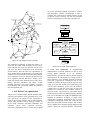
Figure 1. An AST example for MOS Level 1 model.
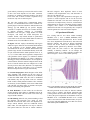
The architecture of MCAST is depicted in Figure 2. It
starts from the VHDL-AMS description file of a device
model. MCAST first parses the input file, checks errors
and stores the device information in an intermediate
format structure. Then the AST tree representation of
device models and the needed derivatives are constructed,
and derivatives are generated by automatic differentiation.
Next, techniques are used to optimize the AST for both
device equations and their derivatives. Finally, device
codes that include device definition, device setup, device
loading, derivative calculation and matrix element
stamping, interfaces to the target simulator, truncation
error checking, and convergence limiting are generated
from the optimized AST.
3. AST-Driven Code Optimization
The success of a model compiler depends critically on the
efficiency and robustness of the generated device code,
more specifically, the portion of code responsible for
filling in the Jacobian matrices and the right-hand-side
vectors. This so-called element stamping consists of
device model evaluation, equivalent conductance and
equivalent current source evaluation (derivative
derivations). High fidelity device models such as BSIM
C/C++
device files
Figure 2. MCAST model compiler architecture.
Green Node Optimization: A straightforward
implementation of element stamping, as done in most
existing model compilers, is to use automatic
differentiation to generate the code for element stamping
and incorporate the code directly for solving systems of
linear equations at every nonlinear iteration of each time
point. This is equivalent to evaluating the AST at every
iteration. In contrast, MCAST colors the AST into three
colors: green (the node needed to be evaluated only once
over the entire simulation), purple (the code needed to
evaluated once at each time point, and red (the code
needed to be evaluated at every nonlinear iteration of
each time point). Special cases of green nodes include
model/instance parameter calculation and range checking.
This can be substantial for models like BSIM that have
hundreds of parameters. Examples of purple nodes
include those calculating performances such as power
consumption (multiplying currents and voltages at every
time point). Red nodes include examples such as those
device equations whose terminal voltages changed at each
iteration. With AST, MCAST identifies automatically
A.