1
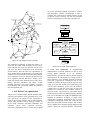
green nodes by a bottom up traversal of the AST to check
on how each node depends on leaf nodes (constants,
parameters, or variables), and purple nodes by a top down
travel of the AST to check if a node is required at every
iteration or only once at each time point.
We note that exploring these computational latency
manually was instrumental to the success of SPICE over
general-purpose numerical simulators. MAST/Saber from
Analogy [9] and ADMS [4] use specific language
constructs or compiler derivatives for a model developer
to indicate parameter checking or performance
calculation. This still puts a huge burden on model
developers, and makes the model description less
readable. Further, only limited amount of optimization
can be achieved. As the result, MAST/Saber has achieved
a limited success for semiconductor circuits.
B. Bypass: MCAST employs automatically node bypass
and device bypass. MCAST uses Automatic Differentiation
in the generation of the Jacobian Matrix elements
associated with the device, automatic differentiation may
generate large amount of intermediate dummy nodes that
are just associated with the dumb operations with +0, -0,
*0, *1,*-1. These nodes can be bypassed or compressed in
code generation. Device bypass is a well-known method
first implemented in SPICE2 [7]. It offers a reduction by
allowing previously calculated results to be used again for
current iteration, when the terminal voltages/currents of the
device of current iteration have not changed over a limit
from its previous value (often, this limit is set empirically).
Otherwise, this device would have to be re-evaluated.
MCAST incorporated device bypass automatically.
C. Constant Propagation: Model designers often define
some frequently used constants for the new device in
VHDL-AMS file, such as kTq, CONSTvt0, etc in BSIM3,
to make the VHDL-AMS source file easier to understand
and maintain, they also may define some new constants
based on those already defined constants. Thee constants
are necessary for the readability of the source VHDL-AMS
code. MCAST will detect those as constants and replace
them by values during code generation.
D. Node Reduction: If some nodes do not affect the
element stamping, these nodes are redundant, and can be
removed from the AST. This case often occurs at the early
stage of model evaluation.
E. Node Sharing: MCAST uses pattern matching to find
the duplicate sub-expression trees inside an AST.
Different from classical ASTs where such duplicates are
always shared, MCAST AST has conditional Switch
(SW) nodes, and such duplicates can only be shared if
their parent nodes have the same or similar conditions.
MCAST categories these duplicates based on their
conditions and computational costs, and determines if
they are to be shared or not.
We note that green node optimization and bypass are
specific to model compilers and are for the first time
automated in MCAST. The other three techniques are
well known in compiler theory. However, with automatic
differentiation for derivative calculation used in compiler
compilers, these features as in VHDL-AMS/VerilogAMS will not be able to be recognized by the C compilers
from the generated C code from model compilers.
4. Experimental Results
Five existing and two new device models including
MOSFET level 1, level 3, BSIM3, BSIMSOI, EKV,
Thermal-Electrical and Opto-Electrical device models
have been implemented with MCAST, and lined with
Berkeley SPICE3, and tested on thirteen benchmark
circuits. For all the circuits, the simulation using the
compiled models generated by MCAST from VHDLAMS yields the same results as that implemented
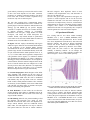
manually in Berkeley SPICE3. As an example, the
simulation results of a voltage-controlled oscillator are
shown in Figure 3: the two curves match perfectly.
Figure 3. The simulation results of VCO using the MCAST-compiled
BSIM3 model and the manually implemented BSIM3 model.
MCAST generated device codes are linked to SPICE3
source code to compare with human optimized codes
(existing built-in device model codes in SPICE3). Figure
4 shows the speed comparison on benchmark circuits for
MOSFET level 3 and BSIM. MCAST Level 3 model
code is 10%-100% faster than the hand codes (except for
one circuit), MCAST BSIM code is less than 70% slower
than human optimized BSIM code.