1
EPIGENTEK
Complete Solutions for Epigenetics
2. 5-mC Binding
a.
Predetermine the number of assay strip wells from Plate 1 to be required for your experiment.
Carefully remove un-needed strip wells from the plate frame and place them back in the bag (seal the
bag tightly and store at 4°C).
b.
Blank Wells: Add 80 µl of BS to each blank well.
c.
Negative Control Wells: Add 80 µl of Diluted ME4 to each negative control well.
d.
Standard Wells: Add 80 µl of Diluted ME4 to each standard well.
e.
Sample Wells: Add 80 µl of Diluted ME4 to each sample well.
f.
Cover Plate 1 with plate seal or Parafilm M and incubate at 37°C for 90 min.
g.
Meanwhile, predetermine the number of wells required in the Plate 2 (Sample Preparation Plate).
Cover remaining unused wells with plate seal and set up sample preparation in the subsequent steps
(Steps 2h to 2k).
h.
Blank Wells: Add 50 µl of Diluted ME5 and 50 µl of Diluted WB to each blank well.
i.
Negative Control Wells: Add 50 µl of Diluted ME5, 49 µl of Diluted WB, and 1 µl of ME3 to each
negative control well.
j.
Standard Wells: Add 50 µl of Diluted ME5, 49 µl of Diluted WB, and 1 µl of Diluted MS at the
different concentrations from 0.05 to 1 ng/µl (as shown in the chart in Step 1f) to each standard well.
k.
Sample Wells: Add 50 µl of Diluted ME5, 49 µl of Diluted WB, and 1 µl of urine sample to each
sample well.
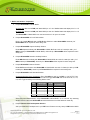
Note: (1) Plate 1 and Plate 2 set up for the wells are depicted in Table 1 and Table 2 in the
“Suggested Strip Well Setup” section of this user guide. (2) As the volume of the control and sample
DNA is very small (1 µl), to ensure that the control and sample DNA are completely added into the
wells, the pipette tip should be put in the solution contained in the well and aspirated in/out 1-2 times.
l.
Mix solution by gently tilting from side to side or shaking Plate 2 several times. Cover Plate 2 with
plate seal or Parafilm M and incubate at 37°C for 60-90 min.
m. Remove the solution from each well of Plate 1 after its incubation period. Wash each well three times
with 150 µl of the Diluted WB 1X Wash Buffer each time. This can be done by simply pipetting
Diluted WB in and out of the wells.
n.
Carefully transfer the solution from each well of Plate 2 to the corresponding well of Plate 1 (ex: from
strip wells 1A through 1H of Plate 2 to strip wells 1A through 1H of Plate 1. Also see the “Suggested
Strip Well Setup” of this user guide). Plate 2 will no longer be used from this point forward.
o.
Cover Plate 1 with a plate seal or Parafilm M and incubate at 37°C for 60 min.
p.
Remove the solution from each well.
q.
Wash each well three times with 150 µl of the Diluted WB each time.
110 Bi County Blvd. Ste. 122, Farmingdale, NY 11735
Tel: 1-877-374-4368 ■ Fax: 1-718-484-3956 ■ E-mail: [email protected] ■ Web: www.epigentek.com
© Epigentek Group Inc. All rights reserved. Products are for research use only.
Page 7
Printed 2014-10-13
P-1040