1
PRELIMINARY
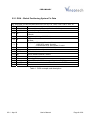
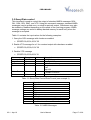
Name
Bytes Scale Example Unit Description
0x8F
Message ID
1U
Decimal 143
0x00
0 = Enable
Static Navigation 1 U
1 = Disable (here)
Flag
Table 19: Static Navigation disable – Message ID 143
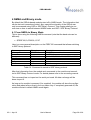
5.2 SBAS Support
The GSD4e chip set supports the Satellite Based Augmentation System SBAS – a
kind of Differential GPS (DGPS) via satellite. The advantage of SBAS towards traditional DGPS lies in the fact that correctional data are received on a normal GPS
channel. Therefore the receiver can use one of its 48 channels to detect and decode SBAS information. There is no need for an additional external receiver.
To initialize SBAS mode it is necessary to send the message with ID 133 (DGPS
source) to the receiver – which has to be put into binary mode before.
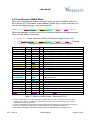
A0A20007850100000000000086B0B3
Within this message one can determine the following segments:
• A0A20007 — Start Sequence (A0A2) and Payload Length (0x07 = 7)
• 85010000000000 — Payload
• 0086B0B3 — Message Checksum (0086) and End Sequence (B0B3)
Name
Message ID
DGPS Source
Internal beacon
frequency
Internal beacon
bit rate
Bytes Scale Example Unit Description
0x85
1U
Decimal 133
0x01
0 = None
1U
1 = SBAS (here)
2 = External RTCM data
3 = Internal DGPS beacon receiver
4 = User software
0x00000
Not used!
4U
000
0x00
Not used!
1U
Table 20: DGPS source selection – Message ID 133
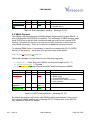
By default the receiver will find the right SBAS satellite automatically. One can select a specific SBAS satellite using message ID 170. Please refer to the SiRF Binary Reference Manual for details.
V0.1 - Apr-10
User’s Manual
Page 24 of 28