1
Fibre Operation
Chapter 9
Fibre Operation
9.1 Overview
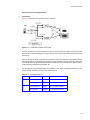
Fibre channel is a device (in term of RAID, a data storage device) protocol capable of high data transfer
rates. Fibre channel simplifies data bus sharing and supports not only greater speed, but also more
devices on the same bus than SCSI. Fibre channel can be used over both copper wire and optical cable.
It can be used for concurrent communications among multiple workstations, servers, storage systems,
and other peripherals using SCSI and IP protocols. When a Fibre hub or fabric switch is employed,
flexible topologies can be achieved with the interconnections of multiple devices.
This chapter describes the Fibre-specific functions available since the firmware release 3.12 and above.
Optional functions have been implemented for Fibre channel operation and access control under a -host
environment such as the Storage Area Network.
Summary:
• 9.2, ”Major Concerns” - Things you should know before setup
• 9.3, ”Supported Features” - List of functionality supported by the Fibre channel chips
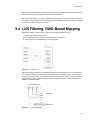
• 9.4, ”LUN Filtering: RAID-Based Mapping” - Learning how to setup the LUN Filtering function, a
useful tool for access control
9.2 Major Concerns
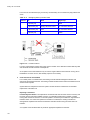
All Fibre-to-Fibre controllers support controller hot-plug capability. The topology that supports the
transparent Failover/Failback functionality requires proper hardware and software configuration. The
configuration requirements can be summarized as follows:
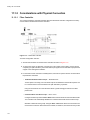
Redundant Cache Coherency Channels (RCC):
• RCC
FC channels can be manually assigned as the dedicated communications loops.
Two are recommended for path redundancy and sufficient bandwidth.
• Drive + RCC
Communications traffic distributed over drive loops
125