1
RAID Planning
Chapter 5
RAID Planning
This chapter summarizes the procedures and provides some useful tools for first-time configuration:
• Section 5.1, ”Considerations”: things you should know before setting up
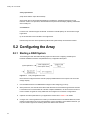
• Section 5.2, ”Configuring the Array” the most common configuration procedure
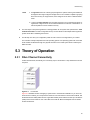
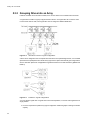
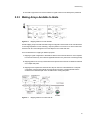
• Section 5.3, ”Theory of Operation”: the theory behind data bus and system drive mapping
5.1 Considerations
After you understand the basic ideas behind the RAID levels, you may still be wondering about how to
begin. Here are the answers to some questions that may help you through the decision making.
1. How many physical drives do you have?
When initially creating the drive groups, you should know how many drives you have in your RAID
enclosure or in the JBOD attached to the RAID appliance.
2. How many drives on each drive channel?
The optimal system planning is always a compromise between pros and cons. As a general rule, the
number of drives you should connect on each channel equals the data bus bandwidth divided by the
maximum transfer rate the average of your hard drives. Knowing the mechanical performance of your
hard drives can help to determine how many drives should be connected over a drive channel.
Always use drives of the same speed and capacity for your disk array. A logical drive composed of an
adequate number of larger drives can be more efficient than that of many but smaller drives.
3. How many drives would you like to appear to the host computer?
It must be decided what capacity will be included in a logical configuration of drives. A logical
configuration of drives will appear to the host as a single capacity volume.
61