1
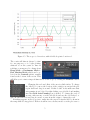
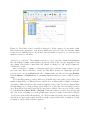
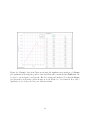
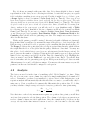
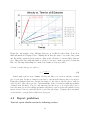
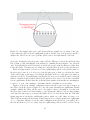
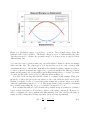
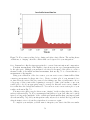
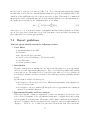
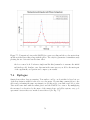
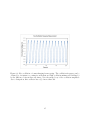
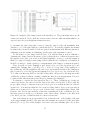
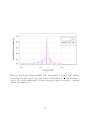
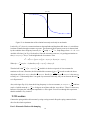
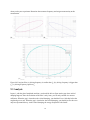
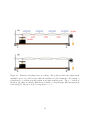
a poorly presented plot (e.g. Fig. 3.3) and one that clearly communicates its
information to the reader (e.g. Fig. 3.4).
• Your fit lines produce a measurement of acceleration, so you must calculate an
uncertainty in that acceleration (see §3.2.4 & §3.2.6). Present these results in a
table as described below.
• You will need accurate values for M and m, so be sure to remember to weigh
the glider and relevant masses. Present your measurements of these masses with
your best estimate of the uncertainties. Use these results to provide a predicted
acceleration for each of your 5 runs, including an uncertainty in your predicted
values due to uncertainties in the measured weights (see chapter 2). These results
will be presented in table form as described below.
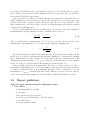
• Make and include a table of your predicted acceleration (with uncertainty), measured acceleration (with uncertainty), and the difference between them for each
run. Remember to label your columns with descriptive titles and to identify the
units in some clear way. This table is probably the main result of your lab report;
spend some time making it clear to the reader.
4. Conclusion
Briefly restate the goals of the experiment and state how your results demonstrate
(or fail to demonstrate) these objectives. Briefly describe at least one possible source
of systematic uncertainty that could affect your measurement (and which direction
the effect would tend to systematically shift your observations) and suggest a future
measurement to eliminate it.
5. Extra Credit
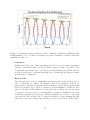
Instead of obtaining a measurement of the acceleration by fitting a slope to the calculated velocity vs. time, which only works in the case of constant acceleration, we could
have differentiated the data once more to obtain a direct measure of acceleration vs.
time. Try this with just one of your data runs and present a plot your results. Discuss
your results and explain why the noise looks the way it does. Obtain a measurement of
the acceleration by using the mean of your calculated accelerations and an uncertainty
based on the procedure outlined in §2.1.6. Compare the results of the two methods
and use this to draw a conclusion of which measure you believe is better.
4.4
Epilogue
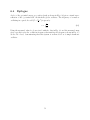
Experiment 2 will be a measurement of the free-fall acceleration due to earth’s gravity, g. In
your report for Experiment 2, extra credit will be available in part for using your results from
Experiment 1 as a measurement of g to compare with your Experiment 2 results. You may
want to think now about how you would turn your Experiment 1 results into a measurement
of g.
35