1
The Almagest
17-3
17.2.1 Target
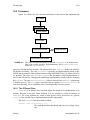
A Target is an object that manages the execution of the Stars in a Domain.
Major methods:
run()
Called to execute a schedule.
wrapup()
Called at the end of an execution to clean up.
setup()
Called by initialize() (which is inherited from the Block
class, which is a common base class for many of Ptolemy’s
classes). Sets each Star to point to this Target and sets up the
Scheduler.
Major objects contained are:
gal
A pointer to the Galaxy being executed.
sched
A pointer to the Scheduler that is being used.
For further information about Targets, see some of the existing domains.
17.2.2 Domain
Declares the type of various components of the Domain, like which type of WormHole, PortHole, Star, etc. is used by the Domain.
Major methods:
newWorm()
Create a WormHole of the appropriate type for this Domain.
newFrom()
Create an EventHorizon (an object that is used to interface to
other Domains, used with WormHoles) that translates data
from a Universal format to a Domain specific one.
newTo()
Create an EventHorizon that translates data from a Domain
specific format to a Universal one.
newNode()
Returns a Geodesic of the appropriate type for this Domain.
17.2.3 Star
A Star is an object derived from class Block that implements an atomic function.
Major methods:
run()
What to do to run the star.
For example, the DataFlowStar class (a parent class to many of the dataflow domain
stars such as SDFStar and DDFStar) defines this function to make each input PortHole
obtain Particles from the Geodesic, execute the go() method of each Star, and then
have each output PortHole put its Particles into the Geodesic.
17.2.4 PortHole
PortHoles are data members of Stars and are where streams of Particles enter or
leave the Stars. Each PortHole always handles Particles of one type, so two connected
PortHoles need to decide which data type they will use if they are not the same. There is a
Ptolemy
Last updated: 10/10/97