1
USOO573433 1A
United States Patent [19]
[11]
Patent Number:
Makino
[45]
Date of Patent:
5,734,331
Mar. 31, 1998
[54]
INPUT CONTROL FOR RADIO SELECTIVE
CALLING RECEIVER
4,786,902 11/1988 Davis ............................... .. 340182544
5,173,688 12/1992 DeLuca etal. .
340182544
5,430,440
7/1995
[75]
Inventor;
5,650,776
7/1997 Mitchell ........................... .. 340/82544
_
Tel-“ya Makino, Shizuoka_ Japan
_
_
Shim ..... ..
340182544
Primary Examiner-Brian Zimmerman
[73] Asslgne?' NEC Corporation‘ Tokyo‘ Japan
Attorney, Agent, or Firm-Sughrue. Mion. Zinn. Macpeak
21
[ 1
& Seas. PLLC
[57]
A 1. No.: 687 038
pp
’
[22] Filed:
_
[30]
ABSTRACT
Jul. 25, 1996
v
I
.
.
A selective calling receiver includes a keypad for inputting
Forelgl! APPllcamm Priority Data
.................................. .. 7490310
[51]
[ 1
apan
Int. GL6 ..................................................... .. H04Q 1/00
an instruction according to a user's manual operation and a
detector for detecting, an , incoming call
addressed
to , the
_
_
_
,
selective calling rece1ve1' itself. A notifying circuit IlOII?CS
reception of the incoming call to a user through sound. light.
[52]
[58]
US. Cl. ....................................... .. 340325.44; 341/24
Field of Search ....................... .. 340/825.44. 825.36;
and/0r vibration. When the incoming call is detected. a
control Processor tfallsfel’s control to an incoming call
455/331; 341/24
notifying routine and. at the same time. ignores the instruc
tion received from the keypad during a predetermined time
period immediately after the incoming call has been
detected. After the predetermined time period has passed‘
Jul‘ 26, 1995
[56]
JP
J
References Cited
U‘S‘ PATENT DOCUMENTS
the instruction due to the user’s manual operation is enabled
3,976,995
4,536,761
8/1976 Sebestyen ........................ .. 340/82544
8/1985 Tsunoda
.. BAD/825.44
4,639,726
1/1987 Ichikawa .......................... .. 340/82544
again
17 Claims, 4 Drawing Sheets
INCCMING CALL INTERRUPT
BEE STiPPED
i
l
INCREIENI' [F IMMJTES Fm TIE SETTING
NOTIFYING INCUMNG CALL
READING IESSAGE -—> STMD-BY
mlilililli
l NTERRUPT
THE
X SECEMDS
KEV INTERRUPT IGNOIED
US. Patent
Mar. 31, 1998
Sheet 2 of 4
m.
m
3
o
m
a
"w
GE
I.J1
52m
_w5%“5206Q:5.%
_
.
5,734,331
w
<_
= H=<
$58“9%."288L. wo1A\>
2$5%?8 E358053
2E58
pm:ZT3Ii1Nm
_$a‘5.85%
. _m
1
o
_
N
_
~
m_20m
EH2
_
‘(m
\
f35:2T%:
L
H:
Qm4x255;
tk
US. Patent
Mar. 31, 1998
Sheet 3 of 4
5,734,331
FIG. 3
8201
L
I NCCM
CALL INTElgRUPT OCCURS
6S 2 0 4
NO
YE S
START \NCGMNG CALL NOTIFYING RUJTME
§S205
V
DISABLE KEY INTERRUPT
S 2 06
68203
YES
INTERRUPT RGJTINE
(INCREMENT [F MINUTES)
9
TIMER STARTS
INTERRUPT mums
(BEEP STOP AND uEssAcE READ R0uTmE)
V
,
5,734,331
1
2
INPUT CONTROL FOR RADIO SELECTIVE
CALLING RECEIVER
during a predetermined time period immediately after the
incoming call has been detected.
The controller is preferably implemented by a base pro
BACKGROUND OF THE INVENTION
1. Field of the invention
The present invention generally relates to a radio selective
calling receiver. and in particular to a method and system for
informing the user of an incoming call with reliability.
2. Description of the Related Art
gram stored in a program memory. The program memory
further stores a plurality of function programs one of which
10
A selective calling receiver has been widely used for
various purposes and. especially. a small-sized and light
weight selective calling receiver called a pager is suitable for
being taken on the road A basic function of the selective
calling receiver is to indicate by beep sound. vibration. or
light the incoming call and then to display a received
message on an liquid-crystal display (LCD) according to the
predetermined time period has elapsed immediately after the
incoming call has been detected The receiver controller
activates the notifying circuit from when the incoming call
is detected until the second interrupt of the instruction ?rst
occurs after the predetermined time period has elapsed.
user’s key operation. Since the incoming call notifying
function has the highest priority. the interrupt of the incom
ing call can occur in the middle of performing another
function. Further. in order to save space. a plurality of
operation modes usually share the use of the same key.
Since any incoming call occurs suddenly, however. the
20
user cannot know in advance when an incoming call occurs.
resulting in a problem of operability as follows.
As showing in FIG. 1. assuming that the user is setting a
25
incoming call occurs. however. control is forced to be
transferred to the incoming call notifying mode in the
progress of setting the tirne-of-day clock. In cases where the
use of that key is shared. the notifying routine is progressed
unless the user stops pressing the key. More speci?cally.
referring to FIG. 1. when the user presses the key just after
the incoming call has occurred. the beeping sound is reset.
On subsequently pressing the key several times. a received
message is read and displayed on the LCD. and then the
operation state is changed to a stand-by state after all the
message has been displayed. Such a sequence may give the
user the impression that an
a ?rst operation mode determined by the instruction to a
30 the incoming call is noti?ed to a usm' through a predeter
mined medium. At the same time. the instruction due to the
user’s manual operation is ignored until a predetermined
time period has elapsed immediately after the incoming call
is detected. and the ?rst step is performed from when the
35
after the predetermined time period has elapsed. Preferably.
mined time period has elapsed.
As described above. according to the present invention.
the user’s manual operation is ignored for a predetermined
time period after an incoming call is detected. Therefore. the
user’s misoperation is effectively prevented even When an
SUMMARY OF THE INVENTION
45
An object of the present invention is to provide a radio
selective calling receiver and its control method which
permit the user to control the incoming call notifying
working and display the received message on screen. In
other words. the incoming call notifying process is pro
gressed by the user with reliability.
Another object of the present invention is to provide a
control method which achieves reliable operability even
when an incoming call suddenly occurs in the middle of the
BRIEF DESCRIPTION OF THE DRAWINGS
user’s key operation.
According to the present invention. any instruction due to
selective calling signal. the incoming call being addressed to
the selective calling receiver itself. Further. the selective
calling receiver is provided with a notifying circuit and a
controller. The notifying circuit noti?es reception of the
incoming call to a user through at least one predetermined
medium such as sound. light. and/or vibration. The control
ler ignores the instruction received from the input means
incoming call suddenly occurs. In addition. the user can
con?rm the occurrence of the incoming call before manually
operating the input means to stop the notifying circuit
process with reliability.
inputting an instruction according to a user’s manual opera
tion and a detector for detecting an incoming call from a
incoming call is detected until the instruction ?rst occurs
the second operation mode provides a second step of dis
playing a message including in the incoming call on screen
when the instruction secondly occurs after the predeter
appears due to some mistake.
mined time period just after an incoming call occurs. More
speci?cally. a selective calling receiver according to the
present invention is provided with an input means for
elapsed.
second operation mode which provides a ?rst step such that
stand-by screen suddenly
the user’s manual operation is ignored during a predeter
Preferably. the receiver controller controls the notifying
circuit such that a message including in the incoming call is
displayed on screen when the second interrupt of the instruc
tion secondly occurs after the predetermined time period has
According to another aspect of the present invention.
when the incoming call is detected. control is changed from
time-of-day clock by pressing a key again and again. Each
time the key is pressed in a time setting mode. the number
of the minute digit. for example. is incremented. When an
is executed in accordance with the user’s manual operation.
The input means comprises a plurality of keys including at
least one key which is shared by a plurality of programs
among the base program and the function programs.
The selective calling receiver is further provided with an
interrupt controller and a receiver controller. The interrupt
controller assigns a higher priority to a ?rst interrupt of the
incoming call than a second interrupt of the instruction and
ignoring the second interrupt of the instruction until a
55
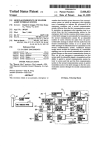
FIG. 1 is a time chart showing an example of the operation
of a conventional radio selective calling receiver;
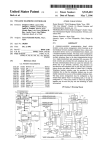
FIG. 2 is a block diagram showing a radio selective
calling receiver according to an embodiment of the present
invention;
FIG. 3 is a ?owchart showing the operation of an interrupt
control according to the embodiment; and
FIG. 4 is a time chart showing an example of the operation
of the embodiment.
DETAILED DESCRIPTION OF THE
PREFERRED EMBODlMENTS
Referring to FIG. 1. there is shown a selective calling
receiver in accordance with the present invention. The
5,734,331
3
4
selective calling receiver is comprised of a radio system and
occurs (step S202). Since the user is pressing the key to set
the time-of-day clock here, the number of minute digit of the
a control unit which is connected to a battery. a key pad. a
system is comprised of a built-in antenna and a radio
receiver 101. The receiver 101 receives an FSK (Frequency
time-of-day clock is incremented each the key is pressed
unless an incoming call occurs (step S203 ).
When the received message is input from the decoder 102
Shift Keying)-modulated radio signal from a radio base
station (not shown) of a selective calling system through the
to the interrupt controller 104. control is forced to be
transferred to an incoming call notifying routine in the
antenna. The receiver 101 further includes an FSK demodu
progress of setting the time-of-day clock (step S204). After
starting the incoming call notifying routine. the control
processor 103 disables the key interrupt (step S205) and then
liquid-crystal display (LCD). and an alert circuit. The radio
lator which demodulates the received radio signal into a
baseband signal. After the waveform of the baseband signal
is shaped. the wave-shaped signal is transferred as a selec
tive calling signal from the radio receiver 101 to a decoder
102. The decoder 102 receives the selective calling signal
from the radio receiver 101 and decodes it into received
data. In this embodiment. the decoder 102 further compares
the selective calling number included in the received data
with the identi?cation (ID) number previously stored in an
starts the timer 110 which is set to X seconds. where X is a
value selected from 0.5. 1.0. 1.5. and so on (step S206).
Since the key interrupt is ignored during this X-second
period. the user’s key operation has no effect on the incom
ing call notifying routine. When the X-second period has
passed (YES in step S207). the control processor 103
enables the key interrupt again (step 8208). Therefore. when
1]) ROM 107 under the control of a control processor 103.
the user presses the key (YES in step S209). the control
processor 103 transfers control to a predetermined interrupt
routine (step S210). Since the incoming call notifying rou
tine is now performed. the user's key operation causes the
alert controller 113 to stop the alert process and then the
When the selective calling number included in the received
data is identical to the ID number. the decoder 102 outputs
a message included in the received data to the control
processor 103.
The control processor 103 receives not only the received
message from the decoder 102 but also user’s key instruc
tions from a key pad including a mode selector 105 and other
function keys 106. As described before. a plurality of
operation modes share the use of the same key for space
saving. The control processor 103 implements an interrupt
controller 10 based on the operating program. The interrupt
controller 104. as described later. assigns the top priority to
the interrupt request of the decoder 102 for the received
control processor 103 to read the message from the RAM
109 to display it on the LCD 112.
25
As illustrated in FIG. 4. in the case where the user is
pressing the key again and again to set the time-of-day
clock. the control processor 103 starts the incoming call
notifying routine at the time when receiving the message
from the decoder 102. At the same time. the control pro
cessor 103 disables the key interrupt for X seconds during
which the user's key operations are ignored. resulting in no
effect on the incoming call notifying routine. After the
message processing. The operating program. other function
programs. and fonts for display on screen are stored in a
program read-only memory (ROM) 108.
When the interrupt for the message reception occurs. the
35
interrupt controller 104 ignores user’s key instructions
received from the keypad for a predetermined time period.
X-second period has elapsed. the control processor 103
enables the key interrupt again. thereby restoring the user’s
key operations. Therefore. when the user presses the key
once just after the X-second period has elapsed. the control
processor 103 controls the alert controller 113 so as to stop
At the same time. the received message is stored onto a
making a beep. And then the following user’s key operations
random access memory (RAM) 109 and the alert circuit is
activated according to a selected informer mode. The control
cause the control processor 103 to read the message from the
RAM 109 to display it on the LCD 112 and. if all messages
processor 103 uses a timer 110 to check whether a lapse of
time reaches the predetermined time period during which the
have been displayed. then the control processor 103 returns
to the stand-by state.
user’s key instructions are ignored as described in detail
The X-second period during which the user's key opera
tions are ignored is preferably determined so that the user is
later.
45
prevented from mistakenly pressing the key and the beep is
By the user pressing a function key in a message read
stopped as soon as possible. For example. the time period X
is set to about 2 seconds.
mode. the control processor 103 reads the message from the
RAM 109 and controls the LCD driver 111 using the font
stored in the program ROM 107 so that the message is
displayed on the LCD 112. When the interrupt for the
message reception occurs. the control processor 103 controls
50
the alert controller 113 so that a selected alert device is
As described above. according to the present invention.
the user’s key interrupt is ignored for a predetermined time
period after an incoming call is detected. Therefore. the
user’s misoperan'on is e?ectively prevented even when an
activated. More specifically. if the user selects a beep mode.
incoming call suddenly occurs. Since the user can con?rm
the alert controller 113 controls an alert driver 114 so that a
the ooctnrence of the incoming call before pressing the key
speaker 115 makes a beep and an light-emitting diode (LED)
55
to stop the beep and display the received message on screen.
117 blinks. If a silent mode is selected. a vibrator 116
the incoming call notifying process is progressed under the
generates mechanical vibrations and the LED 117 blinks.
control of the user with reliability.
What is claimed is:
An interrupt control method according to the present
1. A selective calling receiver for receiving a selective
invention will be described hereinafter in the case where the
calling signal. comprising:
user is setting a time-of-day clock by pressing a certain
input means for inputting an instruction according to a
function key again and again.
user’s manual operation;
detecting means for detecting-an incoming call ?'om the
Referring to FIG. 3. the control processor 103 checks at
all times whether an incoming call interrupt and a key
selective calling signal. the incoming call being
intelrupt occur with higher priority assigned to the incoming
incoming call interrupt occurs (step S201) and . if no
addressed to the selective calling receiver itself;
notifying means for notifying reception of the incoming
incoming call occurs. then checked whether a key interrupt
call to a user through a predetermined medium; and
call interrupt. More speci?cally. it is checked whether an
65
5,734,331
6
5
control means for ignoring the instruction received from
9. The selective calling receiver according to claim 6.
the input means during a predetermined time period
immediately after the incoming call has been detected.
2. The selective calling receiver according to claim 1.
wherein the receiver control means controls the notifying
means such that a message including in the incoming call is
displayed on screen when the second interrupt of the instruc
tion secondly occurs after the predetermined time period has
wherein the control means comprises:
?rst means for receiving a ?rst interrupt request for the
incoming call and a second interrupt request for the
elapsed.
10. The selective calling receiver according to claim 7.
wherein the receiver control means controls the notifying
means such that a message including in the incoming call is
displayed on screen when the second interrupt of the instruc
tion secondly occurs after the predetermined time period has
instruction;
second means for assigning a higher priority to the ?rst
interrupt request for the incoming call than the second
interrupt request for the instruction; and
third means for ignoring the second interrupt request for
the instruction during the predetermined time period
immediately after the incoming call has been detected.
3. The selective calling receiver according to claim 1.
elapsed.
15
further comprising:
tive calling receiver itself;
storage means for storing a base program and a plurality
b) notifying reception of the incoming call to a user
through a predetermined medium; and
c) ignoring the instruction received from the keypad
of function programs. the base program providing basic
operations of the selective calling receiver; and
processing means for executing the base program in
which the control means is implemented and executing
during a predetermined time period immediately after
the incoming call has been detected.
12. The receiving control method according to claim 11.
one of the function programs depending on the instruc
tion corresponding to the user’s manual operation.
4. The selective calling receiver according to claim 1.
wherein the input means comprises a plurality of keys which
allow the user’s manual operation.
5. The selective calling receiver according to claim 1.
wherein the input means comprises a plurality of keys
including at least one key which is shared by a plurality of
25
programs among the base program and the function pro
grams.
the incoming call has been detected.
13. A receiving control method of a selective calling
receiver having a keypad for inputting an instruction accord
ing to a user’s manual operan'on. comprising the steps of:
a) detecting an incoming call from a selective calling
signal. the incoming call being addressed to the selec
input means for inputting an instruction according to a
user’s manual operation;
receiving means for receiving a selective calling signal;
detecting means for detecting an incoming call from the
selective calling signal. the incoming call being
tive calling receiver itself;
b) ignoring the instruction received from the keypad until
a predetermined time period has elapsed immediately
after the incoming call has been detected; and
addressed to the selective calling receiver itself;
notifying means for notifying reception of the incoming
call to a user through a predetermined medium;
interrupt control means for assigning a higher priority to
a ?rst interrupt of the incoming call than a second
45
period has elapsed immediately after the incoming call
has been detected; and
receiver control means for activating the notifying means
from when the incoming call is detected until the
second interrupt of the instruction ?rst occurs after the
predetermined time period has elapsed.
7. The selective calling receiver according to claim 6.
wherein the step (c) comprises the steps of:
receiving a ?rst interrupt request for the incoming call and
a second interrupt request for the instruction;
assigning a higher priority to the ?rst interrupt request for
the incoming call than the second interrupt request for
the instruction; and
ignoring the second interrupt request for the instruction
during the predetermined time period immediately after
6. A selective calling receiver comprising:
interrupt of the instruction and ignoring the second
interrupt of the instruction until a predetermined time
11. A receiving control method of a selective calling
receiver having a keypad for inputting an instruction accord
ing to a user’s manual operation. comprising the steps of:
a) detecting an incoming call from the selective calling
signal. the incoming call being addressed to the selec
c) notifying reception of the incoming call to a user
through a predetermined medium from when the
incoming call is detected until the instruction first
occurs after the predetermined time period has elapsed
14. The receiving control method according to claim 13.
wherein the step (c) further comprises the step of displaying
a message including in the incoming call on screen when the
50
instruction secondly occurs after the predetermined time
period has elapsed.
15. The receiving control method according to claim 13.
further comprising the step of assigning a higher priority to
a ?rst interrupt of the incoming call than a second interrupt
storage means for storing a base program and a plurality 55 of the instruction.
16. A receiving control method of a selective calling
of function programs. the base program providing basic
further comprising:
receiver having a keypad for inputting an instruction accord
ing to a user's manual operation. comprising the steps of:
a) detecting an incoming call from a selective calling
which the interrupt control means and the receiver
signal. the incoming call being addressed to the selec
control means are implemented therein and executing 60
tive
calling receiver itself;
one of the function programs depending on the instruc
b) changing control from a ?rst operation mode deter
tion corresponding to the user’s manual operation.
mined by the instruction to a second operation mode
8. The selective calling receiver according to claim 7.
when the incoming call is detected. the second opera
wherein the input means comprises a plurality of keys
tion mode providing a ?rst step such that the incoming
including at least one key which is shared by a plurality of 65
call is noti?ed to a user through a predetermined
programs among the base program and the function pro
operations of the selective calling receiver; and
processing means for executing the base program by
grams.
medium;
5,734,331
7
c) ignoring the instruction until a predetermined time
period has clapstd immcdiatcly after the incoming call
is detected; and
8
17. The receiving control method according to claim 16.
wherein the second operation mode provides a second step
of displaying a message including in the incoming call on
screen when the instruction secondly occurs after the pre
d) P?rfol‘mihg the ?rst Step from when the incoming can 5 determined time period has elapsed.
is detected until the instruction ?rst occurs after the
predetermined time period has elapsed.
*
*
*
*
*