1
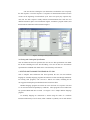
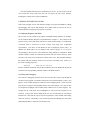
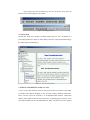
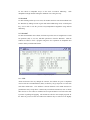
give students an architecture and a series of assignments that repeatedly ask the students to add and implement new features for it, such as new addressing modes, new machine instructions, or new registers, to make programming easier for that architecture. At each stage, the students could also be given assembly language programming assignments that emphasize the advantages of the new features being added. CPU Sim is an tool that was designed to facilitate such interactive hands-on learning. With CPU Sim, students can design their own architectures from scratch or modify architectures given to them. They can simulate a variety of architectures, including accumulator-based, register-based (RISC), and stack-based CPU's, for example, and they can run programs on them without the need of any physical hardware other than the computer on which CPU Sim is run. With CPU Sim instructors can give students hands-on experience with the following topics in the IEEE/ACM Computing Curriculum [IEEE/ACM 2001] •
Numeric data representation and number bases •
Representation of nonnumeric data •
Microprogrammed realization of the CPU •
Control unit; instruction fetch, decode, and execution •
Instruction types (data manipulation, control, I/O) •
Instruction formats •
Assembly/machine language programming •
Addressing modes •
Main memory organization and operations The knowledge of a high-level language is not a prerequisite to understanding and using CPU Sim but an appreciation of what is involved in programming with a high-level language is useful. The author has successfully used CPU Sim in his introductory machine organization classes since 1989, in conjunction with the text "Structured Computer Organization" [Tanenbaum, 1999]. CPU Sim was not designed specifically to be used with that book, but it works well with it. The precursor to CPU Sim can be found in [Kerridge et al. 1980]. CPU Sim version 1.0.13 and its uses in the classroom were discussed in [Skrien et al. 1991]. A later version (2.2) was discussed in [Skrien 1994] The current version of CPU Sim, version 3.1, was written using Java 2 and the Swing package. It has been tested on computers running MacOS X, Windows 98/NT/2000, and Linux.