1
IST-507802 TALK
D6.4 (Part I) 25 January 2007 Page 46/96
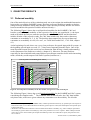
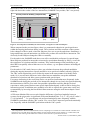
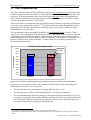
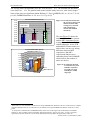
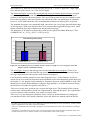
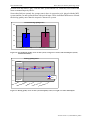
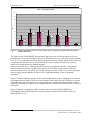
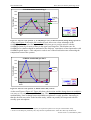
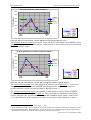
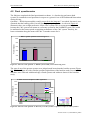
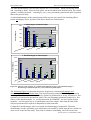
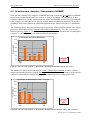
The next Figure 40 is concerning the ease of use and shows, that the use of speech operation was
easier with the present systems as compared to the baseline system (free run). With the present
systems by far most of the Subjects tended to a positive rating (Ratings on the left side:
SAMMIE: 90%, C&C: 80%). There was a relatively slight difference between SAMMIE and
C&C.
For the present systems the answers were spread over the positive part of the scales. I.e. the
systems were felt to be easy, but the degree of ease of use was judged interindividually
differently. There is a significant correlation between the answers to question 2 and the
respective rejection rates of the systems (Pearson correlation coefficient r=-0,41, p<0,05). 43
2. Ease of use ?
60%
Percent Subjects
50%
SAMMIE
40%
C&C
30%
Baseline
20%
10%
0%
very
simple
very
difficult
Figure 40: Answers to the questions “2. How easy was the system operation for you?”
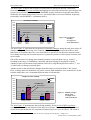
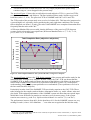
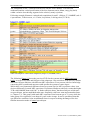
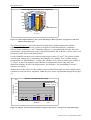
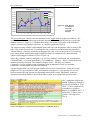
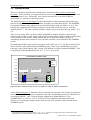
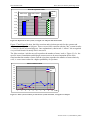
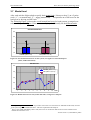
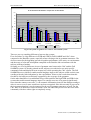
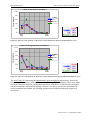
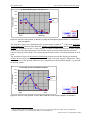
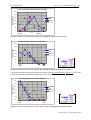
Question 3 concerned the problem of distraction from driving, s. following Figure 41.
Corresponding to the preceding figures there is a similar curve between the present systems,
apart from the highest ranking of “not at all”. A certain distracting effect was felt by most of the
Subjects, with C&C more than with SAMMIE, as the maximums are near the scale centre. (The
Pearson correlation coefficient of r=0,21 between the answers to this question and the individual
driving errors is, however, not significant.)
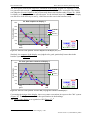
The SAMMIE and C&C systems were assessed to be less distracting than the baseline system
(free run). But again, when comparing with the baseline evaluation results one should consider
that the experimental setup was quite different, because the baseline evaluation used a driving
simulation.
43
It is conceivable, that there are still other correlations, e.g. to the number of turns, task duration etc., which is
beyond the scope of this report.
Version: Final 1.1, Distribution: public