1
TABLE GIBS AND LEVELING
The table gibs on your machine are factory
adjusted and may never require readjustment.
Should any adjustment become necessary, do
the following:
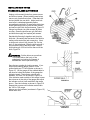
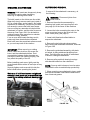
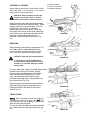
1. Lightly loosen the gib adjusting screws (A),
Figure 23. By loosening the lock nuts first the
set screws should be loose enough to move
the table.
2. Support the end o f the table and a t the
same time, raise it up slightly, (it is
recommended that an- other person hold
and support the table when per- forming
these adjustments). Snug the gib screws. Any
adjustment of the gibs is very minute,
perhaps even 1,000th of an inch. If the gibs
are too tight the adjustment handles will be
difficult to turn. If the gibs ar e too loose the
tables could sag. Keep checking the level
of the tables with a straightedge until leveling
is achieved. When tables are level,
tighten the lock screws.
A
A
FIGURE 23
FENCE ADJUSTMENTS: TILT
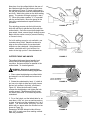
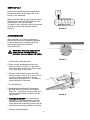
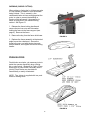
Fence adjustments are made with the lock
handles shown in Figure 24. To slide the
fence f orward or back on the table, loosen
lock handle (A), slide the fence to the desired
position and tighten handle (A) to secure
fence.
C
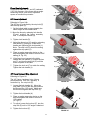
To tilt the fence forward:
1. Loosen locking bolt (B), Figure 24.
2. Place a machinist protractor or triangle on
the table and against the fence. Adjust the
fence to the desired angle and tighten
locking bolt (B) to secure the fence.
A
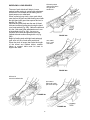
To tilt the fence back:
B
1. Loosen locking bolt (B), Figure 24.
2. Flip back the stop block (C).
3. Adjust the fence to the desired angle and
tighten locking bolt (B) to secure fence.
!
CAUTION: When the jointing operation
is finished with the fence tilted back, do
not forget to flip the pivot stop block
back to its original position.
FIGURE 24
NOTE: The handle (A, Figure 24) can be
adjusted to a more convenient position
by loosening the nuts on its opposite
end, turning the handle to the proper
position, and retightening the nuts.
13