1
Integer Program Constraints
overhead due to register allocation by 61%.
100000
10000
1000
solved optimally
solved non-optimally
not solved
100
10
1
10
100
Intermediate Instructions
1000
Optimal Solution Time (secs.)
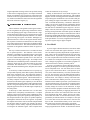
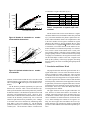
Figure 9. Number of constraints vs. number
of intermediate instructions.
1000.00
100.00
10.00
n
3
1.00
0.10
0.01
100
n
2
1000
10000
Integer Program Constraints
Overhead Type
Spill Load
Spill Store
Rematerialization
Copy
Total
IP
373M
317M
144M
-331M
503M
GCC
902M
565M
-5.0M
-53M
1410M
IP / GCC
0.41
0.56
-29
6.3
0.36
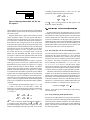
Table 3. Components of dynamic spill code
overhead.
The IP solution times for the x86 architecture is significant faster than the times for the RISC architecture presented
in [3]. The x86 IP model has only about a quarter of the constraints found in the RISC model. The simplification is due
to the fewer number of real registers available for register
allocation; the x86 has 6, whereas the RISC has 24. Since
IP solution time is roughly O(n2:5) relative to the number
of constraints, a four times decrease in the number of constraints translates to a solution time speedup of 32. Furthermore, a newer version of the CPLEX solver is used, yielding a speedup of about 2, and a faster solver machine is used,
giving a speedup of about 3. Total IP solution time speedup
is roughly 192. Furthermore, the irregular cost nature of the
x86 IP model helps to reduce solver time. Irregular costs
break up the symmetry of the integer program, decreasing
the time spent by the solver in searching through equivalent
solutions.
7. Conclusion and Future Work
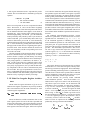
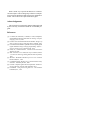
Figure 10. Optimal solution time vs. number
of constraints.
solution, for those functions that the solver was able to find
optimal solutions. The growth rate of the optimal solution
time is roughly O(n2:5) with respect to the number of constraints.
The IP allocator produced significantly less spill code
than the GCC allocator. Table 3 shows the amount of dynamic spill intermediate instructions produced by both the
IP allocator and GCC. The IP allocator produced fewer load
and stores, and eliminated more copies. However, GCC
deleted more rematerialization instructions than it inserted.
Overall, the IP allocator produced only 36% of the total
amount of spill instructions as produced by GCC. Changes
in execution time can be calculated by substituting values
from Tables 1 and 3 into equation (1). The IP allocator
produced 551M cycles of overhead, while GCC produced
1410M cycles. The IP allocator reduces execution time
The paper described an IP-based register allocator for irregular architectures. Previous work showed that an IP allocator is feasible for a RISC architecture, where registers
are uniform and can be treated identically. The work presented here shows the IP approach for an irregular architecture, where registers have distinctive features and should be
treated separately. Furthermore, the IP approach is shown to
be particularly well suited to irregular architectures, because
individual costs can be modeled precisely and accurately in
the IP model. These costs, on the other hand, make allocation using heuristics difficult.
The paper discussed several irregular architecture features, but there are others that remain to be modeled. For
example, instruction selection can be integrated into register allocation to further reduce spill code. The IP allocator
can be extended to use other instructions, such as the x86’s
XCHG, which exchanges the contents of two registers. Finally, the current paper does not address the issue of optimally inserting copy instructions, which are important in
processors with combined source/destination operand specifiers.