1
ORA Analysis
Module
Write
ORA Solver
Module
ORA Rewrite
Module
Write
Read
Decision-
Read
Variable
Table
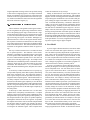
Figure 1. ORA top level modules and data
structures.
potentially benefit a wide range of users.
The rest of this paper is organized as follows. Section 2
gives a brief background on ORA. Section 3 describes features of an irregular register architecture and discusses their
effect on register allocation. Section 4 presents a cost model
suitable for integer programming. Section 5 presents an IP
formulation for irregular register architectures. Section 6
gives experimental results for the x86 architecture, followed
by a conclusion and discussion on future work in Section 7.
2. ORA Background
This section gives a brief overview of the Optimal Register Allocation approach to global register allocation proposed in [3]. The ORA register allocator consists of three
top level modules: the analysis, solver, and rewrite modules, as illustrated in Figure 1. The ORA analysis module
analyzes a function to determine the points in the function
where decisions must be made about various register allocation actions. Each register-allocation decision is a binary
decision: at a specific point in the function a certain register allocation action is either performed (1) or is not performed (0). Register-allocation decisions include whether a
symbolic register should be defined into a specific real register, whether the assignment of a symbolic register to a specific real register should continue, whether a symbolic register should be stored to or loaded from memory, etc. The
ORA analysis module produces a binary decision variable
for each register-allocation decision that must be made, and
records the decision variable and the corresponding register
allocation action in the decision-variable table, as illustrated
in Figure 1.
The ORA solver module uses the information about decision variables, register allocation overheads, and conditions to construct a 0-1 integer program [7], a linear program with the added requirement that each variable must be
assigned an integer solution value that is either 0 or 1. After constructing the 0-1 integer program, an optimal solution
is found using a commercial integer program solver. The
solver determines a value of either 0 or 1 for each decision
variable so the conditions are satisfied and the total register
allocation overhead is optimally reduced. The ORA solver
module then records in the decision-variable table the solution value for each decision variable.
Finally, the ORA rewrite module examines the decisionvariable table to determine each decision variable that was
set to 1 by the solver, and to determine the corresponding
register allocation action. The intermediate instructions are
then rewritten based on the register allocation actions determined by the solver, with each symbolic register replaced by
the assigned real register, and with spill code inserted at the
prescribed locations.
3. Irregular Register Architectures
A register architecture is regular in the programming
model if all registers can be used interchangeably in each instruction without affecting the instruction’s execution time
or the instruction’s size. A register architecture is irregular
if the choice of registers affects instruction execution time,
instruction size, or both. For a register architecture to be regular, all registers must appear homogeneous in structure and
usage. A register structure is homogeneous if all registers
can hold the same data types, and the content of one register
does not interfere with the content of another register. Registers are homogeneous in usage if any register can be used
as an operand whenever a register operand is allowed, and
there is no advantage in choosing one register over another.
Whenever the homogeneity in structure or usage is broken,
the register architecture becomes irregular. This section describes these irregularities and their effect on register allocation.
3.1. Irregularities in Register Structure
A register architecture can become irregular due to irregularities in the structure of the register file. These irregularities limit the generality of the registers. Examples of
these irregularities include the partitioningof the register file
based on data type, and the sharing of bit fields among registers. In partitioningbased on data type, registers are grouped
into sets with each set capable of only holding data of certain types. For example, the Motorola 680x0 processor has
16 general purpose registers, which are divided into sets of
8 “data” and 8 “address” registers [6]. Although all are 32bit registers, values in the data registers are not considered
memory addresses and cannot serve as the base address in
effective address calculations.
In bit field-sharing, the register architecture specifies that
certain registers must have certain bits in common, making the registers physically overlap. Such registers are no