1
Partitioned RAM
Trusted Domain
Application-aware MPU
System Bus
Time-slice Atomicity
Monitor
Monitor
Scheduler
EEPROM
Radio
CPU
Peripheral Bus Manager
Peripheral Bus
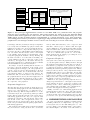
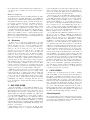
Figure 3: Our trusted scheduling architecture uses a thin layer of software (trusted domain) to initialize and
configure its hardware components. The scheduler informs the trusted domain when a new application has to
be executed. The trusted domain saves the current system state and transfers control to the new application.
The CPU time-slice monitor and the atomicity monitor together guarantee that the trusted domain can
regain control of the CPU when needed. Each application is allocated its own dedicated memory partition
and application boundaries are enforced using an application-aware memory protection unit (MPU). Finally,
the peripheral bus manager controls access to peripherals and also prevents misbehaving peripherals from
denying applications access to the bus.
cations such that their code and data are protected, preventing the attacker from modifying applications or preventing
their correct execution by modifying their data. Finally, the
system should be able to securely multiplex shared system
resources and ensure that applications are able to obtain all
resources they need on-time for their correct execution. Ensuring the correct allocation of resources prevents internal
Denial-of-Service (iDoS) attacks in which an attacker holds
on to a system resource (e.g., a bus or a peripheral) required
by another application or exhausts system resources to prevent other applications from running (e.g., dynamically allocating memory until it runs out).
In the next section, we describe our design of an embedded system that follows the above reasoning and supports
trusted scheduling.
3.
TRUSTED SCHEDULING SYSTEM
Our trusted scheduling system is designed for real-time
systems with a pre-defined set of applications. It is tailored for embedded devices that are used in security- and
safety-critical applications that have a well-defined and focused purpose. The system is initialized and configured by
a trusted administrator and is not expected to be modified
by the user during use.
3.1
System Overview
Our system is shown in Figure 3. It includes standard embedded system components (shown in white): CPU, RAM,
system bus, peripheral bus, peripherals and trusted scheduling extensions (shown in gray): trusted domain, scheduler,
application-aware MPU, time-slice and atomicity monitors
and a peripheral bus manager.
The scheduler manages the execution of applications and
informs the trusted domain when a new application must be
executed. The scheduler triggers execution of applications
according to its pre-determined schedule or in response to
external events. The scheduler is therefore configured with
the scheduling policy it must enforce and is aware of the
applications that are running on the system. When a new
application is scheduled to be executed, the trusted domain
saves the current state of the system and transfers control to
the new application. Before the actual execution of the application itself, the trusted domain configures and activates
the desired CPU time-slice monitor (e.g., a timer interrupt)
and the atomicity monitor that transfer control back to it
from the application. The CPU time-slice monitor and the
atomicity monitor together guarantee that the trusted domain can regain (with minimal latency) control of the CPU
when needed. The scheduler is isolated from the applications and other system components; it acts directly on the
CPU and thus can always stop and start the execution of
the applications. In order to ensure application isolation,
each application running on the system is allocated its own
dedicated memory partition and application boundaries are
enforced using an application-aware memory protection unit
(MPU). Finally, to ensure that bus access to the peripherals
is securely mediated, we introduce a peripheral bus manager. This peripheral bus manager controls access to the
peripheral bus from the various peripherals and prevents
misbehaving peripherals from denying the CPU (the running applications) and other benign peripherals access to
the bus. It also ensures that each application can only access the set of peripherals to which it has been granted access
by the trusted domain.
Every application starts executing at its first instruction
and continues until it terminates, violates a security policy
or is preempted. A security exception is raised if an application tries to access or modify code or data that does not
belong to it. A security exception is also raised if an application tries to execute an atomic section that is larger than
the preset limit or if its allocated CPU time-slice expires.
Additionally, the peripheral bus manager also raises a secu-