1
CLK
(a) clix instruction execution
INS
clix3
inst1
inst2
inst3
inst4
. . . inst1−4 6= clix / cli / sei
clix3
clix3
clix3
inst1
inst2
. . . inst1,2 6= clix / cli / sei
clix3
inst1
inst2
inst3
clix3
. . . inst1−3 6= clix / cli / sei
INTR EN
(b) Nested clix
instructions
INS
INTR EN
(c) Pending interrupts vs. clix
INS
INTR EN
Process pending interrupts
before this clix
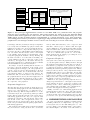
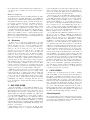
Figure 6: In order to limit the number of cycles for which interrupts can be disabled by untrusted applications,
we introduce a new processor instruction (clix) which can be used to bound the maximum duration for which
interrupts are disabled. We also implemented additional safeguards to prevent an application from disabling
interrupts for a longer period by executing clix continuously or at regular intervals.
that is connected to two slave devices (register files) on an
I2 C bus. We chose the AVR ATmega core and the I2 C bus
due to their widespread use in embedded systems. In what
follows, we describe our implementation in detail and then
present initial results on the performance of our prototype.
4.1
Our Prototype
In our prototype, the trusted domain, which manages the
scheduler, time-slice and atomicity monitors, applicationaware MPU and the peripheral bus manager, is hosted in
its own dedicated portion of RAM (instead of ROM) which
is not accessible by other applications. The trusted domain also has exclusive access to a set of registers that
hold security-critical information. This was necessary to
ensure that misbehaving applications do not access or modify security-critical system parameters, e.g., the maximum
length of an atomic section that is stored in a register and
initialized during system start-up by the trusted domain.
We added secure registers to store information regarding the
currently executing application (in the application tracker),
the trusted domain’s stack pointer and the boundaries of
different applications. We also modified the interrupt mask
register (that is used to determine the set of active interrupts and hence, the set of applications that may interrupt
the current application) and the timer corresponding to the
time-slice monitor to be secure registers.
The scheduler is implemented using the set of prioritized
interrupts available in the AVR core. It supports prioritybased scheduling of applications with fixed and unique priorities. The highest priority interrupt line is reserved for
the trusted domain and applications are executed as interrupt handlers. A high priority panic interrupt is fired when
a security violation (as detected by the application-aware
MPU, time-slice monitor, atomicity monitor or peripheral
bus manager) occurs. It is important that the security panic
interrupt is non-maskable, i.e., it can never be disabled.
CPU preemption occurs automatically based on the priority
of an incoming interrupt. The CPU time-slice monitor is
implemented as a hardware timer that fires a security inter-
rupt when it expires. The atomicity monitor is implemented
as a custom instruction.
Furthermore, since the original AVR does not have an exclusive MMU or MPU module, we extend the core with a
custom MPU that is initialized by the trusted domain. During system start-up the trusted domain loads the memory
map of applications into the MPU. Then the MPU enforces
application boundaries in program and data memory using
the information about currently executing application that
it obtains from the application tracker.
Memory partitions that are enforced by the MPU are created at compile time, i.e., by compiling the trusted domain
and applications into a custom executable. The executable
contains information regarding the load addresses of applications in RAM and their data regions (stack, heap and globals) and hence facilitates mapping of applications to separate
(program and data) partitions. The trusted domain multiplexes the stack pointer between different applications. We
extended the AVR core with an additional stack pointer that
is used exclusively by the trusted domain. The trusted domain is also responsible for saving and restoring application
contexts. We store the context of an interrupted application on the trusted domain’s stack, which is accessible only
by the trusted domain. This prevents any malicious application from accessing and modifying the state of any other
application.
Atomicity Monitor
Since our prototype uses interrupt-based preemption mechanisms, applications disable all interrupts before executing
atomic operations. In order to limit the maximum length of
atomic operations, we added a custom instruction clix Y to
the AVR core that disables all interrupts for Y cycles (Figure 6). We extended gcc (version 4.3.2) and binutils (version 2.20.1) to enable support for this new instruction. The
value of Y is fixed at compile-time based on the atomic section’s declared length. The generated application binaries
use the custom instruction clix in place of the conventional
cli instruction and a security exception is raised if any ap-