1
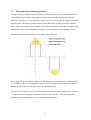
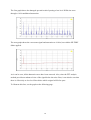
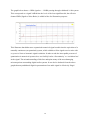
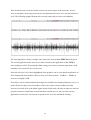
Since the vast majority of metering within workstation environments responds to sample
value only, the above example would show a level of around —3dB below clipping. However
any further increase in the level of the signal would result in a potentially illegal output level
from the system converter. As this error would not be reported on metering within the
workstation, in this particular case a possible 3dB overload can result if the signal is
increased to a maximum reading on the workstation meters. This phenomenon is sometimes
termed as ‘inter-sample peaking’.
Although the above example is somewhat extreme and specific, there is plenty of potential
for this to occur within the mixing environment. Combining a number of processed
contributing tracks, and limiting the result to the maximum possible modulation level in order
to satisfy current industry trends, when using only peak value metering, provides a recipe for
such hidden errors.
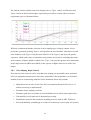
Since the very purpose of a limiting application is most often to increase average modulation
levels, a reconstruction meter with both manual and automatic correction processing has been
included in the Oxford Limiter plug-in, in order to provide the user with a method to avoid or
repair such errors.
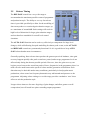
Pro Tools AAX version only
The AAX version of Oxford Limiter has two Reconstruction Meter modes — DAC
Simulation that was present in the RTAS/TDM version, and a new True Peak mode.
DAC Simulation Mode
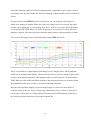
A signal that is already 2dB over unity when it reaches the Auto-Compensation section will
remain 2dB over unity. It is only inter-sample-peaks that are corrected, not sample-peaks.
Therefore the Auto-Comp feature (in this mode) should be understood as a feature that
corrects for illegal sequences of legal sample values, not corrects illegal sample values.
Before examining the Recon Meter, and using the Auto-Comp feature, you need to ensure
that you have already controlled transients in some other way to bring them below unity (see
The Limiter Section). This means using Safe Mode, having 16-bit or 24-bit dither enabled or
lowering the input or output fader.
14