1
14
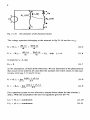
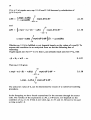
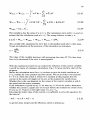
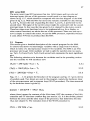
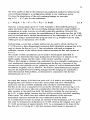
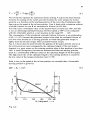
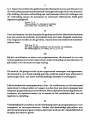
lf j 2(-x/2-a) equals zero, eqs. 2.1.43 and 2. 1.49 become by subsdtution of
j 2(-x/2-a) = 0:
8
i1(9)
= r1exp(-a1(9))
l + g cos(29)
J
exp(o11ll'\)d0'
1
2~1.s5
\V
-'lt/2-u
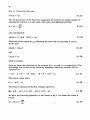
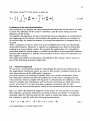
and
-P
jz(9) = {r1 exp(-o,(-P) - T2(9))
J exp(o (9')) d9' 1
2.1.56
-'ltf2-a
8
r2exp(-02(9))
J
exp(a2(9'))d9'}/u
+ gcos(29)1
-Il
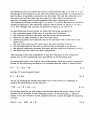
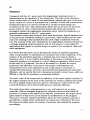
Whether eq. 2.1.54 is fulfilled or not depends largely on the values of a and ~· To
express this condition in an analytica! form we use the following line of
reasoning:
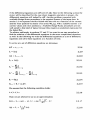
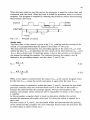
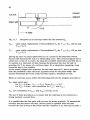
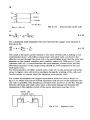
lf i2(6) equats zero for 0=-7t/2-a then i2 can already reach zero for 6=6;., with
-P < 9z < n/2 -
2.l.57
a.
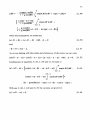
Then eq. 2.1.56 gives
-P
J
r1exp(-01(-P) - Ti(9z))
exp(o1(9'))d0 1 =
2.1.58
-x/2-a
r2exp(-02(9z))
j
&z
exp(o2(9'))d9'.
-P
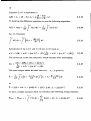
The unknown value of ez can be determined by means of a numerical scanning
procedure.
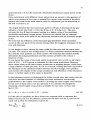
In the foregoing we have found expressions for the currents through the motor
coils. The validity of the expressions 2.1.43, 2.1.49 and 2.1.53 depends on the
condition of eq. 2.1.54. If this is not valid, eqs. 2.1.55 and 2.1.56 have to be used
as long as j 2(6) > 0.