1
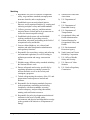
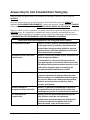
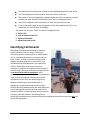
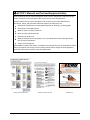
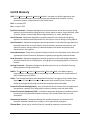
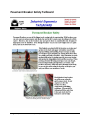
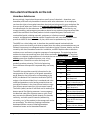
CAREER PROFILE: Pipeline Technician As a pipeline technician, Oscar G. is responsible for the operation, maintenance, and repair of pipelines, terminals, and associated equipment, including pipeline valve sites, mains, metering units, and pump stations for his company. Pipeline technicians maintain, test, troubleshoot, and repair pipeline equipment, associated computer programming, and electronic control systems used in pipeline systems. Oscar monitors control systems for indications of system errors or failures including leak detection or pressure fluctuations. He also uses computer applications and specialized programs to test pipeline system functions and maintain accurate records. Pipeline technicians conduct site-based activities that evaluate pipeline product measurement and quality. Oscar says, “The favorite part of my job is doing hands-on pipeline maintenance.” Pipeline technicians perform corrective maintenance as well as damage prevention activities on pipeline systems. Pipeline technicians use customer service skills in communicating with the public about safety issues. Oscar says, “An important part of my job is to help educate the public about pipeline safety, such as telling them about the Call Before You Dig program, and how to identify gas line markers.” Gas Pipeline Markers Pipeline markers are found in the pipeline right of way to identify that a pipeline is buried in the vicinity of the markers. Pipeline markers are not necessarily placed directly above the buried pipeline but typically follow the pipeline’s general location and route. Pipeline markers identify what product is being carried in the pipeline (natural gas, etc.), the name of the pipeline operator, an emergency contact number, and the area’s one-call center (“call before you dig”) number. High Consequence Areas Federal regulations require some areas near pipelines to be designated as high consequence areas (HCA). An HCA is an area or building near a gas transmission pipeline where more than 20 people gather, work, or live. HCAs include schools, churches, apartment buildings, business establishments, etc. While major pipeline incidents are rare, pipelines are frequently damaged by excavation and other construction activities. When a pipeline near an HCA is damaged, the area will be evacuated for safety reasons until the pipeline is repaired and it is safe to return. Citizens should be alert to and take notice of pipeline markers placed throughout their communities. Knowing in advance the proximity of local pipelines and how to safely respond to pipeline incidents can help ensure community safety. Energy Industry Fundamentals — Module 2 (Ver. 1.2) 94