1
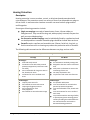
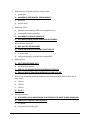
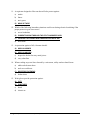
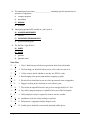
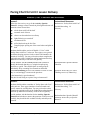
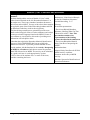
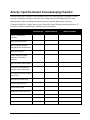
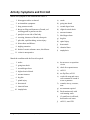
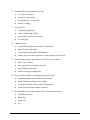
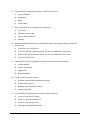
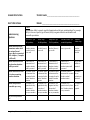
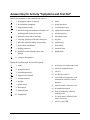
injuries. Before the victim’s condition can be assessed and the victim treated, the circuit must be opened by flipping the power switch, unplugging the appliance, throwing the circuit breaker, or, in the case of high voltage, de-energizing the power lines by utility workers. Until this is done, the victim cannot be treated safely. Major shocks or those with secondary injuries require emergency treatment. Call 911 and monitor the victim’s breathing and pulse and follow procedures for preventing shock. Shock It is better to prevent shock than to try to treat it. Do not reposition the body if there are broken bones, spinal injuries, or head injuries. Injuries that are serious enough to throw a victim’s body into a state of shock merit calling 911. Physical shock can be prevented by elevating the victim’s feet slightly, ensuring that the victim is neither too hot nor too cold, and offering reassurance that emergency medical personnel are on their way. The acronym W.A.R.T. may help you remember what to do to prevent shock. W: warmth; keep the victim off the damp ground, cover with a blanket as needed A: remember your ABC’s; check the victim’s airway (unobstructed), breathing, and circulation (pulse) R: reassure and rest; speak calmly to the victim, keep the victim from feeling anxious, keep the victim relatively still T: treat the injury Heart attack Call 911 and arrange for emergency transportation of the victim to hospital. If the victim becomes unconscious, watch the victim’s chest to see if he or she is breathing. Check the victim’s pulse. If the victim is not breathing but has a pulse, begin artificial respiration. If there is no breathing and no pulse, the victim is in cardiac arrest. Begin chest compressions and continue until emergency medical personnel arrive. Stroke Call 911 and arrange for emergency transportation of the victim to a hospital. Unconsciousness Ask the victim a question and listen for a response. If there is no response, call 911. Watch the victim’s chest to see if he or she is breathing. Check the victim’s pulse. If the victim is not breathing but has a pulse, begin artificial respiration. If there is no breathing and no pulse, the victim is in cardiac arrest. Begin chest compressions and continue until emergency medical personnel arrive. ACTIVITY: SYMPTOMS AND FIRST AID TREATMENT REQUIRED On the worksheet provided by your instructor, try to match the symptoms with the conditions they indicate and the conditions with the proper first aid response without looking back at your text. It’s important that you know the basic warning signs so that you can recognize the underlying health issues. Even if your first response is just to call 911, the dispatcher on the other end of the line is going to need for you to describe the victim’s symptoms and surroundings. Energy Industry Fundamentals — Module 2 (Ver. 1.2) 254