1
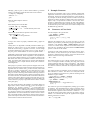
(module preferences scheme/contract
(provide add-panel open-dialog)
;; add-panel : (panel → panel ) → void
(define/contract add-panel
((any 7−→
(λ (new-child )
(let ([children (send (send new-child get-parent)
get-children)])
(eq? (car children) new-child ))))
7−→ any)
(λ (make-panel )
(set! make-panels (cons make-panel make-panels))))
;; make-panels : (listof (panel → panel ))
(define make-panels null )
;; open-dialog : → void
(define open-dialog
(λ ()
(let∗ ([d (instantiate dialog% () · · ·)]
[sp (instantiate single-panel% () (parent d ))]
[children (map (call-make-panel sp) make-panels)])
· · ·)))
;; call-make-panel : panel → (panel → panel ) → panel
(define call-make-panel
(λ (sp)
(λ (make-panel )
(make-panel sp)))))
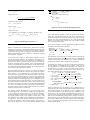
Figure 1. Contract Specified with add-panel
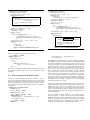
Here is an example of a dependent contract for sqrt:
;; sqrt : number → number
(define/contract sqrt
d
(bigger-than-zero? 7−→
(λ (x)
(λ (res)
(and (bigger-than-zero? res)
(≤ (abs (− x (∗ res res))) 0.01)))))
(λ (x) · · ·))
This contract, in addition to stating that the result of sqrt is positive,
also guarantees that the square of the result is within 0.01 of the
argument.
2.2
Enforcement at First-Order Types
The key to checking higher-order assertion contracts is to postpone contract enforcement until some function receives a first-order
value as an argument or produces a first-order value as a result.
This section demonstrates why these delays are necessary and discusses some ramifications of delaying the contracts. Consider this
toy module:
(module delayed scheme/contract
(provide save use)
;; saved : integer → integer
(define saved (λ (x) 50))
;; save : (integer → integer) → void
(define/contract save
((bigger-than-zero? → bigger-than-zero? ) → any)
(λ (f ) (set! saved f )))
;; use : integer → integer
(define use
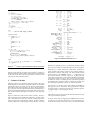
(module preferences scheme
(provide add-panel open-dialog)
;; add-panel : (panel → panel ) → void
(define add-panel
(λ (make-panel )
(set! make-panels (cons make-panel make-panels))))
;; make-panels : (listof (panel → panel ))
(define make-panels null )
;; open-dialog : → void
(define open-dialog
(λ ()
(let∗ ([d (instantiate dialog% () · · ·)]
[sp (instantiate single-panel% () (parent d ))]
[children (map (call-make-panel sp) make-panels)])
· · ·)))
;; call-make-panel : panel → (panel → panel ) → panel
(define call-make-panel
(λ (sp)
(λ (make-panel )
(let ([new-child (make-panel sp) ]
[children (send (send new-child get-parent)
get-children)])
(unless (eq? (car children) new-child )
(contract-error make-panel ))
new-child )
))))
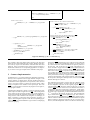
Figure 2. Contract Manually Distributed
(bigger-than-zero? → bigger-than-zero? )
(λ (n) (saved n))))
The module [8, 9] declaration consists of a name for the module,
the language in which the module is written, a provide declaration
and a series of definitions. This module provides save and use. The
variable saved holds a function that should map positive numbers
to positive numbers. Since it is not exported from the module, it
has no contract. The getter (use) and setter (save) are the two visible accessors of saved . The function save stores a new function
and use invokes the saved function. Naturally, it is impossible for
save to detect if the value of saved is always applied to positive
numbers since it cannot determine every argument to use. Worse,
save cannot guarantee that each time saved ’s value is applied that
it will return a positive result. Thus, the contract checker delays the
enforcement of save’s contract until save’s argument is actually applied and returns. Accordingly, violations of save’s contract might
not be detected until use is called.
In general, a higher-order contract checker must be able to track
contracts during evaluation from the point where the contract is established (the call site for save) to the discovery of the contract
violation (the return site for use), potentially much later in the evaluation. To assign blame, the contract checker must also be able to
report both where the violation was discovered and where the contract was established.
The toy example is clearly contrived. The underlying phenomenon, however, is common. For a practical example, consider
DrScheme’s preferences panel. DrScheme’s plugins can add additional panels to the preferences dialog. To this end, plugins register
callbacks that add new panels containing GUI controls (buttons,
list-boxes, pop-up menus, etc.) to the preferences dialog.