1
HP DIS: A Development Tool for
Factory-Floor Device Interfaces
The HP Device Interface System provides a development
facility that includes a high-level Protocol Specification
Language, a testing facility, and a run-time facility for device
interfaces that run in an HP-UX environment on HP 9000
computers.
by Kent Fulton Garliepp, Irene Skupniewicz, John U. Frolich, and Kathleen A. Fulton
EFFICIENT DEVELOPMENT OF INTERFACES be
tween computers and factory-floor devices can be a
serious challenge in factory automation projects.1
These factory-floor devices consist of programmable logic
controllers (PLCs), robots, numerically controlled ma
chines, gauges, scales, and other devices. The problem is
that they may come from many manufacturers and may
have different, proprietary interfaces.
For a few major brands of programmable controllers,
there are off-the-shelf communications packages that can
be purchased. This solution has limited applicability if the
needs vary from what is implemented in the package.
If flexibility is needed, a customized interface can be
written. At present, development of specific device inter
faces is a time-consuming, exacting, and expensive process
requiring a fairly high level of expertise. The process gen
erally consists of characterizing the device's communica
tion protocol and then writing, changing, or enhancing
programs, subroutines, and test suites. This process is wellknown to all interface developers and creates a slow re
sponse to market needs.
In the long run, the use of communications standards,
such as the Manufacturing Automation Protocol2 (MAP),
will eliminate many of the device connectivity problems
and the response to market needs will improve significant
ly. In the meantime, many factory-floor devices exist and
have long useful lives remaining. Many are simple devices,
such as gauges with simple interfaces, that may never con
form to a standard.
To reduce the cost of developing customized interfaces
for devices that need them and to shorten the time required
for such efforts, tools are needed to simplify the develop
ment and testing of the interfaces. This is the objective of
the HP Device Interface System (HP DIS). HP DIS is a toolset
that helps developers create and test interfaces between
computer applications and RS-232-compatible factoryfloor devices in less time than before. The resulting inter
faces run in an HP-UX environment on HP 9000 Series 300
or 800 computers.
HP DIS offers three facilities to make the development
and implementation of device interfaces more efficient. A
development facility provides a high-level Protocol
Specification Language3 for defining the communications
logic. A testing facility provides a test generator, a test
exerciser, and a device simulator. A run-time facility exe
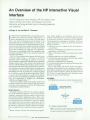
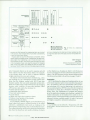
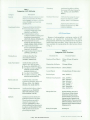
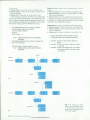
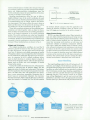
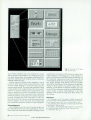
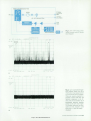
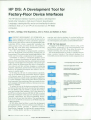
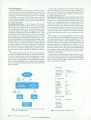
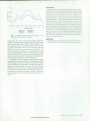
cutes the protocol in real time. Fig. 1 shows a typical pro
tocol development cycle and the use of the HP DIS toolset.
HP DIS: the Tools Approach
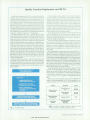
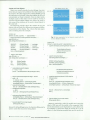
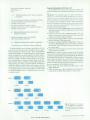
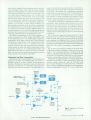
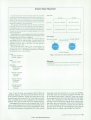
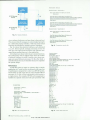
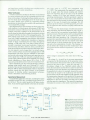
A diagram of the HP DIS system is shown in Fig. 2. The
three bubbles correspond to the above-mentioned three
facilities provided by HP DIS. These allow the system de
veloper to develop, test, and run device interfaces.
The development facility is simply a compiler that gen
erates a protocol interface. The protocol interface is an
executable process that forms the central component of an
Standard Process
62 HEWLETT-PACKARD JOURNAL OCTOBER 1990
© Copr. 1949-1998 Hewlett-Packard Co.
Corresponding Steps Using HP DIS
Understand application needs.
Understand device communication
protocol and message formats.
Design protocol interface
architecture, functionality, and
modularity.
Write application calls to protocol
interface. Create protocol interface
using the Protocol Specification
Language.
Create tests using the HP-DIS test
facility.
Execute tests using the HP-DIS test
facility.
Define the configuration and
execute the protocol interface modules.
Fig. 1 . The process of creating a device interface.