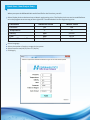
1
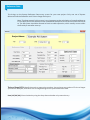
Hour (XX): Enter the hour the data point was logged using military me of 0 to 23 hours.
Note: The Reference Data sec on items listed below are used in the calcula on of system
Normalized Permeate Flow, Normalized % Salt Passage, and Normalized Delta P. The Element
sec on items listed a er the Reference Data sec on are used in the normaliza on calcula ons
of the Water Transport Coefficient and Salt Transport Coefficient. The Normalized Permeate
Flow and Normalized % Salt Passage in most cases is a be er indicator of actual system
performance as they are based on the actual "real-world" ini al opera on of the elements at
the site
Feed Temp (XXX.X): Enter the temperature of the RO feed. The temperature range allowed is 33 to 122°F or 1
to 50°C.
Note: The correct feed temperature is absolutely essen al for the genera on of meaningful
normalized data due to its significant impact on feed pressures and permeate quality.
Feed Salinity (XXXXX.X): Enter the salinity of the RO feed as it enters the 1st stage of the RO. The feed salinity
is a measurement of the TDS (Total Dissolved Salts) content and is reported as ppm (American) or µS/cm
(Metric). PPM (Parts per Million) is also known as mg/l (milligrams per liter). MicroSiemens/cm (µS/cm) is
also known as micromhos/cm (µmhos/cm) in parts of the world.
Perm Salinity (XXXXX.X): Enter the salinity of the RO permeate. The Permeate Salinity is a measurement of
RO permeate quality and is reported as ppm or µS/cm. The Permeate Salinity has to be a lower value than the
Feed Salinity.
Perm Back Pressure (XXXX.X): Enter the Permeate Back Pressure as it leaves the RO. American units are psi
(Pounds per Square Inch) and Metric units are bar.
Note: The Permeate Back Pressure reading is important in that it is subtracted from the Feed
Pressure and Concentrate Pressure for the calcula on of NDP (Net Driving Pressure). The Net
Driving Pressure is the remaining feed pressure available to force water through the membrane
once osmo c back-pressure and permeate back-pressure have been overcome.
Conc Flow (XXXX.X): Enter the concentrate flow of the RO. Concentrate flow is also known as Reject or Brine
flow. American units are gpm (Gallons Per Minute) and Metric units are m3/hr (Cubic Meters per Hour).
Perm Flow (XXXX.X): Enter the permeate flow of the RO. Permeate flow is also known as Product flow.
American units are gpm (Gallons Per Minute) and Metric units are m³/hr (Cubic Meters per Hour).
Note: The Feed flow is calculated by the program by adding up Concentrate flow plus Permeate
flow.
Feed Pressure (XXXX.X): Enter the Feed Pressure as it enters the 1st stage of the RO. American units are psi
(Pounds per Square Inch) and Metric units are bar.
Conc Pressure (XXXX.X): Enter the Concentrate Pressure as it exits the last stage of the RO. American units
are psi (Pounds per Square Inch) and Metric units are bar.
Note: The Concentrate Pressure is subtracted from the Feed Pressure by this program to
determine the Delta P (Pressure Drop) of the system. In the situa on where the user uses a
Delta P gauge to monitor the feed-to-concentrate pressure drop, it is recommended to log the
feed pressure gauge reading and that the concentrate pressure is logged by the operator by
deduc ng the Delta P from the feed pressure. An increase in the calculated Pressure Drop is an
indica on of fouling of the feed spacer.