1
Graphs
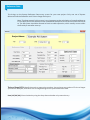
The operator can choose to view a number of graphs of the system opera ng data and normalized data. The
graphs are automa cally generated and the data is plo ed rela ve to me. If there is more than one set of
data for a par cular day, the data set with the lowest Hour value will be plo ed. The graphs plot a straight line
between data points.
The graph types include:
Permeate Flow vs. Time: This graph plots the actual permeate flow in gpm or m³/hr.
Feed Pressure vs. Time: This graph plots the actual RO feed pressure in psi or bar.
Permeate Salinity vs. Time: This graph plots the actual permeate salinity (quality) in ppm or µS/cm.
Salt Passage vs. Time: This graph plots the actual per cent salt passage for the en re system. The
calculated value is the actual permeate salinity divided by the "average" salinity of the RO feed and
concentrate. The average feed salinity calcula on es mates the concentrate salinity based on system
recovery and then calculates the "arithme c average" of the feed and concentrate salinity.
Note: The % Salt Passage in this case is not simply permeate salinity divided by feed salinity.
Normalized Salt Passage vs. Time: This graph plots the normalized per cent salt passage of the system
rela ve to the System Reference Data at start-up.
Normalized Permeate Flow vs Time: This graph plots the normalized permeate flow in gpm or m³/hr,
rela ve to the System Reference Data at start-up.
Normalized Delta P vs. Time: This graph plots the normalized feed-to-concentrate pressure drop in psi
or bar rela ve to the System Reference Data at start-up. The normalized Delta P value reflects
adjustments to pressure drop due to varying feed and concentrate flows.
Salt Transport Coefficient vs. Time: This graph plots Salt Transport Coefficient (STC) for "membrane
technophiles". The importance of this number is that it measures the efficiency of the membrane in
how fast it allows the passage of salts. The value is reported as m/sec (meters per second). This number
allows the comparison of membranes from site to site, independent of what the on-site opera ng
condi ons are. This number will be affected by changes in the ionic makeup of the feed water. For
example, an increase in divalent ions (like hardness or sulfate) will result in a lower Salt Transport
Coefficient.
Water Transport Coefficient vs. Time: This graph plots the Water Transport Coefficient (WTC) for
"membrane technophiles". The importance of this number is that it measures the efficiency of the
membrane in how fast it allows the passage of water. The value is reported as m/sec‐kPa (meters per
second per kilopascal. This number allows the comparison of membranes from site-to-site,
independent of what the on-site opera ng condi ons are.