1
Appendices
User’s Guide CT-Expo V 2.3
equal dose-relevant characteristics (Siemens Somatom DRH). No information is available up to now on
the agreement with other data sets (e.g. NIH, 1999).
anatomical region are small relative to e.g. thorax
and abdomen, and hence this error can be tolerated.
Correction of Scanner Type
In addition to the conversion factors used, the accuracy of effective dose is also dependant on how these
factors are used in the calculation. This applies to
the way in which organs are substituted (which are
listed in reports ICRP 60 (ICRP, 1991)and ICRP 103
(ICRP, 2008) but not available in the pertaining data
set) as well as the correct treatment of the ‘remainder’ organs. In CT-Expo, a simplified, accelerated
procedure is used in the ‘Calculate’ module which
takes the remainder organs into account slice-by-slice.
The ‘Standard’, ‘Light’ and ‘Benchmarking’ modules,
however, make use of pre-defined mean conversion
factors which have been determined by using a more
extended procedure which treats the remainder organ problem per anatomical region. Normally, the
results of these two different approaches differ by
less than 5% except for the region ‘Facial Bone /
Neck’ where differences can be up to 10%. However,
the effective dose values which are typical for this
The conversion factors used in CT-Expo apply for
the scanner model Siemens Somatom DRH. The dose
characteristics for this older type of scanner differ
substantially from other CT scanners. In order to correct for scanner-specific calculations of organ dose
and effective dose, discrete correction factors (in steps
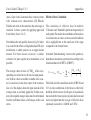
of between 10 and 20%) are used (‘Scanner Matching’). The error resulting from this procedure amounts
to approximately ±10% and thus remains at a level
comparable to other factors influencing the accuracy
of effective dose determined by this calculation.
Dose Modulation
On most types of scanner, the tube current can be
adjusted automatically to the varying absorption between a.p. and lateral projections (angular dose modulation) or/and along the patient’s long axis (longitu54