1
2-6
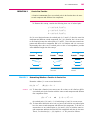
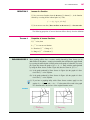
DEFINITION 1
183
Inverse Functions
One-to-One Function
A function is one-to-one if no two ordered pairs in the function have the same
second component and different first components.
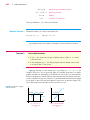
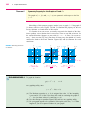
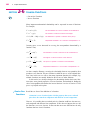
To illustrate this concept, consider the following three sets of ordered pairs:
f {(0, 3), (0, 5), (4, 7)}
g {(0, 3), (2, 3), (4, 7)}
h {(0, 3), (2, 5), (4, 7)}
Set f is not a function because the ordered pairs (0, 3) and (0, 5) have the same first
component and different second components. Set g is a function, but it is not a oneto-one function because the ordered pairs (0, 3) and (2, 3) have the same second component and different first components. But set h is a function, and it is one-to-one.
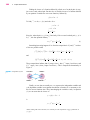
Representing these three sets of ordered pairs as rules of correspondence provides
some additional insight into this concept.
f
Domain
Domain
3
0
0
4
f is not a function.
EXAMPLE 1
h
g
Range
Range
Domain
Range
0
3
2
5
4
7
3
5
2
7
4
7
g is a function but is not
one-to-one.
h is a one-to-one
function.
Determining Whether a Function Is One-to-One
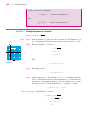
Determine whether f is a one-to-one function for:
(A) f(x) x2
Solutions
(B) f (x) 2x 1
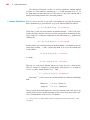
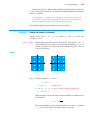
(A) To show that a function is not one-to-one, all we have to do is find two different ordered pairs in the function with the same second component and different
first components. Since
f (2) 22 4
and
f (2) (2)2 4
the ordered pairs (2, 4) and (2, 4) both belong to f and f is not one-to-one.
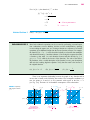
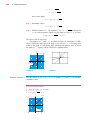
(B) To show that a function is one-to-one, we have to show that no two ordered pairs
have the same second component and different first components. To do this, we
assume there are two ordered pairs (a, f (a)) and (b, f(b)) in f with the same second components and then show that the first components must also be the same.
That is, we show that f (a) f(b) implies a b. We proceed as follows: