1
ATSC A/85:2013
Establishing and Maintaining Audio Loudness, Annex F
12 March 2013
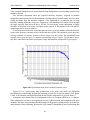
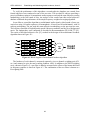
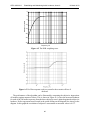
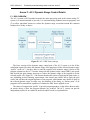
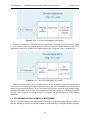
The loudness of each channel is calculated individually, then summed to get the overall
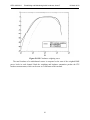
loudness of the program. (The loudness weighting curve is shown in Figure F.8).
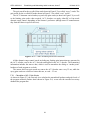
The peak level calculation has to include the center and surround channel downmixing
coefficients (cmixlev and surmixlev) selected (ideally) during the production process. The output of
the calculation is the maximum peak level of the worst case downmix condition.
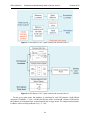
Loudness and peak values are normalized by the overall program dialnorm value before being
passed to the subsequent calculation stages.
The loudness and peak level data used for the “compr” gain word calculations represent these
values over an entire AC-3 sync frame (32 ms).
The audio decoder includes an overlap and add, thus even the coarsely timed “compr” gain
words are applied smoothly.
The dynamic range control portion of the AC-3 system has to deal with all types of program
material, so it includes a method of adjusting the attack and decay time constants that are
determined automatically depending upon the program material..
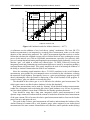
The audio data after loudness normalization is mapped onto the selected DRC profile to
generate a static gain value. It is also used to select one of four time constants, depending on
whether the input loudness is larger (attack) or smaller (decay) than the smoothed loudness, and
by how much.
If the input loudness is larger than the smoothed loudness, and the amount is greater than the
attack threshold, then the "fast attack" time constant is selected. This is generally a very fast time
constant, designed to provide very quick convergence of the compressor for very loud events.
If the input loudness is larger than the smoothed loudness, but not by more than the attack
threshold, then the "slow attack" time constant is selected. This is generally a moderately fast time
constant, designed to provide reasonably quick convergence of the dynamic range controller for
moderately loud events
If the input loudness is smaller than the smoothed loudness, but not by more than the decay
threshold, then the "slow decay" time constant is selected. This is generally a very slow time
constant, designed to provide slow and therefore inaudible release of the compressor during soft
passages.
If the input loudness is smaller than the smoothed loudness, and the amount is greater than the
decay threshold, then the "fast decay" time constant is selected. This is generally a moderate time
constant, designed to provide a faster release at the end of very loud events.
The other principal part of the DRC data generation process is the peak limiting function. The
clip level is known (0 dB FS) thus the difference between that and the normalized peak level of
the program is the maximum allowable gain before clipping. If the static gain words call for more
gain, the smooth and limit gain block limits the static gain words to the maximum allowable gain.
The time constant just computed ensures that the gain changes will not be abrupt enough to cause
objectionable artifacts, and are appropriate to the program material.
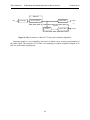
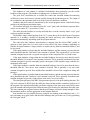
Note that there are two parallel processes going on; one running at the audio block rate (~ 5.3
ms) generating dynrng gain words, and the other running at the sync frame rate (32 ms) generating
the compr gain words.
55