1
areas to type in actual text, etc. on their own and
combined together. It is not our goal to provide here an
extensive compilation of HTML forms and we suggest
[3, 7] for that purpose.
There are two methods to submit forms. Depending
on which method is used the encoded results of the form
is passed to the CGI program in a dierent way. This
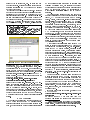
issue is explained in Section 3. We shall employ a simple form comprising an area and a button whose HTML
code is shown in Figure 2. The user is to type in a piece
of text (e.g. \This is a simple input text.") and click
on the \submit" button. By doing so, the user requests
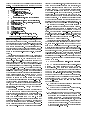
<html><title>HTMLForm</title>
<p>Please type your sentence below and
click on the ``submit'' button.
<p><form action="http://www.yoursite.com/cgi-bin/script.cgi"
method="get">
<textarea name="query" rows="10" cols="40" wrap="physical">
</textarea>
<p><input type="submit" name="send" value="submit">
</form></html>
+
Figure 2: HTML Code (Top) for Form (Bottom)
a service from the WWW site specied by the form. A
CGI script [6, 8, 9], explained in Section 3 below, must
be associated with an HTML form. In our running example, we have made use of the get method and associated our form with the CGI script script.cgi stored
in http://www.yoursite.com/cgi-bin on the WWW
server machine. When the user clicks on the \submit"
button the request query
http://www.yoursite.com/cgi-bin/script.cgi?query=
This+is+a+simple+input+sentence.+&send=submit
is sent over to the site www.yoursite.com. The substring of characters starting with \?" and going until the end comprises the information from the HTML
form to be passed on to script.cgi. However, if the
post method had been used, the input string would not
have appeared in the request query as above, rather it
would have appeared in the body of the HTTP request.
We explain below some important technical details of
scripts.
3
The CGI Script
A CGI script is a special kind of program started via
an HTML form and run on the WWW site's machines.
Scripts are sequences of commands like ordinary programs, however their commands consist of instructions
at the operating system level such as handling les
(deleting or printing them, for instance) or running
other scripts and programs in programming languages
like C or, in our case, Prolog. We suggest [9] for a
more thorough explanation on the Common Gateway
Interface.
Any programming language which can read environment variables and which provides executable code
(like C, C++ or Java) can be used as a CGI application. Prolog, being a high-level symbolic language,
is an excellent tool for programming WWW applications [1, 2, 12], but some implementations do not allow
the creation of executable code. Furthermore, in the
standard Prolog denition [10] there is no way to refer directly to environment variables. That is why, if
we want to use Prolog as a programming language for
WWW applications, we have to provide an executable
program (i.e. a binary or script le) that can invoke
the Prolog interpreter, load a given program and run
it. For the sake of convenience, this executable will also
deal with the CGI particularities. We have used a CGI
script [6, 8, 9] for this purpose2 and we proceed below
to describe this approach.
A rst piece of technical information is that a CGI
script, in order to handle requests of HTML forms, has
to be stored in a special folder, viz. the cgi-bin subfolder of the WWW server machine, otherwise it just
does not work! In some sites, where security against
invaders is a priority issue, very strict policies are enforced concerning access to cgi-bin folders and what can
be made available in them. For instance, some sites
may demand that the CGI script be thoroughly tested
before they are made available to outside users. We
recommend that readers interact directly with the computing support and WWW team of their sites to nd
out more about such restrictions. If it turns out to be a
delicate political issue to have a CGI script available via
normal means, one can always set up one's own independent WWW server (for instance, using free software
like Jigsaw { see http://www.w3.org/Protocols/ for
more information).
Another important technical issue concerns the
method employed in the HTML form. Forms are used
in various contexts as a standardised mechanism for
bidirectional data exchange over the web [7]. Methods
are used to specify how the form is to be handled by
the CGI script and they (method and CGI script) are
closely related. We have experimented with two methods, post and get, and their respective CGI scripts,
explained below.
If you use method get in your form, specied by the
HTML command
<form action="http://www.yoursite.com/cgi-bin/script.cgi"
method= "get">
as part of your HTML web page then your CGI
program will receive the encoded form input in the
2 Another alternative would be to write a C or Java program
to deal with CGI and interface this program with an executable
Prolog program. Although we know that in principle this approach is feasible we haven't investigated it thoroughly.