1
Course Requirements
This course involves reading, writing and in-class
activities. You are expected to read and absorb the
text and other materials on your own outside of class.
You are expected to know all assigned material even
if it is not discussed in class. You will write the
several technical engineering documents over the
course of the term. This writing should be taken
seriously. You will need to put in consistent effort
throughout the whole semester. You will need to
speak up in class, answer questions, and present ideas
orally and in writing.
Attendance & Participation
Attendance is mandatory and expected. You should
be punctual, and have read the assigned material
before class. In order to properly pace your way
through unit work and project deliverables, there will
be something due nearly every class period—one or
two unit questions or a project document—either
individually or as a team. Reviews of project
documents will be conducted in class, and it is
important for all team members to be present on
those days.
In general, late submissions will not be accepted, and
there is no extra credit work. Exceptions may be
made at the instructor's discretion.
Units and Unit Sheets
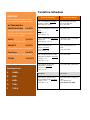
Below is a list of the 7 major units we will be
covering this semester. The topics and readings
cover all of the chapters in the text. The pacing is
roughly one chapter per week of coverage, with two
chapters per unit.
Each Unit has a corresponding Unit Sheet that lists
assignments and point values. Think of each unit
sheet as a combination of traditional homework
assignments and take-home exam. Unit sheets should
be downloaded and printed by each student. The
instructor can sign off items that the student has
completed on the sheet, providing a backup record of
work.
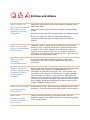
Questions are grouped in layers. Each unit has a "C"
layer, a "B" layer, and an "A" layer. "C" layer is
designed to help you learn basic and general
information. You will choose "C" layer questions
you want to answer, complete the work, and then
demonstrate learning by oral defense. Oral defense
means you have to answer questions about your work
asked by the instructor. "B" is designed to help you
apply, information form the "C" layer, discover
something, hypothesize or problem solve. Typically,
choose one question to work on in the "B" layer. The
"A" layer requires you to analyze an issue, research
facts and form an opinion—critical
analysis. Typically, choose one question from the
"A" layer. Rubrics for each kind of question will be
available so that you know how answers will be
graded. Each 5 points on a question represents about
20 minutes worth of work.
Team Project
The team project is to be completed as a group. The
ideal project is a real-world application which you
identify and begin working on in this course, and
potentially carry on into a capstone course—but
continuing is not required. The project work is
represented by 8 documents as follows: Project Plan,
User’s Manual, Software Requirements, Test Plan,
Test Report, Software Architecture, Software Design,
Acceptance Test.
More details for each document will be in discussed
in class, especially once you have chosen a project.
Your textbook contains outlines and templates for a
number of the documents you must write. Use them!
Each member of the team is responsible to know and
understand documents that another team member has
written. Every document should be reviewed by at
least one other member of the team before it is turned
in for review and grading by the instructor.
Final Exam
The final exam is comprehensive, and will be offered
at the scheduled date and time.