1
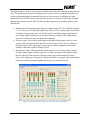
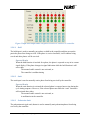
software based device. The tests ensure each pathway through the source code has been exercised and is working properly. Its completeness can be measured by code coverage metrics. There are two general approaches to test automation: Graphical user interface testing. A testing framework generates user interface events such as keystrokes and mouse clicks, and observes the changes that result in the user interface, to validate that the observable behavior of the device is correct. The correctness of the device response as well as the timing of new test is controlled by the operator or person who is doing the testing. Test vector testing. Commonly used in the integrated circuit design industry, the test vector consists of a series of stimuli and expected device responses. Each test case is called a vector because it directs the device under test to a specific observable action. Elements types in the test vectors include logic levels (True and False), integer and floating point data types. A timing control is also required for automated testing that determines how long to wait for a device output to be asserted before declaring a fault and the time before moving on to the next test vector. Test automation can be expensive, and it is usually employed in combination with manual testing. It can be made cost-effective in the longer term though, especially in regression testing. Regression testing is any type of software testing which seeks to uncover software regressions. Such regressions occur whenever software functionality that was previously working correctly, stops working as intended. Typically regressions occur as an unintended consequence of program changes. Common methods of regression testing include re-running previously run tests and checking whether previously fixed faults have re-emerged. 4.2. Traffic Controller Test Automation The automated tester, developed as part of this project, uses a graphical interface for manual testing. The scope of the traffic controller testing is those operations that can be generated by placing calls from vehicles detectors, pedestrian buttons, and preemption inputs. Only the traffic controller operations that are observable by asserting the signals of the NEMA TS1 A, B and C connections can be verified. The automated tester can be operated in a static mode using the graphical user interface. The timing of input changes is strictly control by the person operating the testing system. Validation of traffic controller responses is the responsibility of the person testing the controller. The automated testing uses XML script files to specify which inputs are activated, the timing of those activations and verifying the controller response(s). The advantage of automated testing is that tests can be repeated exactly and results are recorded automatically. Automated test can be repeated for long periods of time while subjecting the traffic controller to varying environmental conditions. An Automated Testing Tool for Traffic Signal Controller Functionalities 14