1
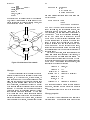
Lemma 4.2 The component processes meet the following specications:
ENEMY (S )
ENEMY (S )
MEDIUM (B )
MEDIUM (B )
NODE1
where
sat
sat
sat
sat
sat
E 1S (tr )
E 2S (tr )
M 1S (tr )
M 2S (tr )
N 1S (tr )
The proof could easily be adapted to take other
nodes into account. In fact, descriptions of the other
nodes are not even necessary, all that is required of
them is that they meet some particular specication:
for example, that they do not transmit any messages
whose kernel intersects with that of a :
NODEj sat
kernel (TRANSj (tr )) \ kernel (a ) = ?
Of course, more complex specications might be more
appropriate, for example that the messages added to
the network by the nodes do not intersect with a
(though those that were passed to the node may be
passed back):
E 1S (tr ) =
kernel (ADD (tr )) kernel (S ) [ kernel (INIT ) [ kernel (LEAK (tr ))
E 2S (tr ) =
NODEj sat
kernel (OUT0(tr )) kernel (TRANSj (tr ))
kernel (S ) [ kernel (INIT ) [ kernel (LEAK (tr ))
\(kernel (a ) n kernel (RECj (tr )))
M 1S (tr ) =
=?
kernel (LEAK (tr )) kernel (B ) [ kernel (TRANS1 (tr ) [ kernel (ADD (tr )) This latter specication is in fact met by NODE1 .
M 2S (tr ) =
5 Discussion
kernel (REC (tr )) kernel (B ) [ kernel (TRANS1 (tr ) [ kernel (ADD (tr )) Model-checking
N 1S (tr ) =
This paper has been concerned with the expression
kernel (TRANS1 (tr )) kernel (REC1 (tr ))
of particular security properties and protocols within
the framework of CSP, in order to provide a founda2
tion for analysis and verication. This approach is moProof This is a standard mutual recursion proof in tivated in part by the availability of model-checking
CSP. The full proof has been omitted for reasons of
tools such as FDR[1], and the work has always prospace.
2
ceeded with an eye on applicability of these tools. However, it is inevitable that there will be some practical
Some further process algebra manipulation (details
diculties, and it may be necessary to adapt some of
in the full paper) nally yields the required result.
the properties. When this becomes necessary, we will
have to establish that the properties we are checking do
Theorem 4.3 The network is secure:
indeed correspond to the properties presented in this
paper, or at least that results obtained by application
(NODE1
of
the tools allow us make the inferences we require.
j[ trans :1; rec :1]j
For example, the sets PLAINTEXT and
MEDIUM
MESSAGES
will generally be innite, even when
j[ leak ; add ; kill ]j
the
base
sets
are
very small. This makes them unsuitENEMY )
sat tr out :0:0:a = hi
able for direct analysis by means of model-checking
using current (February 1996) state-of-the-art technol2
ogy, though the situation will improve as value-passing
Proof The strategy of the proof is as follows: we will is introduced. Techniques such as Skolemisation
(deducing results concerning all messages from veriuse the properties established in Lemma 4.2 to prove
cations on place-holders) might also be appropriate
that the kernels of all messages passed around the syshere. In any case some simplications will have to be
tem must be contained in the kernel of INIT . Since it
made (perhaps concerning the maximum number of
is given that a 62 kernel (INIT ), it follows that a can
never be passed along channel out :0.
2
encryptions) in order to regain nitude of the message