1
and receiving messages. This situation may be modelled at a high level of abstraction in CSP as a process
NET which provides to each user two ways of interacting with it: sending messages to other parties, and
receiving messages from other parties.
We will assume a universal set MESSAGE of all
messages that might be sent by any party, and we will
consider the users to be numbered up to n :
USER = f0; 1; : : : ; n g
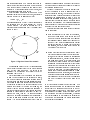
The channel employed by user i to input messages to
the network will be the input channel in :i , of type
USER :MESSAGE . An input of the form in :i :j :m is
considered an instruction from user i to transmit message m to user j .
eventually become available. Generally these properties are expressed precisely and formally in terms of
the semantic models of CSP.
Although it is necessary to know the internal structure of the network in order to demonstrate that it
provides particular services, the services or properties
themselves should be expressible simply in terms of the
interactions the network oers its users. This is the
case for common communications protocols, and in this
paper we take the view that security properties can be
captured in the same way. We therefore examine and
oer denitions of these properties before considering
the network at any ner level of detail.
There are two views from which security properties
can be considered:
from the viewpoint of the users of the network,
out.i
out.j
in.i
in.j
NETWORK
who do not know which other parties are to be
trusted. Properties expressed from this viewpoint
will generally include assumptions (implicitly or
explicitly) that a user's communication partner
will not act contrary to the aims of the protocol.
For example, that any shared secrets should not
be disclosed to third parties.
from a high-level `God's eye view' which identiout.0
in.0
Figure 1. High level view of the network
The channel employed by user i to receive messages
output from the network will be the output channel
out :i , of type USER :MESSAGE . An output of the
form out :i :j :m is considered to be receipt by user i of
message m sent by user j .
Users' requirements on the network are expressed
in terms of the behaviour of the network as a whole,
and CSP has been used successfully for some years in
the description and analysis of communications protocols. Common safety and liveness properties are readily expressed in terms of the possible behaviour of the
network with respect to the users. For example, the
property that no spurious messages are generated is
captured as a safety property that requires any output
message to have previously been input: if out :i :j :m
appears in a trace, then in :j :i :m must have already
occurred. The liveness requirement that no message is
lost can be formalised as follows: for any input message in :i :j :m the corresponding output out :j :i :m must
es those nodes which follow their protocols faithfully, and also identies those which are engaging
in more general activity, perhaps in attempting to
nd a aw in a protocol. If this view is taken, then
care should be taken to ensure that this privileged
information is not accidentally used in the protocol
description: the responses of a node should not be
dependent on information which is available only
at the high-level view. In some circumstances, a
node may not have knowledge concerning its communication partner; in other cases, a protocol may
be invoked only when communicating with particular known and trusted users (how this knowledge
and trust is obtained is outside the scope of this
report).
In this report we will follow the high-level view. This
means we can postulate the existence of an enemy
whose identity is known and can be used in the formulation of security properties. We will use 0 2 USER
as the name of this enemy process. Later we will justify the decision to use only a single enemy, by arguing
that further enemies do not increase the vulnerability
of protocols: the single enemy in a sense encapsulates
the behaviour of all enemies.