1
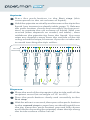
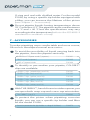
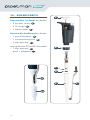
Release the push-button, smoothly. Eject the tip by
pressing firmly on the tip-ejector button.
6 - General Guidelines for Good Pipetting
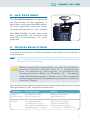
Make sure that you operate
the push-button slowly
and smoothly.
When aspirating, keep the
tip at a constant depth
below the surface of the
liquid (refer to the table).
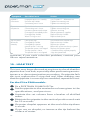
Change the tip before aspirating a different liquid,
sample, or reagent.
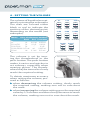
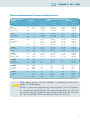
Table - Immersion Depth
and Wait Time
Model Immersion Wait Time
Depth (mm) (seconds)
1
1
P2
P10
1
1
P20
2-3
1
P100
2-4
1
P200
2-4
1
P1000
2-4
2-3
P5000
3-6
4-5
P10ml
5-7
4-5
Change the tip if a droplet remains at the end of the
tip from the previous pipetting operation.
Each new tip should be pre-rinsed with the liquid
to be pipetted.
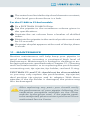
Liquid should never enter the tip-holder; to prevent
this:
-press and release the push-button slowly and
smoothly,
- never turn the pipette upside down,
- never lay the pipette on its side when there is liquid
in the tip.
If you use the same tip with a higher volume, prerinse the tip.
For volatile solvents you should saturate the aircushion of your pipette by aspirating and dispensing
the solvent repeatedly before aspirating the sample.
When the temperature of the liquid is different from
the ambient temperature, pre-rinse the tip several
times before use.
You may remove the tip-ejector (see Chapter 11 Maintenance) to aspirate from very narrow tubes.
After pipetting acids or other corrosive liquids that
emit vapors, remove the tip-holder, rinse the piston,
7