1
2. Select an appropriate pair of resources. This can
be done only if the system knows both the source
and the destination. The mechanism used in Plan
B is the resolution of a set of constraints associated with each resource and is discussed later.
Regarding the rst point, the optimization of the path
used to transfer the data may introduce signicant
performance improvements. Since the implementation
of copy asks the destination box to retrieve data from
the source, caching techniques can still be applied to
avoid unnecessary data transfers. When the network
connection between the machine executing the operation and the rest of the system is poor, the use of copy
can make the dierence between being able to perform
the copy and not being able to do it at all.
Regarding the second point, the selection of the resources involved in a system call is performed by unifying constraints on the set of boxes named in the system
call arguments. System calls using a single box (e.g.
info, which retrieves metadata for boxes) unify the
constraints supplied by the user with the constraints
of the boxes with the given name. The rst box found
for which the constraints unify is the one used. On
the other hand, system calls using two boxes together
(e.g. copy, which copies a box to another) try to nd
a pair of boxes such that: the rst one unies with the
constraints supplied for it by the user; the second one
unies with the constraints supplied for it by the user;
and the results of both unications unify.
/b/proc
/bin
386
ARM
386
p98!ether
p95!wave
p98!wave
lb
lb
chinfo
cp
mk
mk
sh
p98!ether
p95!wave
p98!wave
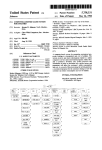
Figure 1: A network with processors and binaries
To show an example, gure 1 depicts a scenario
where three dierent processors are bound to the name
\/b/proc" and three dierent boxes containing inner boxes with program binaries are bound to the
name \/bin". In this example, two boxes exist with
name /bin/lb, one with constraints p98!ether and
the other with constraints p95!wave. The convention is that the rst constraint species the architecture of the machine involved and the second species the network where the machine is attached at (or
one of them if there are many). In this example, p98
and p95 are two dierent architectures (i586/PC and
sa1110/iPaq). Ether means that the machine is exporting the box through our fast ethernet and wave
means that it is exported through a radio ethernet.
Now consider the system call
make("/b/proc/lb!\%!ether", "/bin/lb")
which requests the creation of a new box (a new
process) named /b/proc/lb such that its constraints
match with those of a box named /bin/lb and also
match the constraints %!ether. The system searches
the name space for a pair of boxes named /b/proc
(since we are making a box, we search for a container
where to create it) and /bin/lb. It may nd rst
the processor box bound to /b/proc with constraints
p98!wave. Such constraint set does not unify with
%!ether and therefore the system keeps on searching until it nds the box bound to /b/proc with constraints p98!ether. Since that unies with %!ether
the system has a candidate for /b/proc. The result of
the unication has the constraints p98!ether.
Now the system searches for boxes bound to
/bin/lb such that its constraint set unies with that
given by the user and also with the result for other
argument (p98!ether). Since the user said nothing
regarding constraints for /bin/lb, the rst box found
whose constraints match p98!ether is considered a
candidate for /bin/lb. In fact, there is a /bin/lb
box whose constraints are exactly p98!ether. That is
the one used. In few words, the user asked the system
to create a process to execute a program and the system searched for an appropriate processor and binary
program pair.
We also need some means to ask the system to
choose a dierent resource for a given resource name
and application, i.e. to perform a \resource redirection". In Plan B, this operation is link. Consider as
an example the redirection of \standard output" for
a process. In Plan B each process is represented by a
box (e.g. /b/proc/lb) and has an inner box named
io1 (e.g. /b/proc/lb/io1). The convention is that
this box is used by the process to serve the same purpose of UNIX's standard output. A link from a box