1
PERFORMANCE CHARACTERISTICS
PRE-TRAVEL VARIATION:
Pre-travel is the amount of deflection of the stylus tip before the probe output switches. This value
varies depending on the length of the stylus, speed and direction that the stylus tip is moving relative to
the target surface when it makes contact. Pre-travel variation amount should be stated in probe
specifications relative to stylus length and direction of travel limitations. A probe that has small pretravel variation with no restriction on stylus length and direction of travel will be quite expensive.
Machine characteristics including lash and input latency also contribute to pre-travel variation. Pretravel variation errors can be easily avoided by always taking data in the same directions and speed.
The pre-travel then becomes a constant and can be accounted for in the calibration procedures then
accuracy becomes dependent on repeatability.
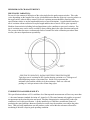
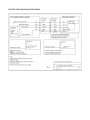
PRE-TRAVEL VARIATION, RADIAL DIGITIZING PRECISION BORE
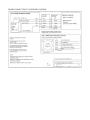
Typical pre-travel variation for DP-4 probe showing variation over 720 degrees of
radial digitizing routine of precision bore. Inside circle represents the
minimum value and the outside circle the maximum. Data was collected
probing at 1 inch per minute with a 43mm long stylus.
UNIDIRECTIONAL REPEATABILITY:
This specification indicates a 95% confidence level that repeated measurements will not vary more than
+/- the stated amount (standard deviation at 2 sigma level). The stated amount only applies to repeated
measurements in the same direction and speed. Machine characteristics can drastically reduce the
confidence level in this specification. A probe installed on a CMM has a much better chance of
producing the stated tolerance than one installed on a mill since the machine errors add to the probe
error. That said, mill installations can still produce results well within the tolerances allowed for
machining if the mill is kept in good operating condition.