1
3.3. SPECIFYING A PARTITIONED MODEL
41
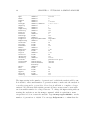
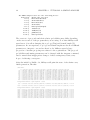
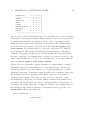
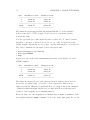
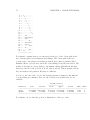
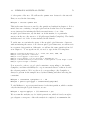
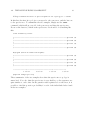
Parameters
1 2 3 4 5
-----------------------------Revmat
. 1 1 1 1
Statefreq
2 3 3 3 3
Shape
. 4 4 4 4
Pinvar
. 5 5 5 5
Ratemultiplier
6 6 6 6 6
Topology
7 7 7 7 7
Brlens
8 8 8 8 8
------------------------------
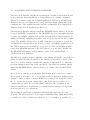
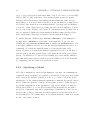
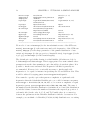
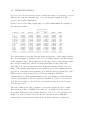
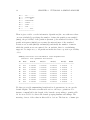
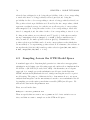
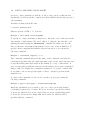
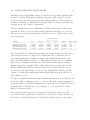
As you can see, all molecular partitions now evolve under the correct model but
all parameters (statefreq, revmat, shape, pinvar) are shared across partitions.
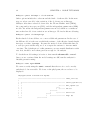
To unlink them such that each partition has its own set of parameters, type:
unlink statefreq=(all) revmat=(all) shape=(all) pinvar=(all). Gamma-shaped
rate variation for the morphological data is enforced with lset applyto=(1)
rates=gamma. The trickiest part is to allow the overall rate to be di↵erent
across partitions. This is achieved using the ratepr parameter of the prset
command. By default, ratepr is set to fixed, meaning that all partitions have
the same overall rate. By changing this to variable, the rates are allowed to vary
under a flat Dirichlet prior. To allow all our partitions to evolve under di↵erent
rates, type prset applyto=(all) ratepr=variable.
The model is now essentially complete but there is one final thing to consider.
Typically morphological data matrices do not include all types of characters.
Specifically, morphological data matrices do not usually include any constant
(invariable) characters. Sometimes, autapomorphies are not included either, and
the matrix is restricted to parsimony-informative characters. For MrBayes to
calculate the probability of the data correctly, we need to inform it of this
ascertainment (coding) bias. By default, MrBayes assumes that standard data
sets include all variable characters but no constant characters. If necessary, one
can change this setting using lset coding. We will leave the coding setting at
the default, though, which is variable for standard (morphology) data. Now,
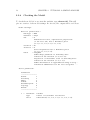
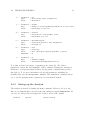
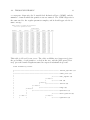
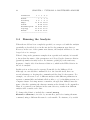
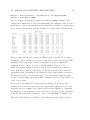
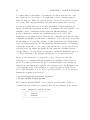
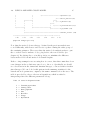
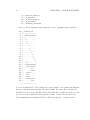
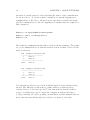
showmodel should produce this table:
Active parameters:
Partition(s)