1
EPICS Design Process
•
Develop Design Specifications: The last step in this phase is to develop a complete list of
specifications for the design, based off of the full functional decomposition and the previously
completed steps. You will again need to develop criteria for the new functions identified and come
up with specific targets for each of those criteria.
•
Design/Analysis/Evaluation of Project and Components: The main task in this phase of the
design process will be taking the ideas you had in the conceptual design phase and transforming
them into an actual design for your project. You should design each of the subcomponents of the
project following the bottom-up implementation described above. This is one of the most
challenging aspects of the design process, because it will require you to use knowledge and skills
from a number of different areas.
First of all, you will be required to use the disciplinary knowledge you have gained through your
formal education. This knowledge will take on different forms depending on your major and how
far along you are with your degree. You will also need to use less formal disciplinary knowledge,
possibly acquired during internships or other practice, in order to successfully complete your
design.
However, you will also be required to obtain new knowledge during the design of the project. This
may be new knowledge that is directly related to your discipline, or it may be something
completely different. For instance, you may be an electrical engineer working on a circuit, but you
don’t have background using a specific type of chip. You will need to do research into how to use
that chip effectively in order to design your project. Likewise, you may be an educator working on
the content for a software project. In order to successfully complete the design, you may need to
learn some basic programming in order to add your content into the program.
The main result of this step in the detailed design phase will be the diagrams, drawings,
schematics, etc needed to construct the prototype of the project. The design of each of the
components should be outlined in design records.
You will also likely need to add additional specifications to your list as you work through the
detailed design of your project. These specifications will deal mostly with the implementation of
the design, and will be specific to the project.
•
Design for Failure Mode and Effect Analysis (DFMEA): As part of this phase in the design
process, you will need to conduct a DFMEA on your design. This is a technique to explore the
possible ways your project might fail in order to address them prior to delivering the project. It is
also a method for documenting that your team has explored the possible ways the project will fail
and taken them into account. This is especially important in industry, where if a project fails in a
way that injures someone, documentation may mean the difference between your company losing
millions of dollars in a lawsuit or not. More information on DFMEA can be found in Lima and
Oakes Service-Learning: Engineering in Your Community on page 65.
A DFMEA is a process by which a detailed and quantitative analysis of the different ways a design
can fail can be generated. Through the DFMEA process, each aspect of a design will be analyzed
for possible ways it can fail, and then each of these failures will be rated based on some criteria.
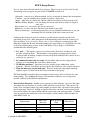
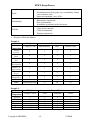
The four criteria that will be used are:
1) Failure Mode: What went wrong with the design?
Copyright © 2009 EPICS
- 18 -
1/7/2010