1
Abstract
Hardware miniaturization, the increased speed of microchips and reduced energy consumption
allowed the development and deployment of many embedded (mobile) devices in the last ten
years. More and more of those devices are equipped with numerous sensors and an increasing
number of specialized sensor networks are installed worldwide. However, most existing deployments are isolated and the data is not merged in order to allow building mashups. This is
mostly due to the lack of an uniform and easy way to make sensor data available, to integrate,
and process it.
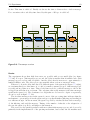
The thesis proposes a novel, distributed architecture (Wisspr ) that facilitates the advanced
interaction with sensor data. Wisspr supports publishing and sharing of sensor data over the
Web in the form of data streams. The representation of sensor data as streams and the use of
Web messaging protocols ease the development of (Web-based) sensor monitoring applications.
Additionally, Wisspr also provides mechanisms for storing sensor data, as well as for executing
continuous queries over the data. This three-fold functionality provides most applications with
the necessary mechanisms to interact with sensor data in a very easy, declarative way.
Wisspr allows to deal with many devices and high sensor sampling rates because it was
designed in a modular and scalable way. An important advantage of the modular design is the
use of specialized engines for publishing, storing and querying. This helps making Wisspr even
more scalable and flexible.
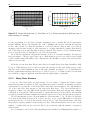
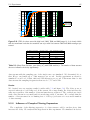
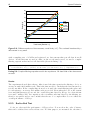
We demonstrate the performance and limitations of our prototype implementation by testing
it against several benchmarks. We also argue why our platform is suitable for a wide range of
potential applications by analyzing the requirements of a set of typical sensing applications.