1
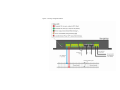
When the booster is operated from LocoNet, the signal arriving
from the centre (or the previous booster) shall always be
connected to the left LocoNet connector and the extension branch
into the right LocoNet connector.
Supply voltage
The booster can be supplied by DC or AC as well. In order to
achieve appropriate dissipation at the bridge rectifier of the
booster, it is definitely preferred to use AC supply.
The AC supply voltage shall never exceed 18V AC!
Connectors
The receiving possibilities of the booster synchronizing signal are
described below. Since the booster can be adapted to various
systems, it can be perfectly used if supplied from any of its inputs.
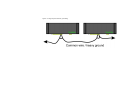
Solely fully insulated track sections with both rails cut shall
be supplied by the digital booster!
DCC OUT: Boosted signal output.
It is required to pay attention to the correct polarity during
connection. In case the isolated rail section is of reversed polarity
compared to the previous section, the booster may give a shortcircuit signal when the train changes the sections.
Only one sync source can be used at a time. The booster shall
never be used with synchronizing of rail signal and signals of other
source simultaneously. The signal source detection is automatic.
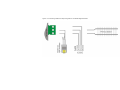
C D E: Synchronizing signal can be received from the rail signal or
from C D E connection. This can be applied if neither of the other
input signals is available or it is not required to ensure a separate
synchronizing signal for the booster.
The input can be used also for receiving the synchronizing signal of
centers.
In this case it shall be considered that a short-circuit status at the
previous booster / maybe the centre can cause the breaking of the