1
Requirements Analysis Overview
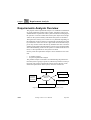
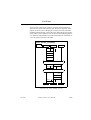
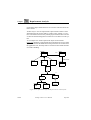
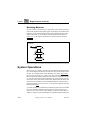
An overview of the requirements analysis activity is depicted in
Figure 627. As can be seen a number of models are used:
•
Textual requirements model as described in “Textual Requirements” on page 3700. Some requirements are supplied as input to
the activity, others may be produced within the activity.
•
Data dictionary, further described in “Data Dictionary” on page
3701.
•
Use case model, described by text, plain MSCs, or plain MSCs in
combination with HMSCs. The use case model shows the system
and the actors interacting with the system. It is described in “Use
Cases” on page 3703.
•
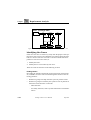
Requirements object model using object model notation. This model includes both a problem domain model and context diagrams
showing the system and the external actors that interact with the system. The requirements object model is described in “Requirements
Object Model” on page 3711.
•
System operations model, see “System Operations” on page 3716.
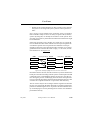
The requirements analysis is a highly iterative process where the different tasks creating the different models are iterated over and over again
but the following outline can give some guideline on how to structure
the work:
1. Study any textual requirements that are provided as input and other
sources of information that are available, e.g. read text books about
the problem domain and talk to potential users of the system. This
may also include rewriting (or creating from scratch) the textual requirements to make them more complete or structured.
2. While performing 1 above create a first version of the data dictionary, including lists of actors, use cases and important problem domain concepts.
3. Create a first version of the requirements object model:
July 2003
–
Use context diagrams to give an overview of the actors and the
system.
–
Use an information model to describe the problem domain.
Telelogic Tau 4.5 User’s Manual
,um-st1
3699