1
Handout C
Action Plan
Quality Details in Apparel
The truth is in the details. Perhaps you have heard this phrase before, but when thinking
about apparel, it does not usually come to mind. Truth is it does apply, and this handout
will help you begin to see whether quality exists in the apparel you consider for purchase.
Quality does not always mean spending a lot of money. Many manufacturers and retailers
add these “quality details” in apparel at numerous price levels. These details may typically
have been used only on expensive items, but they are appearing more frequently at lower
prices to entice buyers.
Often the relationship of price to quality is labeled value. Consumers decide an item is of
fair value when the quality delivered is comparable to the price they paid. Therefore,
overpriced apparel has few quality features, and a bargain offers more quality features in
terms of the price. Always remember quality can be found at any price level.
So what quality details should you look for? The list can be lengthy but begin with these
simple steps:
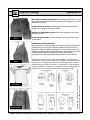
1. Fabric is the basic foundation of apparel. Fabric is woven by yarns which run up-anddown or across. When apparel is cut from the fabric, it too should run up-and-down
and across. Sometimes apparel is not cut correctly, and actually causes clothing to twist
around the body. This is called off-grain, and cannot be corrected. Off-grain apparel is a
result of poor quality control during the manufacturing process (photo example on
Handout D).
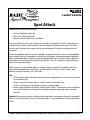
2. Manufacturers sometimes use bias cut sections to cut costs. Bias cut apparel is
exceptionally difficult to sew, tends to stretch out of shape, hang unevenly at the hem,
or sag, compromising quality.
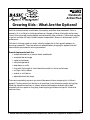
3. Patterned fabrics should match along seamlines in both directions, across and upand-down. Matching indicates quality because of the additional fabric and labor
involved in cutting and sewing.
4. Colors should match between pieces and is an indicator of quality. Fabric, thread,
buttons, zippers, even elastic, should match, function and be durable. Manufacturers
know the performance characteristics of each fabric and should base decisions on how
well these pieces perform in accordance with the fabric.
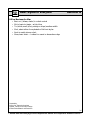
5. Seams within a garment should be securely sewn. Check to make sure threads have not
popped or ruptured along all seams. Seams with serging are more secure and of higher
quality as long as the correct tension was used when sewn. Just be sure to tug along a
seam to see if it has enough tension to resist popping (photo example on Handout D).
8
• Kansas State University Agricultural Experiment Station and Cooperative Extension Service •