1
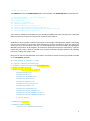
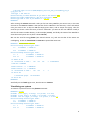
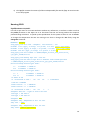
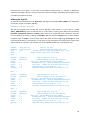
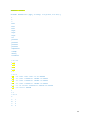
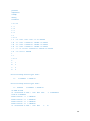
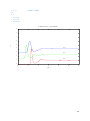
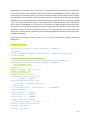
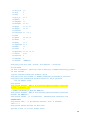
C:\EPSR\examples_rh\silica_with_silvia\silica_3_mc-only_equil_300K\sio2
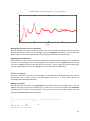
1.5
1
F (Q )
0.5
NeutronSiO2sq
0
-0.5
-1
0
5
10
15
20
Q [1/Å]
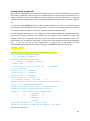
Making the fit better prior to refinement
We now experiment with the model parameters (the van der Waals parameters and the minimum
distance parameters). These can be changed using the changeato command, as we did with the
temperature. (In this case the parameters are pretty good, but feel free to experiment.)
Beginning the refinement
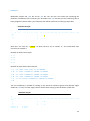
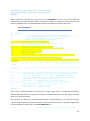
(See section 5.3 in the manual.) To add the refinement of the empirical potential to the simulation
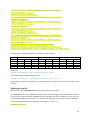
we turn it on by changing some of the parameters in the .inp file: 1) we set potfac equal to 1.0; and
2) we set the ereq parameter to be 10 or 20% of the energy – this is roughly 10 to 20% of the energy
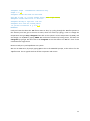
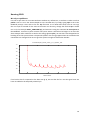
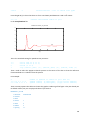
we have equilibrated too shown in the p 14 plot, in this case we chose 300 kJ/mol.
Water example
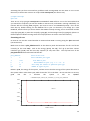
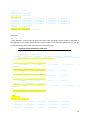
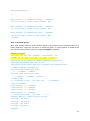
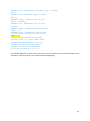
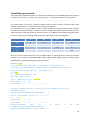
We have 3 diffraction data sets in this example are H2O.mdcs01 (this undeuteriated pure water),
D2O.mdcs01 (this is heavy water), and HDO.mdcs01 (and this is a 50:50 molar mixture of
deuteriated and undeuteriated water).
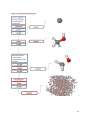
Making an .ato file
We shall construct our system using makemole, like we did with silica but this time we just have one
.mol file since we have just one molecule type. Section 4.3 in the manual explains the makemole
command and uses water as its first example. The process is very similar for what we did in the silica
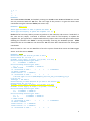
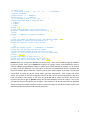
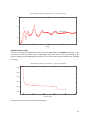
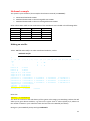
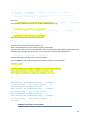
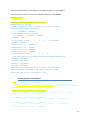
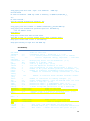
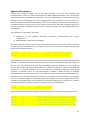
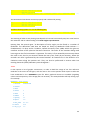
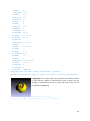
example. The water.mol file should look like:
4
|0 |1 |2 |3 |4 |5 |6 |7 |8
1
OW
2
*
*
3
HW
bond OW HW
0.97600
angle HW OW HW
104.50000
|9
|10 |11 |12 |13 |14 |15 |16 |
HW
14