1
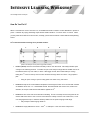
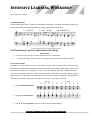
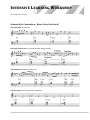
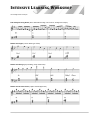
I NTENSIVE L EARNING W ORKSHOP 3 Left and Right Hand Techniques How Do You Fix It? When a chord has too much of one tone in it, an unbalanced sound is created. It is like alliteration in speech or prose – scientists say saying something simple seldom settles situations. Too much of the ‘s’ sound? While you may want this for effect from time to time, normally you will want to achieve a more balanced and pleasing sound. Let’s consider two-hand voicings for a possible solution. 1. 2. 3. 4. (Refer to the example on the previous page when needed) In Bar 1 (above) we have removed unnecessary notes to ‘thin’ the sound. We briefly looked at open voicings in the following sections. To create an open voice triad you simply take the middle note out of the triad and move it up one octave, or down. With bigger chords, this is called a drop 2 voicing – taking the ‘2nd’ note from the top of a four-note chord and moving it down an octave – very popular in jazz. o Using an open voicing in a pad or string patch can create a very rich sound. In Bar 2 we kept the ‘E’ but avoided the temptation of throwing the C back in for comfort sake. Instead we added a colour note – D – and doubled the fifth. Because the fifth was not the root, it feels ok to double it, as it helps create interest and balance against the 2nd. In Bar 3 we have a four-note chord but still no doubling. This is a nice Maj7 chord voicing and can be used to add some colour to the I or the IV chord when the melody is not the root of that chord, A root note sung against a major 7 creates a half step collision for the person singing in that range. o Play example 3 while singing middle ‘C.’ In Bar 4 we simply added more colour – the 2nd - to example 3. Now we have a Cmaj9 chord. © Matt Day 2008 www.mattday.ca