1
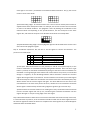
move right. If one of the y coordinates of the bottom reference blocks is 111 (7), the current
tromino cannot move down.
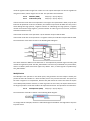
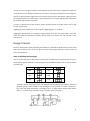
2) Stack boundary judger: To examine whether the current tromino reaches places where its
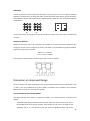
adjacent blocks have already been taken. For example, the current tromino cannot move left
or down in the below condition. This judgment is done by feeding the coordinates of the
reference blocks corresponding to one specific behavior, into the read ports of the stack
register file, and check the outputs to see whether these blocks are already taken.
3) Synthesized boundary judger: The final judgment signal for all three behaviors are the union
of the above two judgment signals.
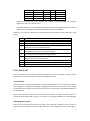
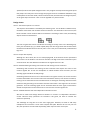
Step 4: Coordinate Operations. We use the F1 and F0 signals to choose the behaviors. The
processes are listed below.
F1
0
0
1
1
F0
0
1
0
1
Behavior
Fall Down
Move Right
Move Left
Discard
ALU Operation
ADD 1 to yA, yB, yC
ADD 1 to xA, xB, xC
SUB 1 from xA, xB, xC
AND 0 with xA, xB, xC, yA, yB, yC
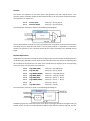
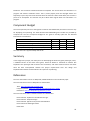
1) Data path: When both buttons are not pressed, F1 and F0 are acquiescently 00, so the
tromino coordinates are calculated assuming falling down behavior. Once the left or right
button is pressed, F1 and F0 will simultaneously change so that the tromino coordinates are
calculated in moving left/right mode. When both of the buttons are pressed, F1 and F0 will
change to 1 together, so the discarding behavior will be executed. It flushes the tromino
register file and generates a new tromino. The four behaviors are chosen by F1 and F0 signals
and executed by ALU. When the coordinates of the blocks have been calculated by ALU, they
will be written into the tromino register file again. The write addresses are the same as the
read addresses in the same clock period. Of course, whether the new coordinates should be
written again is determined by the boundary judgment signal we get in the last step.
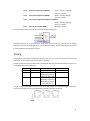
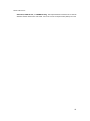
2) State machine B: This state machine is for reading the x and y coordinates of the tree blocks
from the tromino register file one by one, and writing the calculated coordinates into the
register file again. It accepts a rising edge as the start signal.
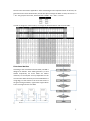
Step 5: Block Accumulation. When the current tromino falls down and reaches the top of the stack,
it cannot fall down any further, so the coordinates should be saved into the stack register file from
the tromino register file. When the last line is complete in the stack register file, it should disappear
and blocks above should fall down.
7